
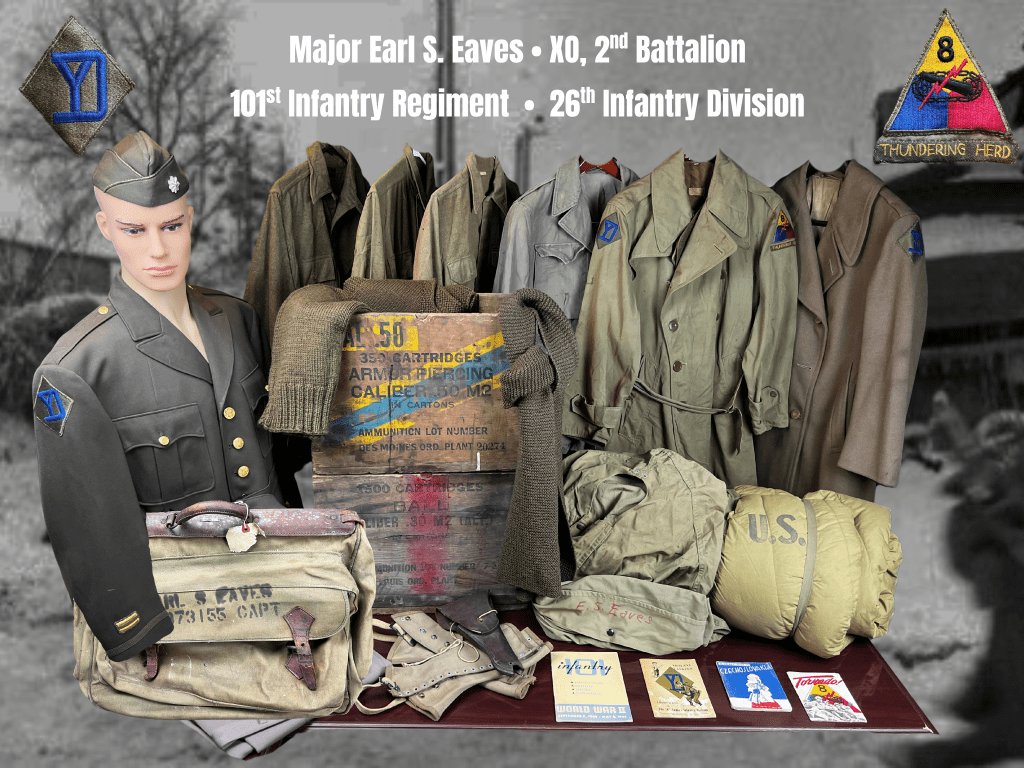
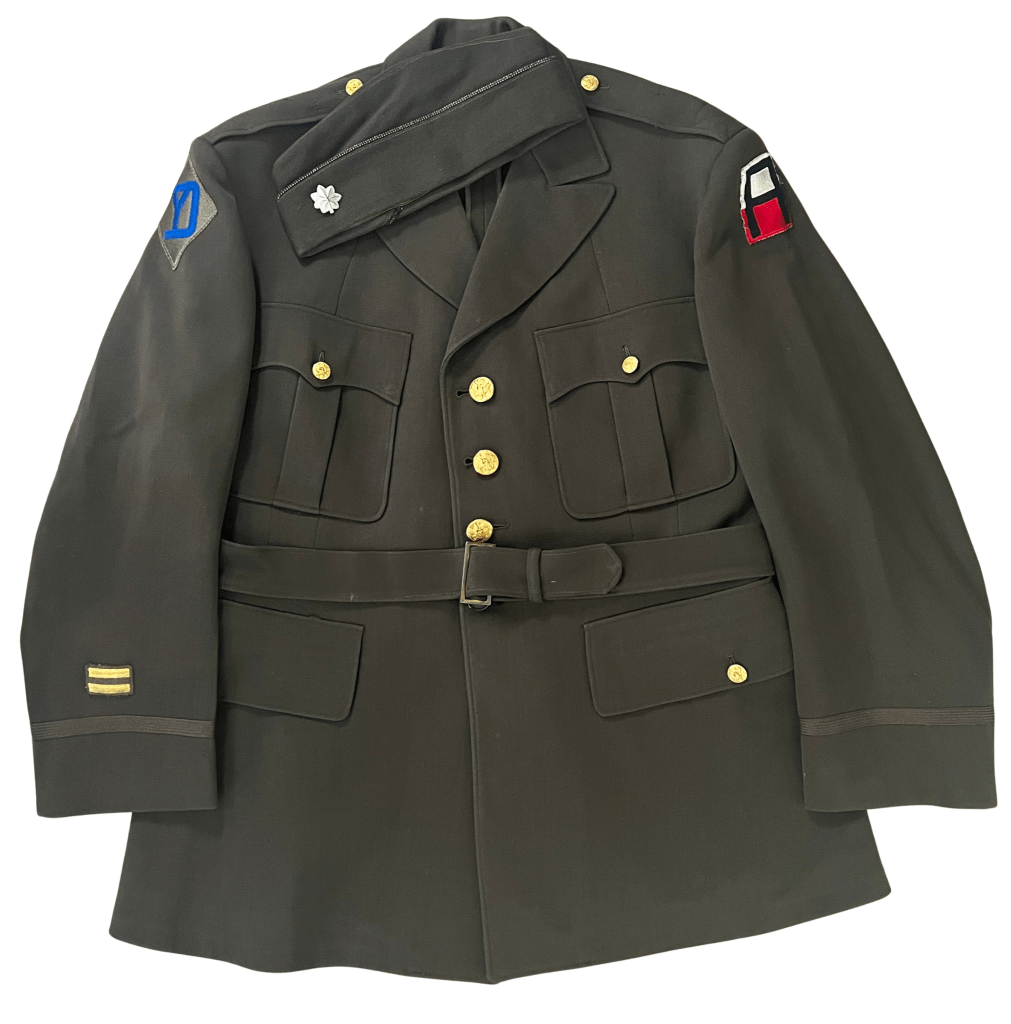
Major Earl S Eaves
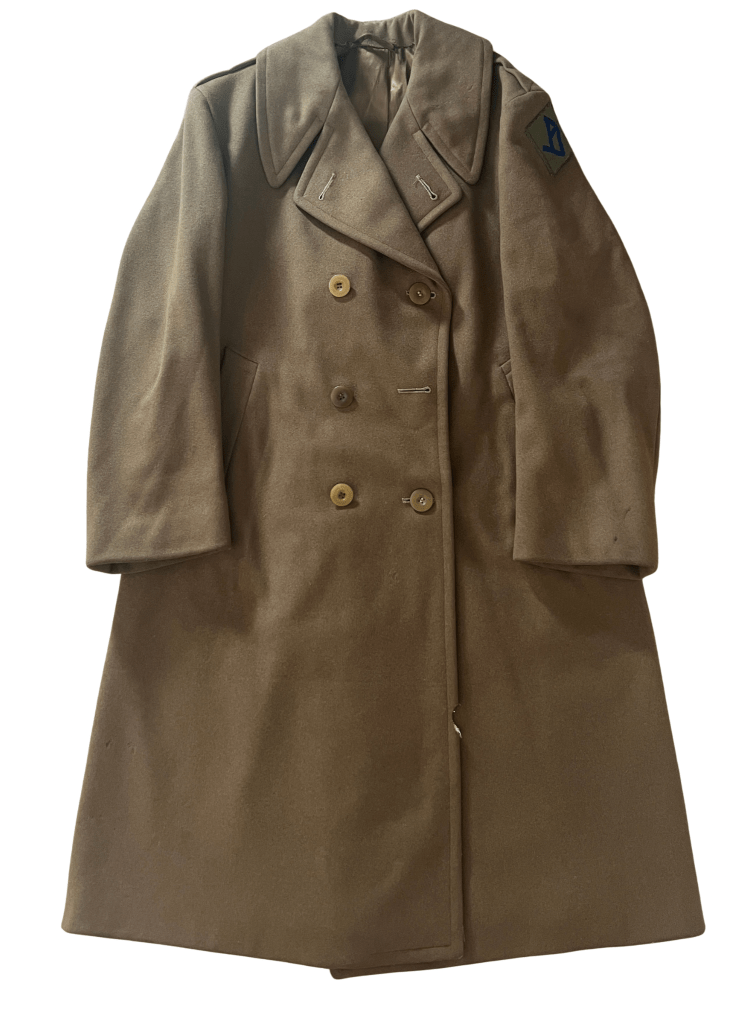
26th Infantry Division – 101st Infantry Regiment – Executive Officer – 2nd Battalion
-
Earl Sydney Eaves was born in Boston, Massachusetts, on September 13, 1911, to Charles Sydney Eaves and Julia Mary Pope Eaves. He was raised in Dorchester, Massachusetts, alongside his two sisters and graduated from Dorchester High School. After high school, Earl worked for the John Hancock Insurance Company while serving in the Massachusetts National Guard (M.N.G.), beginning a military career that would span decades and include distinguished service during World War II.
Pre–World War II Service
Earl originally enlisted in the Massachusetts National Guard, gaining nearly a decade of military experience prior to the outbreak of World War II. He served with the 110th Cavalry Regiment before transferring in 1938 to the 101st Infantry Regiment, 26th Infantry Division (Yankee Division).
During his time in the M.N.G., Earl earned multiple honors for leadership and excellence in training. As a member—and later leader—of Company F, he was designated the “Blue Student”, an award given to the best overall student, while his platoon as a whole was awarded for being best-drilled. On another occasion, Company F again earned top honors under his leadership, and Earl was awarded the Gold Fort Devens Efficiency Medal for commanding the Best Drilled Rifle Company.
He also received the Citizenship Award on “Dorchester Day” at Fort Devens, during a ceremony attended by Congressman John William McCormack and a large delegation from Dorchester honoring local soldiers training at the fort.
World War II – Stateside Training
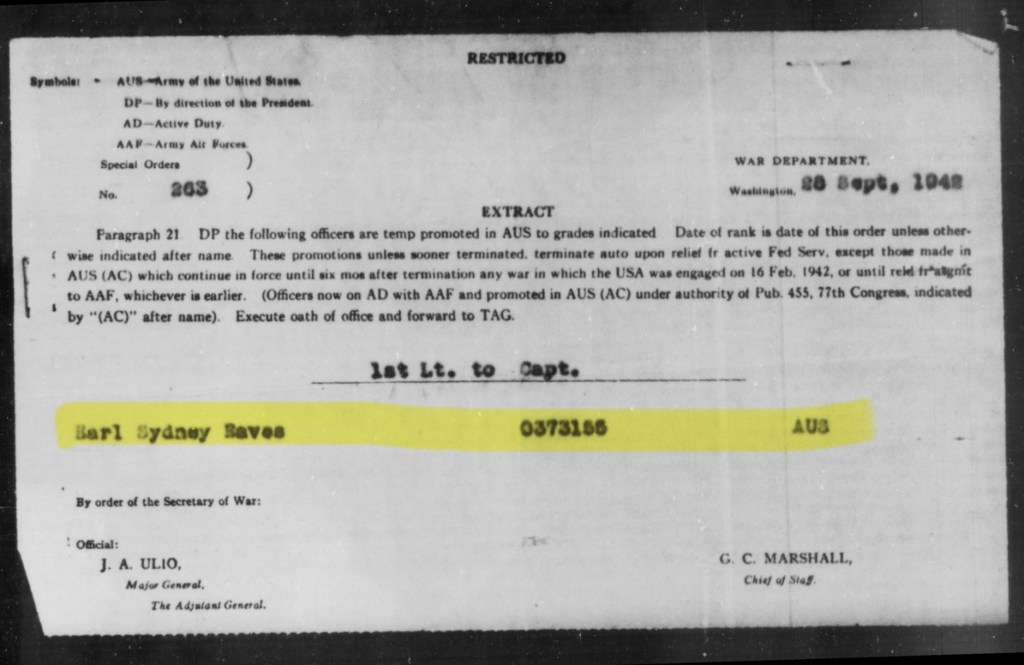
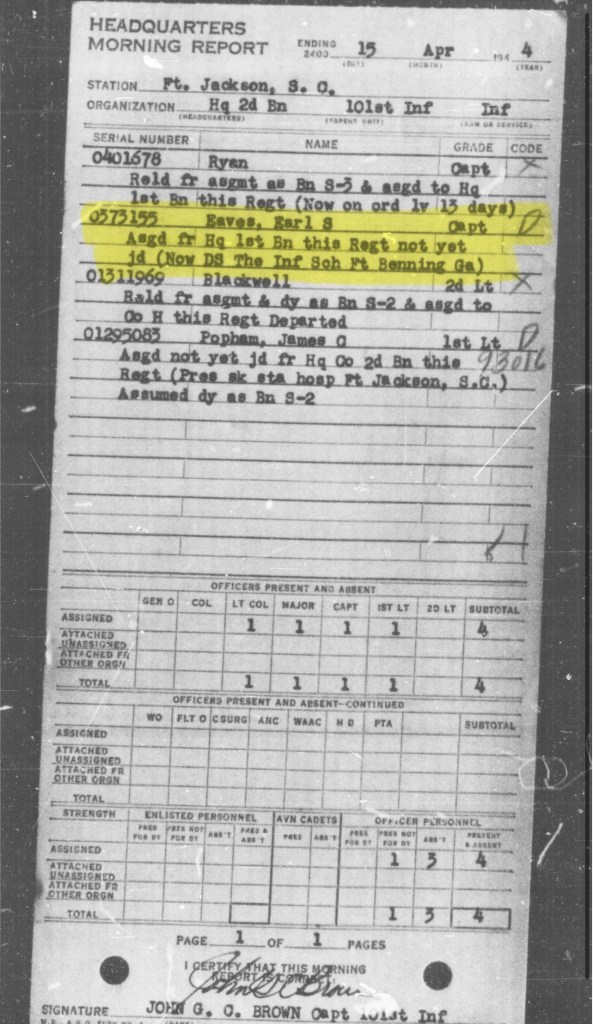
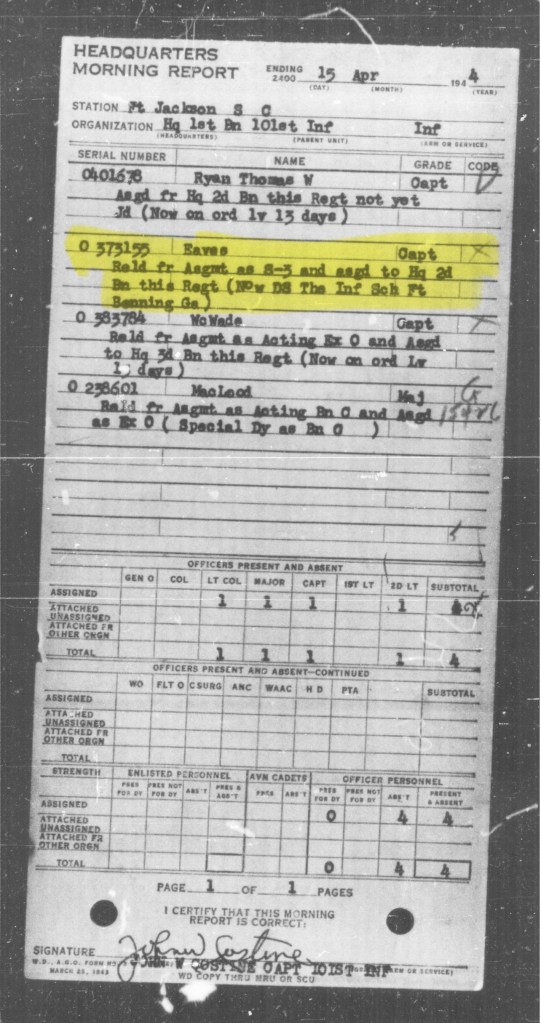
With the outbreak of World War II, Earl Eaves entered federal service as a Second Lieutenant in the United States Army with the newly federalized 101st Infantry Regiment, 26th Infantry Division. Until deploying overseas in September 1944, Earl and the division underwent extensive training across the United States.
Their training included assignments at Camp Edwards, Massachusetts; participation in the VI Corps Maneuvers; the large-scale Carolina Maneuvers of 1941; and a return to Camp Edwards on December 6, 1941. Following the Japanese attack on Pearl Harbor the next day, the division was formally federalized and continued training at numerous installations, including Fort DuPont (Delaware), Camp A.P. Hill (Virginia), Fort Meade (Maryland), Fort Jackson (South Carolina), Camp Gordon (Georgia), and Camp Campbell (Kentucky).
The division’s final stateside stop was Camp Shanks, New York, from which it departed for Europe. On September 7, 1944, the 26th Infantry Division arrived in France, landing at Cherbourg and Utah Beach. The division would enter combat approximately one month later.
World War II – Combat Operations Overseas
On October 7, 1944, Earl and the 101st Infantry Regiment relieved the 4th Armored Division and launched an offensive the following day near Arracourt, France, with the objective of capturing Hill 310. The regiment successfully seized the hill, advanced into Moyenvic, and captured more than 500 German prisoners in the surrounding area. Subsequent operations led to the capture of towns including Bergelstorff, Lohr, and Innsviller.
Bronze Star for Heroic Achievement
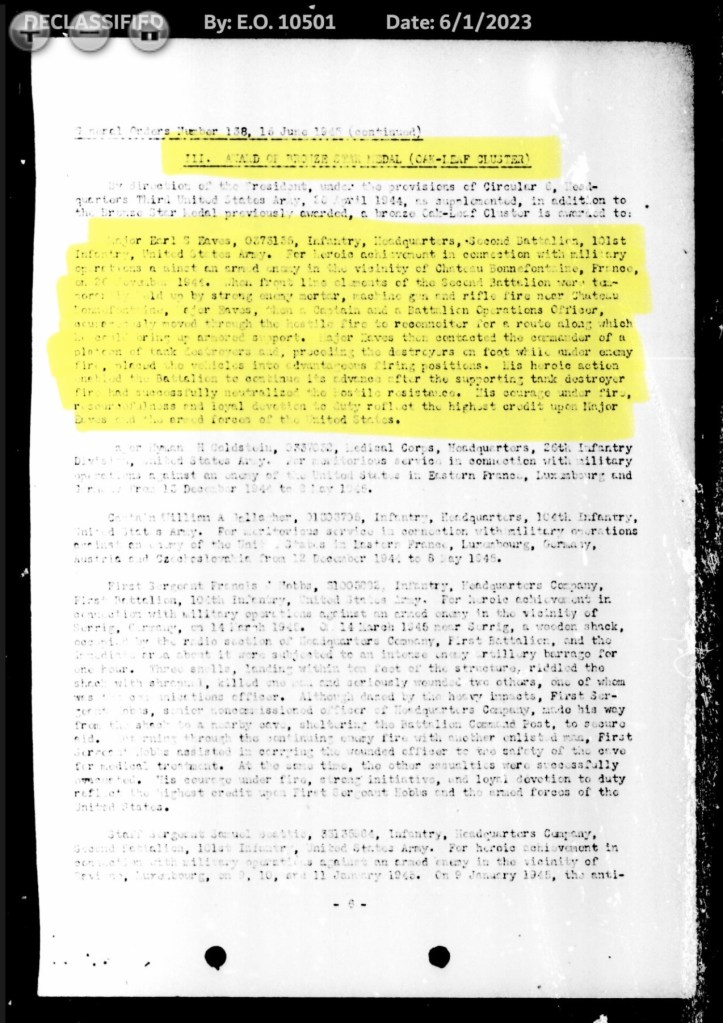
On November 26, 1944, during intense fighting near Château Bonnefontaine, France, Earl—then a Captain and Battalion Operations Officer—distinguished himself under heavy enemy mortar, machine-gun, and rifle fire. His actions on this day earned him the Bronze Star Medal for Heroic Achievement. His citation reads, in part:
“…Major Earl S. Eaves, 0373135, Infantry, Headquarters, Second Battalion, 101st Infantry, United States Army. For heroic achievement in connection with military operations against an armed enemy in the vicinity of Château Bonnefontaine, France, on 26 November 1944. When frontline elements of the Second Battalion were temporarily held up by strong enemy mortar, machine-gun, and rifle fire near Château Bonnefontaine, Major Eaves, then a Captain and Battalion Operations Officer, accurately moved through hostile fire to reconnoiter a route along which arms support could be brought forward. Major Eaves then contacted the commander of a platoon of tank destroyers and, proceeding on foot while under enemy fire, personally placed the vehicles in advantageous firing positions. His heroic action allowed the battalion to continue its advance after the supporting tank destroyer fire had successfully neutralized the enemy resistance. His courage under fire, resourcefulness, and loyal devotion to duty reflect the highest credit upon Major Eaves and the Armed Forces of the United States.”
Continued Operations and Second Bronze Star
The regiment concluded November with an assault on Sarre-Union, which fell to American forces on December 3, 1944. Moving through the Metz area, the 101st Infantry Regiment was ordered to contain a German garrison at Fort Jeanne d’Arc, which surrendered on December 13, 1944. After weeks of continuous combat, the regiment was granted a brief period of rest and recuperation beginning December 14.
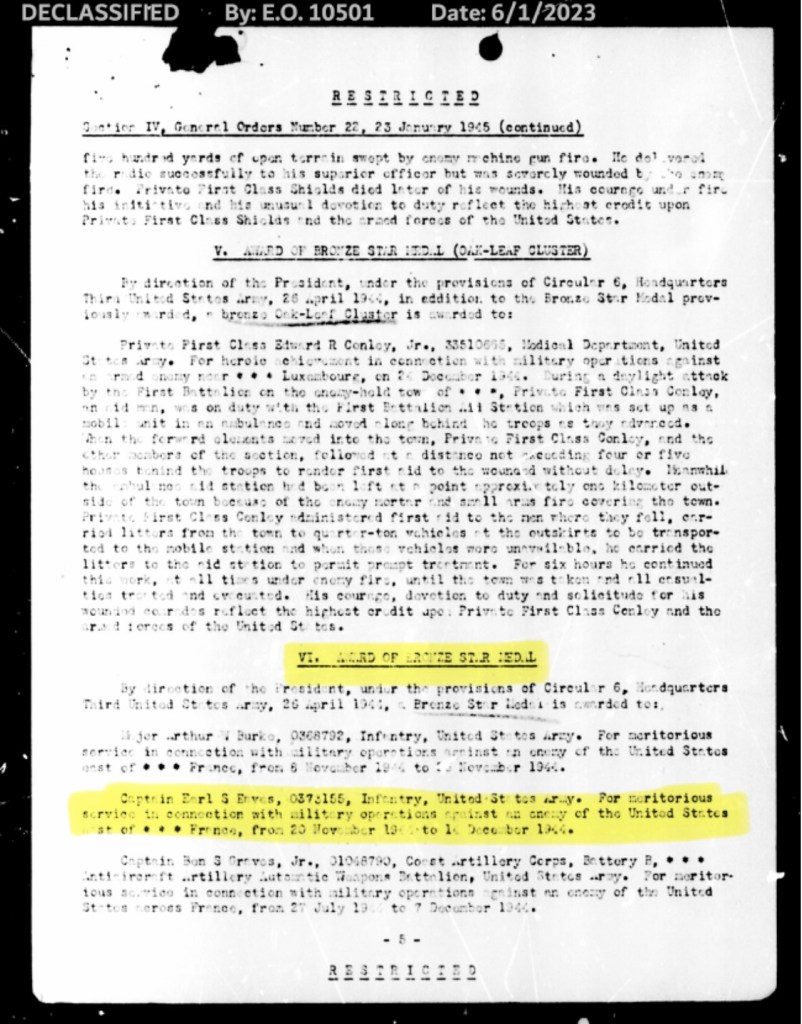
For his service from November 20 to December 14, 1944, Earl received a second Bronze Star Medal, this time for meritorious service. His citation states:
“Captain Earl S. Eaves, 0373155, Infantry, United States Army, for meritorious service in connection with military operations against an enemy of the United States of America in France from 20 November 1944 to 14 December 1944.”
Battle of the Bulge and Wounding in Action
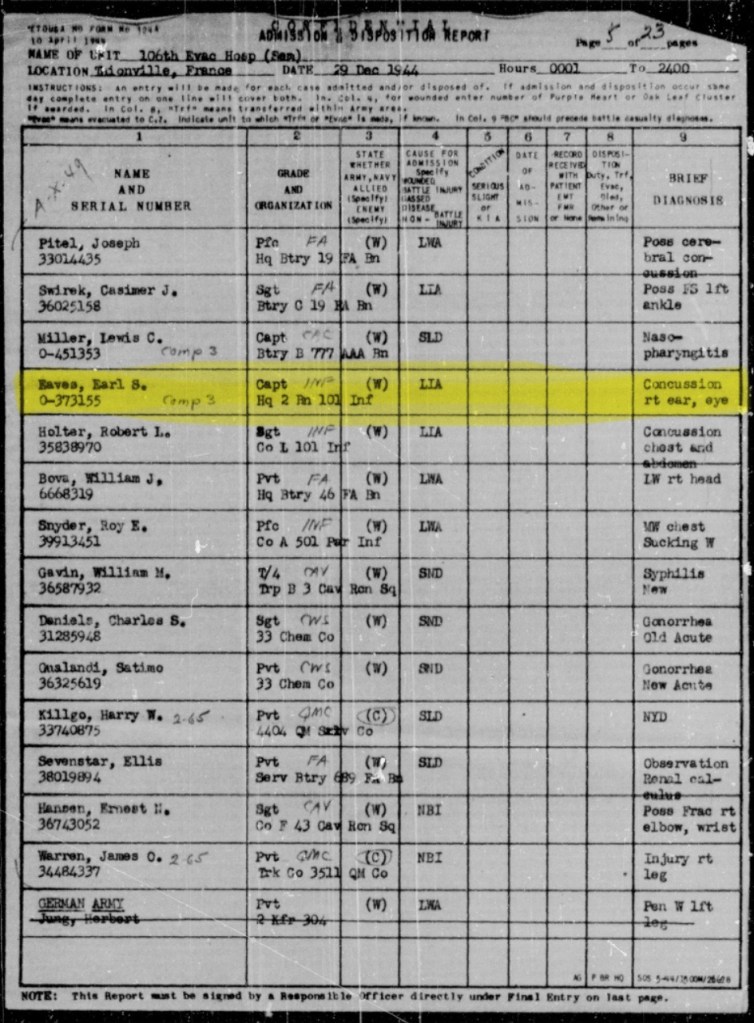
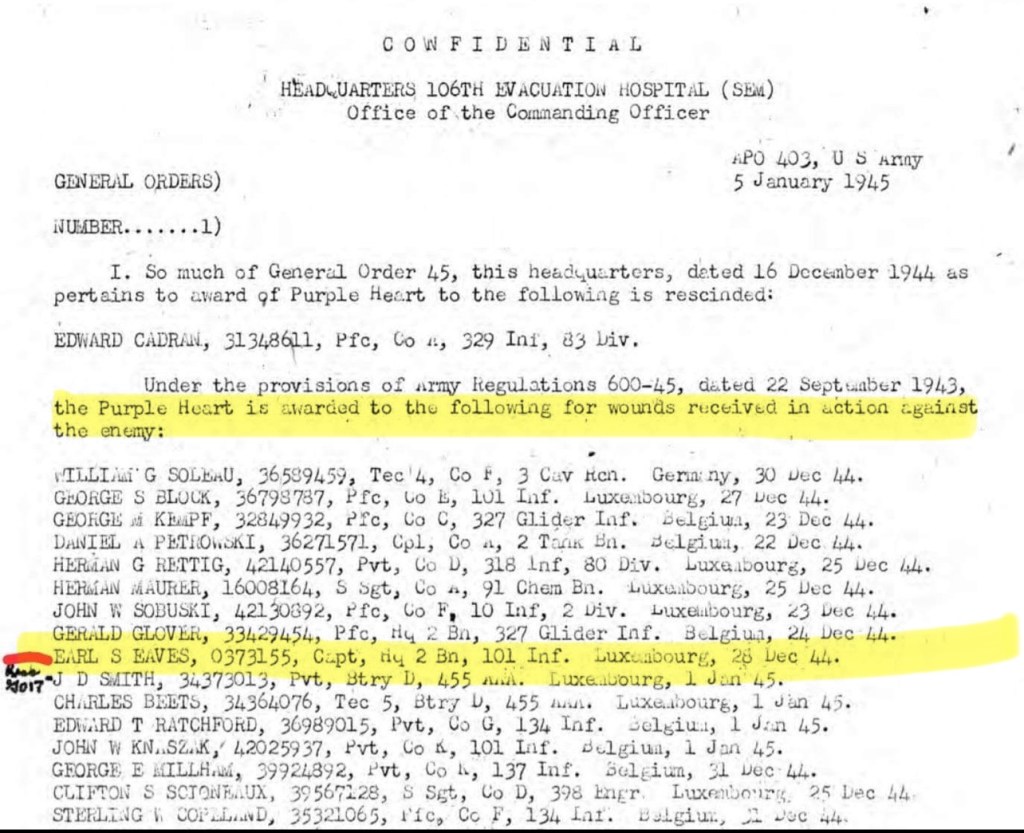
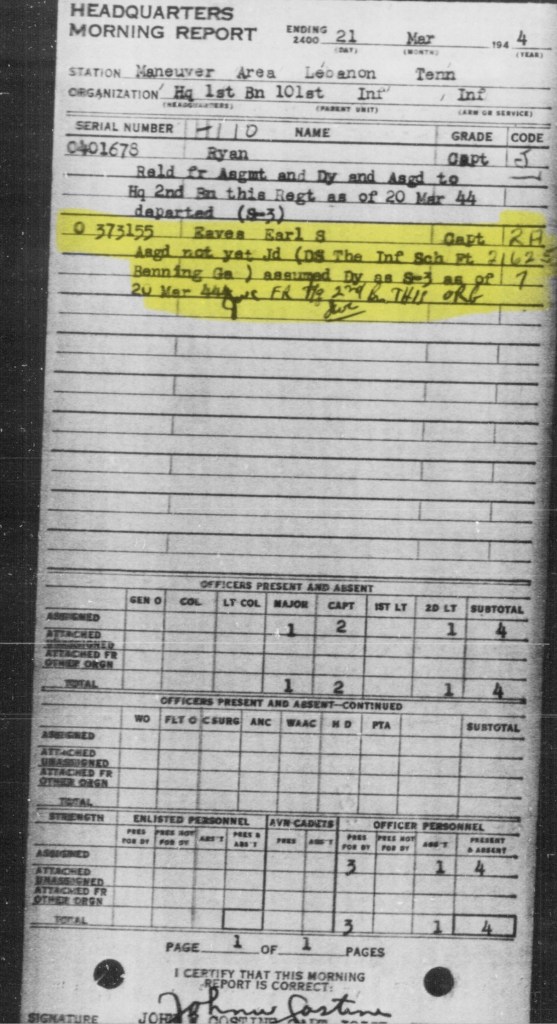
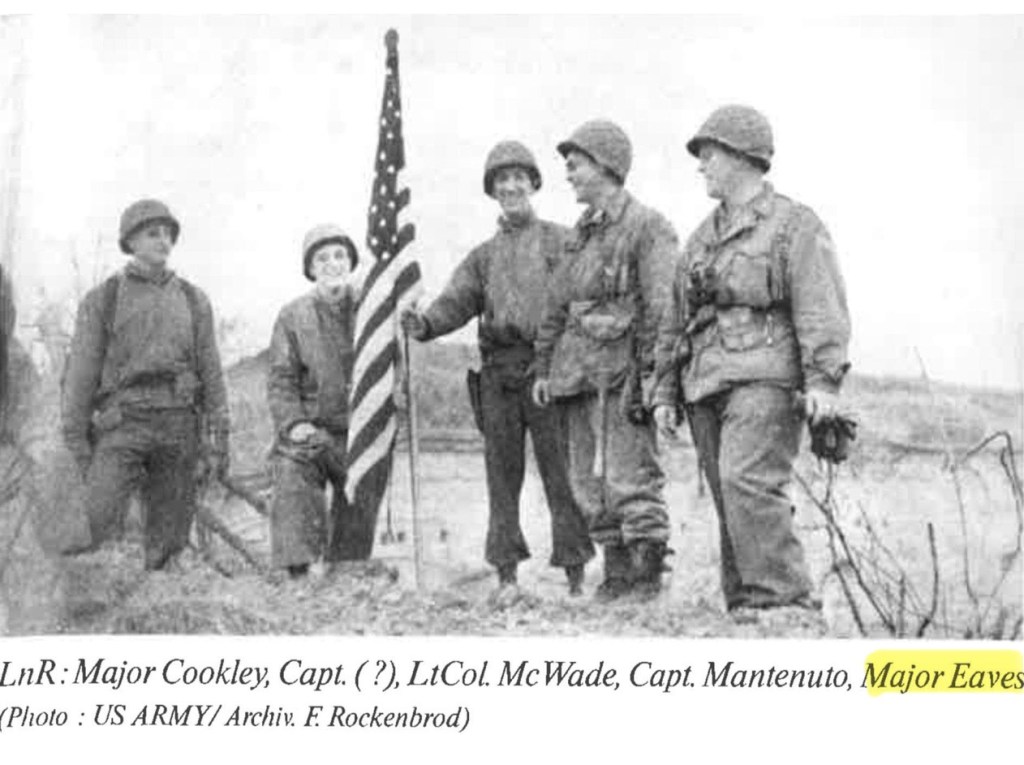
The regiment’s rest was short-lived. On December 19, 1944, the 26th Infantry Division was rushed north to counter the German von Rundstedt Offensive, better known as the Battle of the Bulge. During fighting in Luxembourg, Major Eaves, serving as Executive Officer of the 2nd Battalion, 101st Infantry Regiment, was lightly injured in action on December 28, 1944, near Mecher-Dunkrodt.
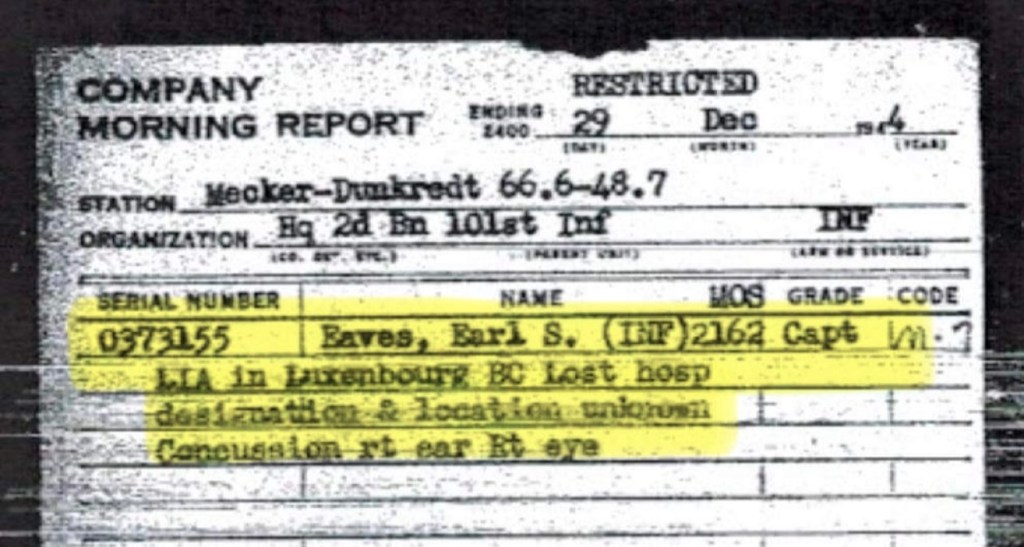
While targeting German machine-gun positions near Hill 395, Earl sustained a concussion injury to his right ear and right eye, likely caused by blast or shrapnel. His injury is documented in the battalion morning report:
“0373155 Eaves, Earl S. (INF) 2162 Capt. LIA in Luxembourg. BC lost. Hospital designation and location unknown. Concussion, right ear and right eye.”
Despite his injury, the regiment successfully neutralized the enemy positions and forced a German retreat.
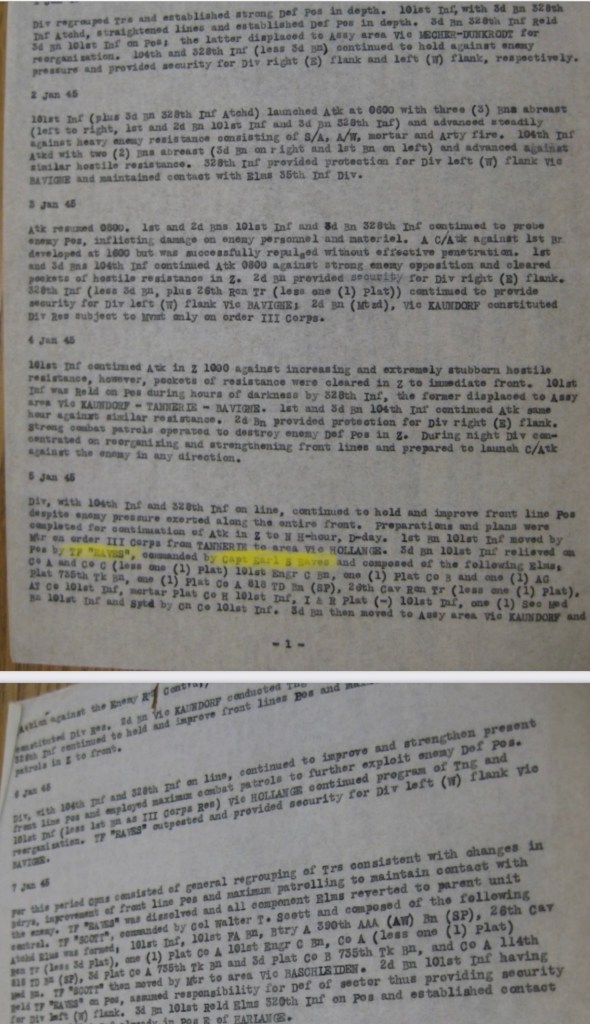
After treatment in a base hospital, Earl returned to duty and assumed command of Task Force Eaves, a combined-arms unit composed of infantry, mortars, reconnaissance, and tank destroyer elements. Stationed near Hollange, the task force was responsible for securing the division’s left flank near Bavigne during the division’s successful second attempt to cross the Wiltz River.
Final Service and Later Life
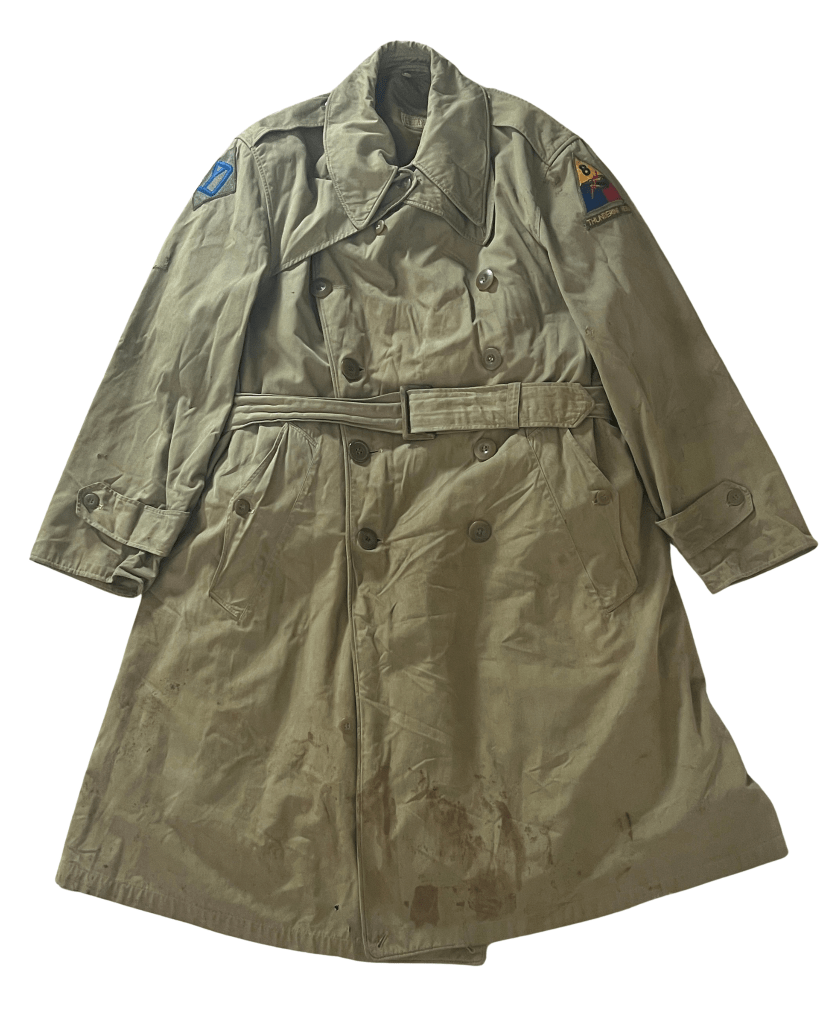
Details of Earl’s actions during the final months of the war remain limited. It is known, however, that he remained with the 26th Infantry Division until the end of hostilities and later transferred to the 8th Armored Division during the occupation period. Earl was awarded the Silver Star, though the citation and specific actions leading to this honor have not yet been located.
Following World War II, Earl remained deeply connected to the Yankee Division, playing a key role in organizing and coordinating 26th Infantry Division reunions for many years. He passed away on April 9, 1997, in Quincy, Massachusetts.


 Mass Militaria & Antiques