
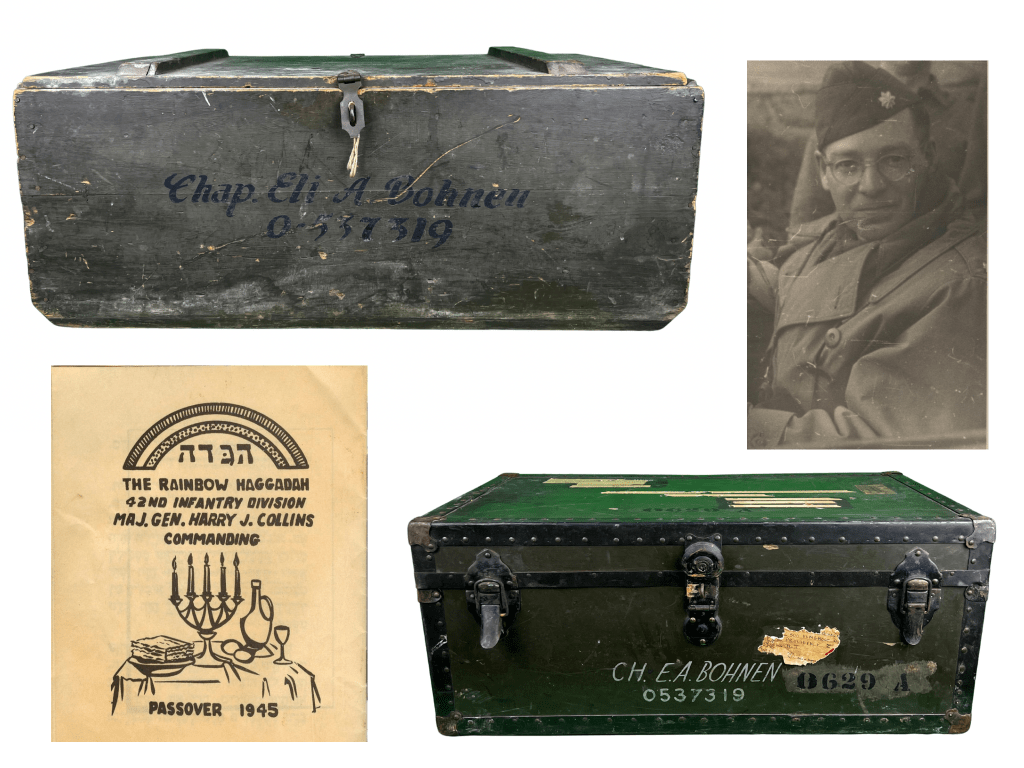
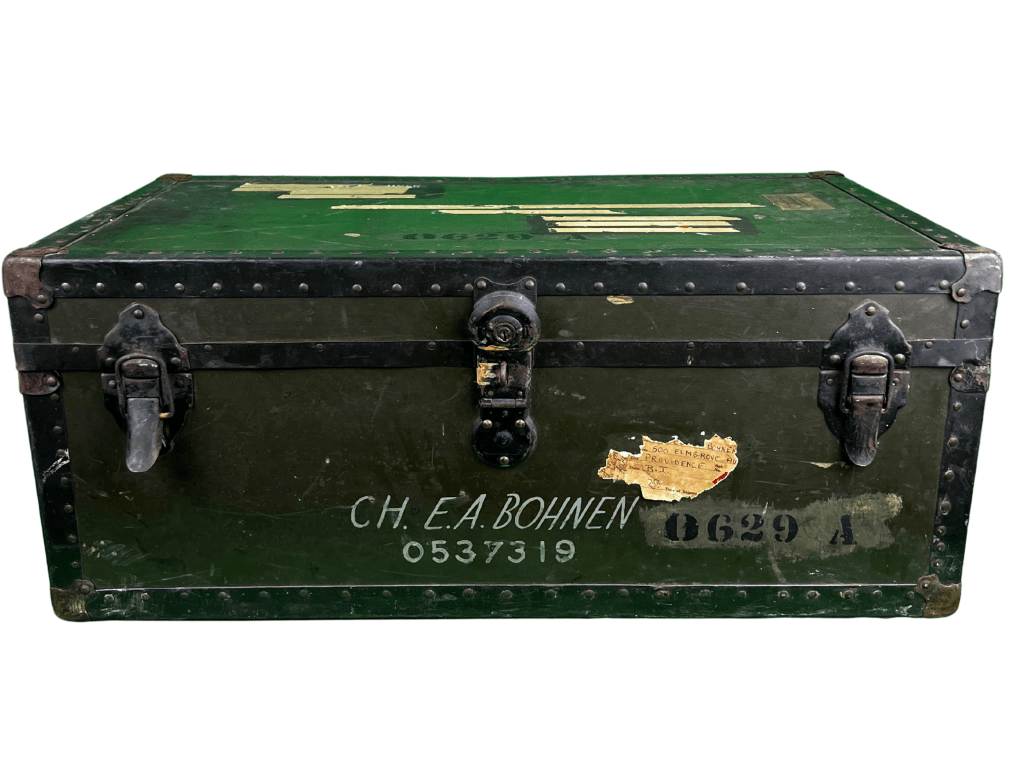
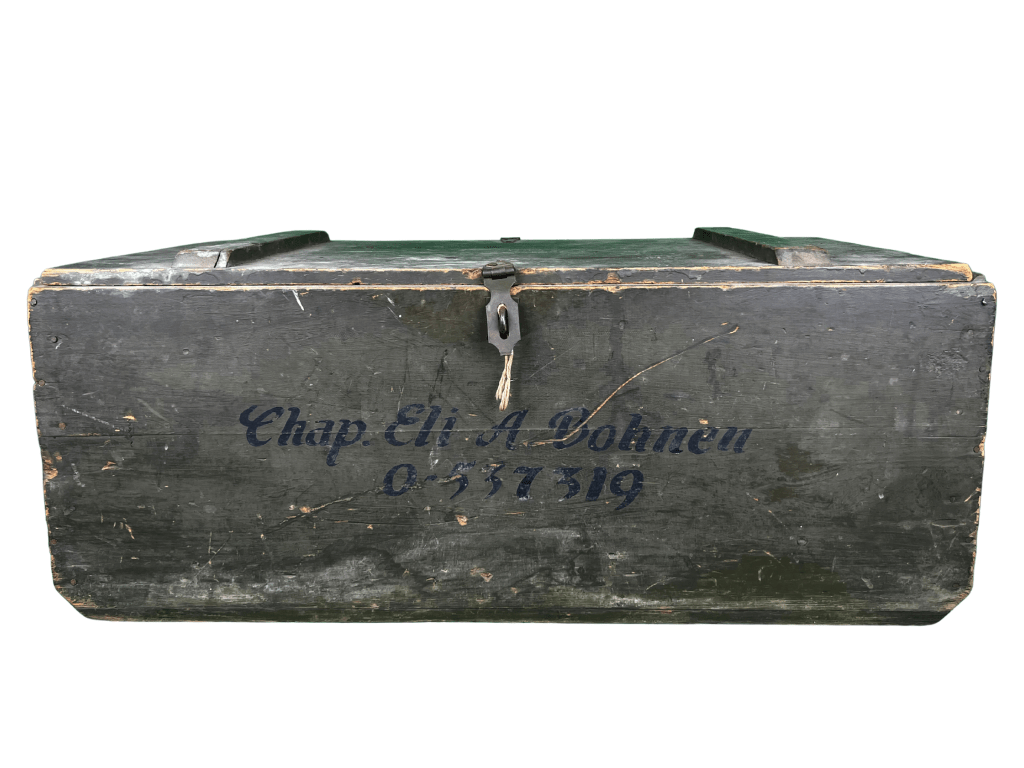
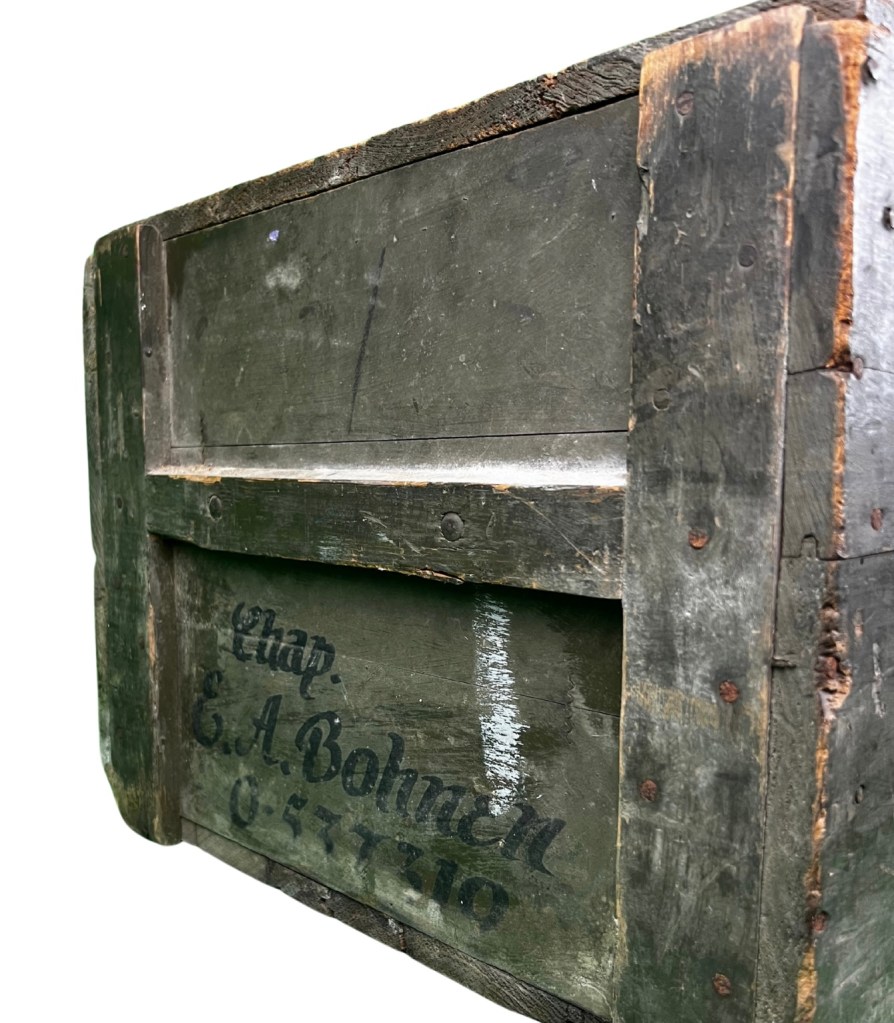
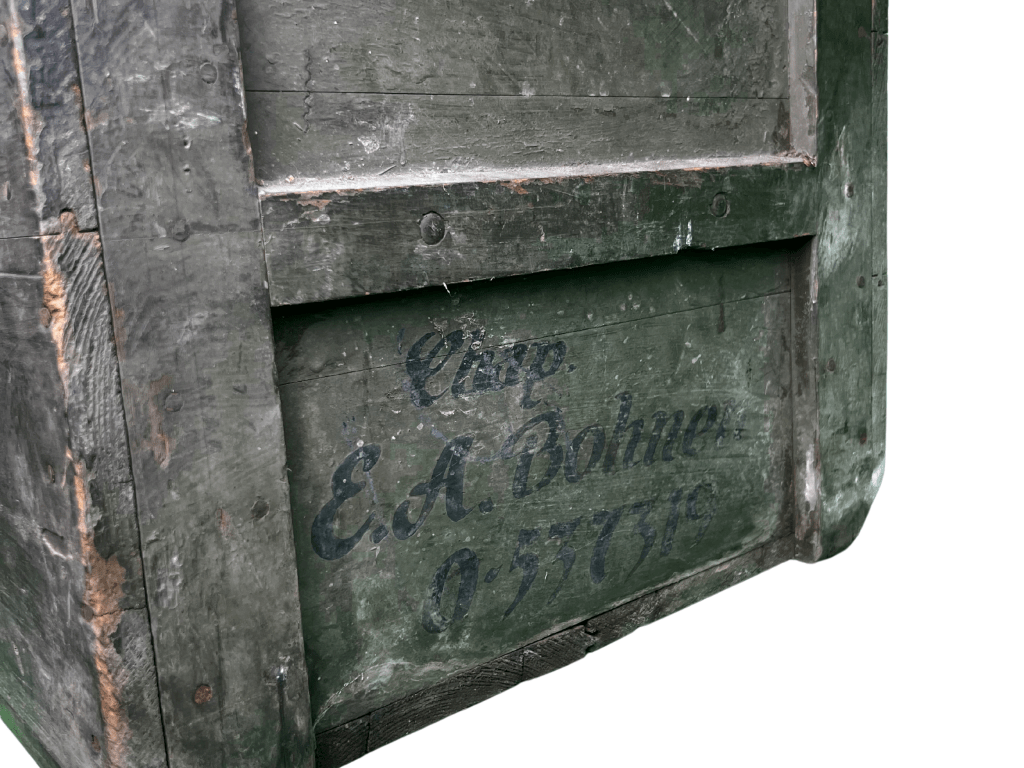
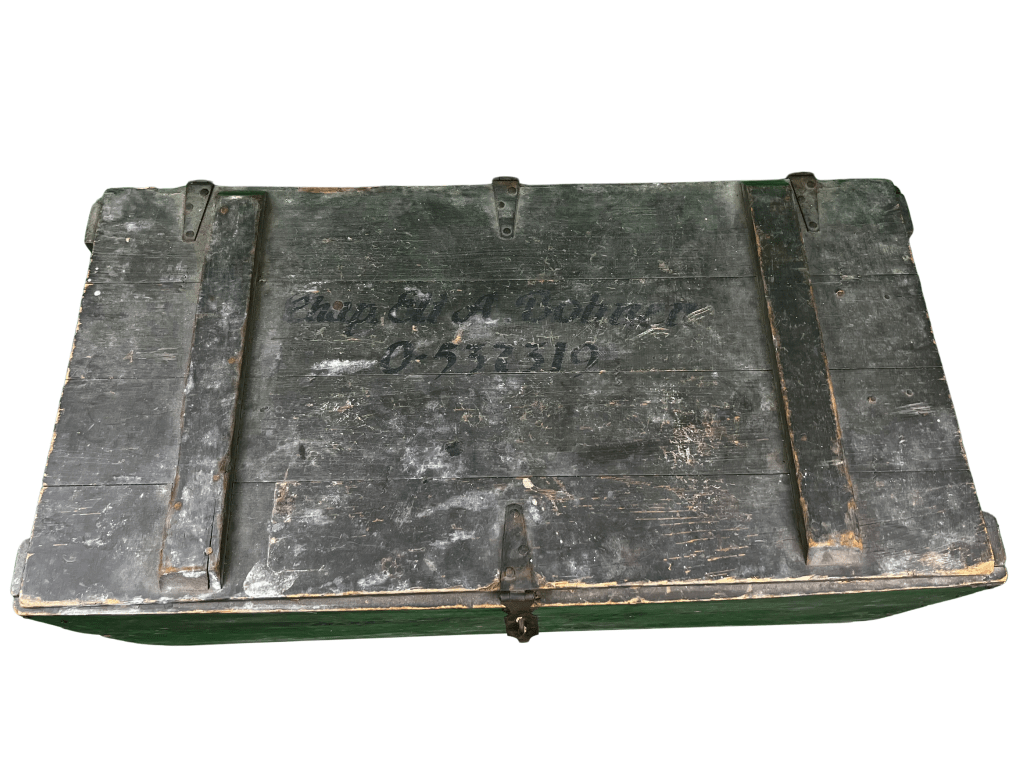
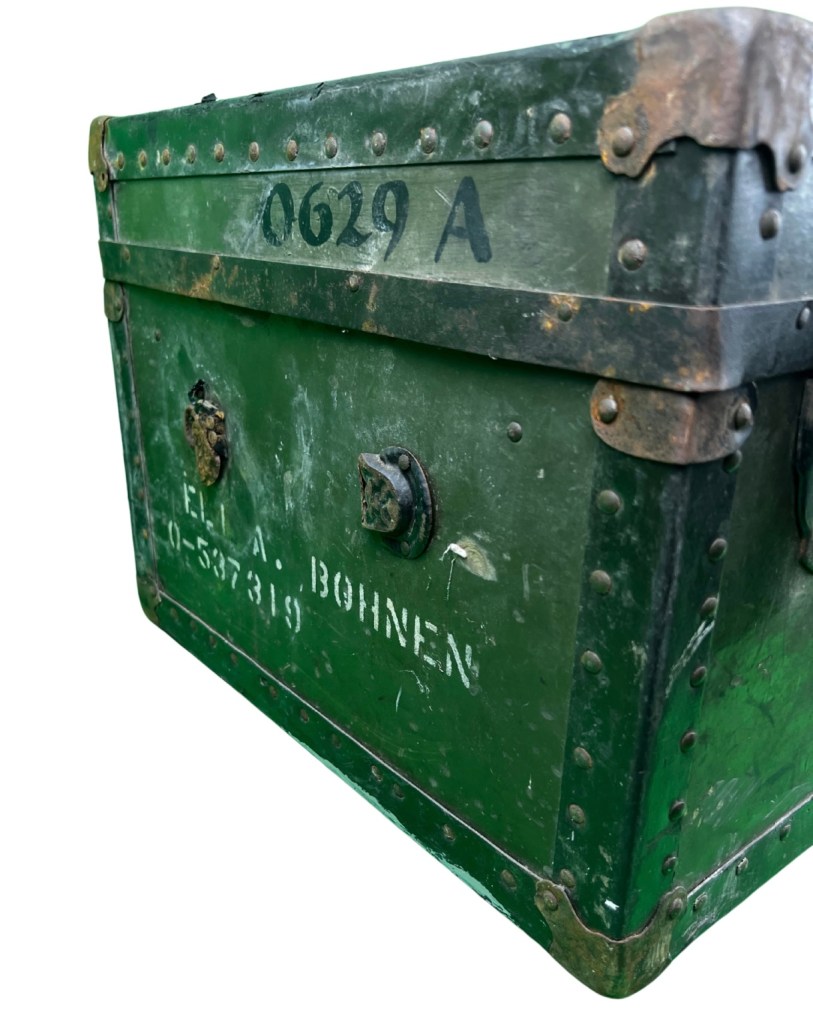
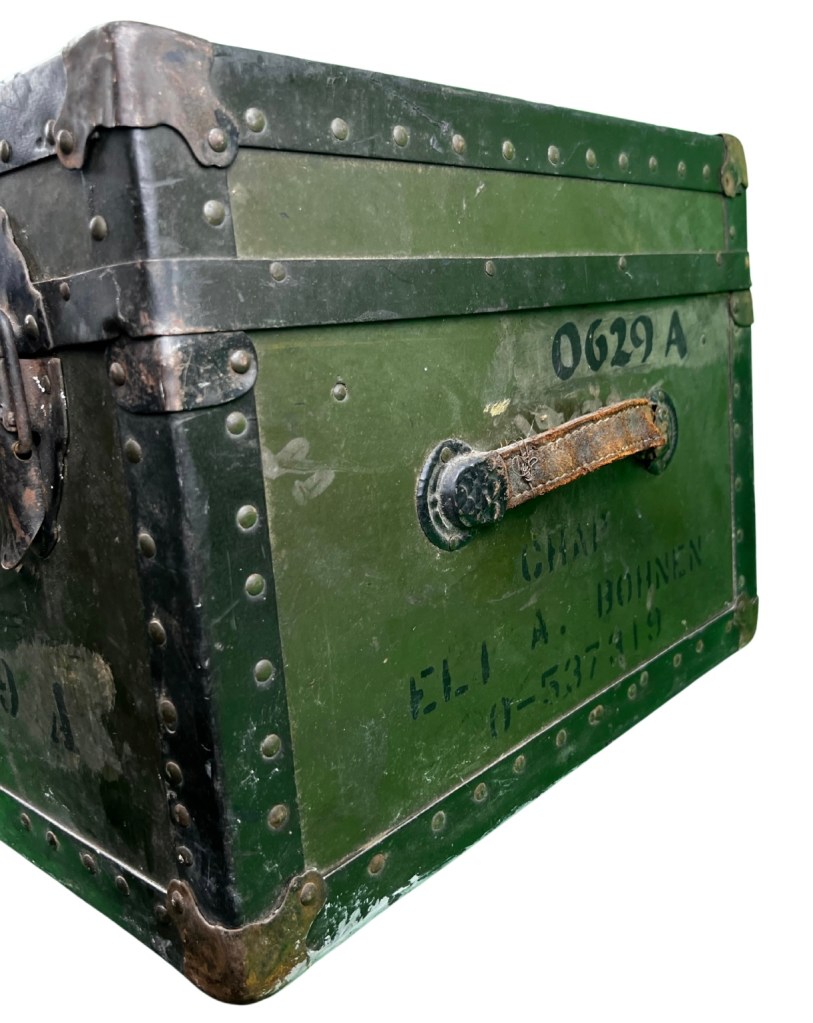
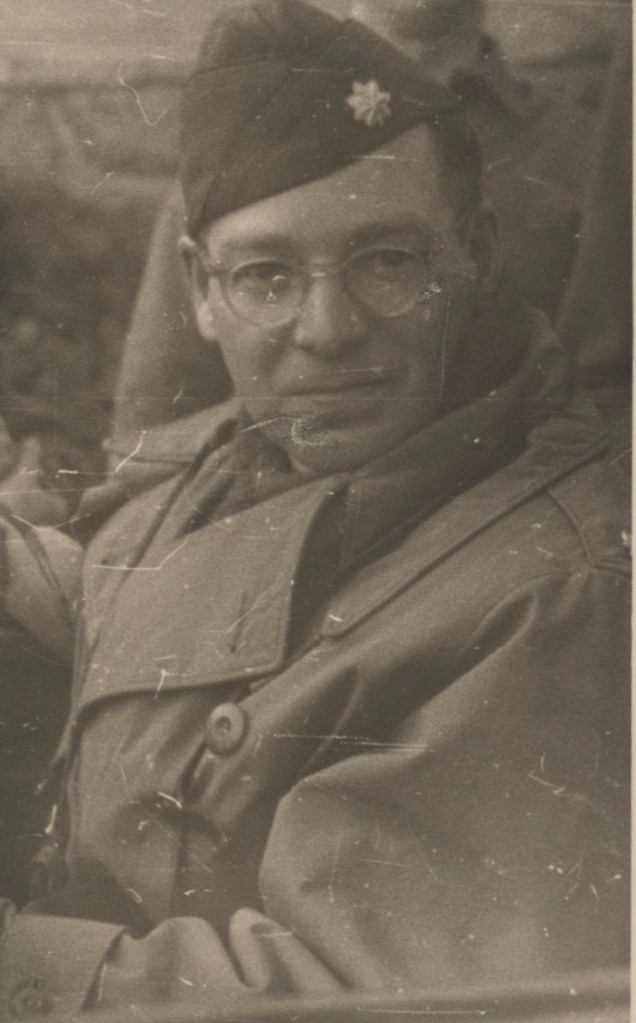
Major Eli A. Bohnen
US Army – 42nd Infantry Division – Assistant Division Chaplain
-
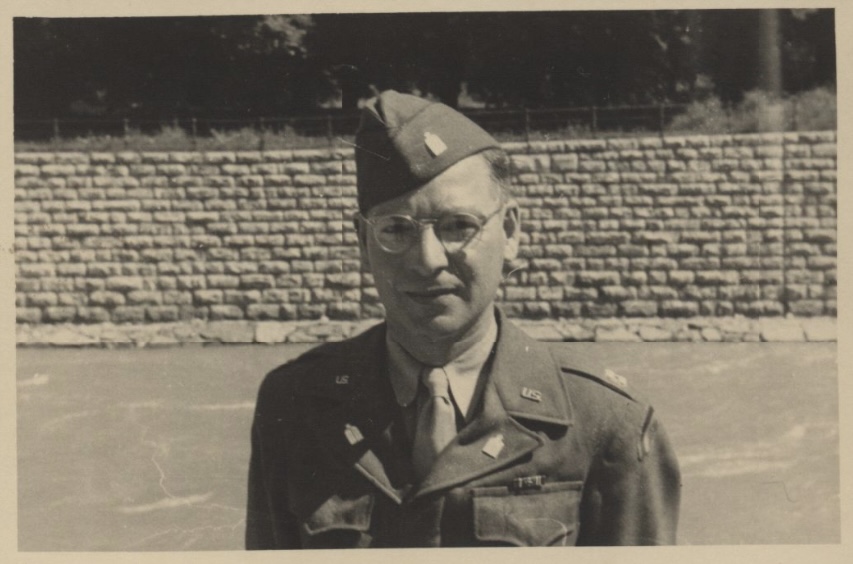
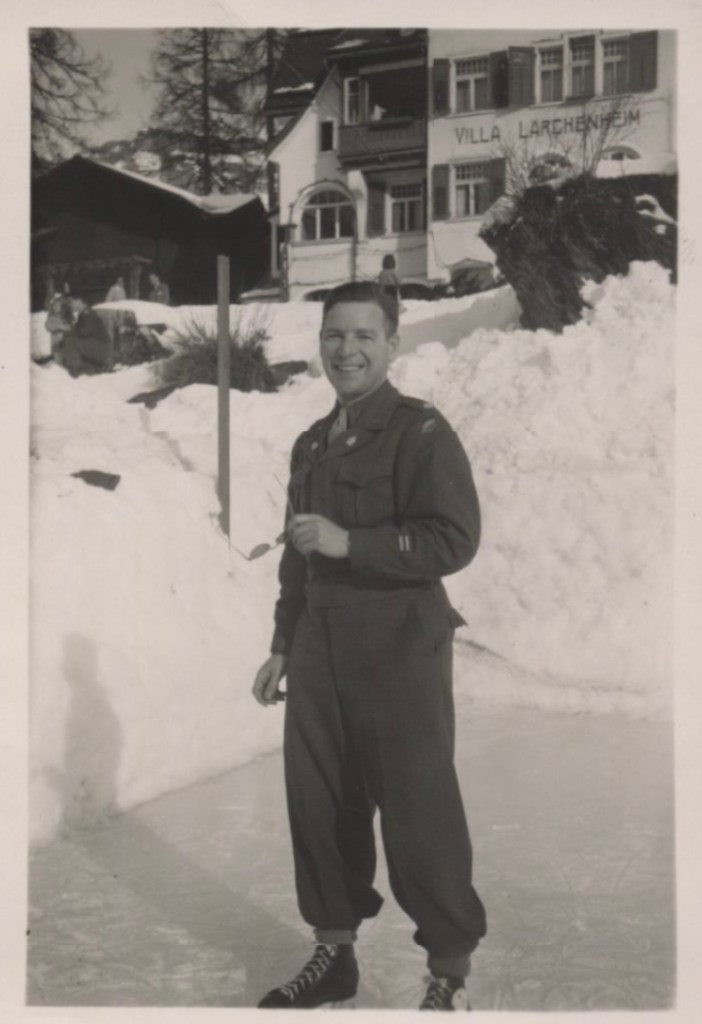
Rabbi Eli A. Bohnen was born on May 8, 1909, in Providence, Rhode Island, to Abraham and Sarah Bohnen. He was raised in Providence and educated locally before pursuing rabbinical studies. When the United States entered the conflict, he entered military service as a Jewish chaplain.
Service with the 42nd Infantry Division
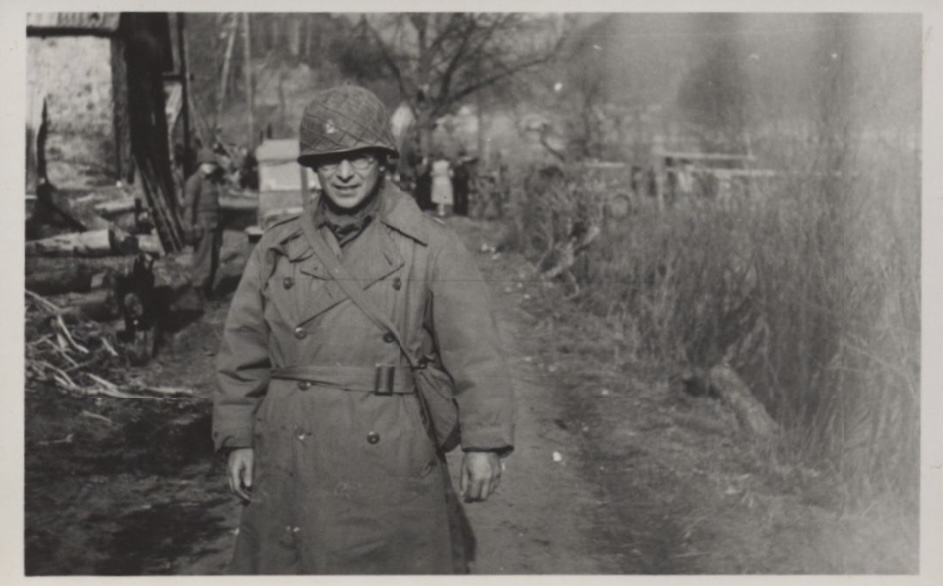
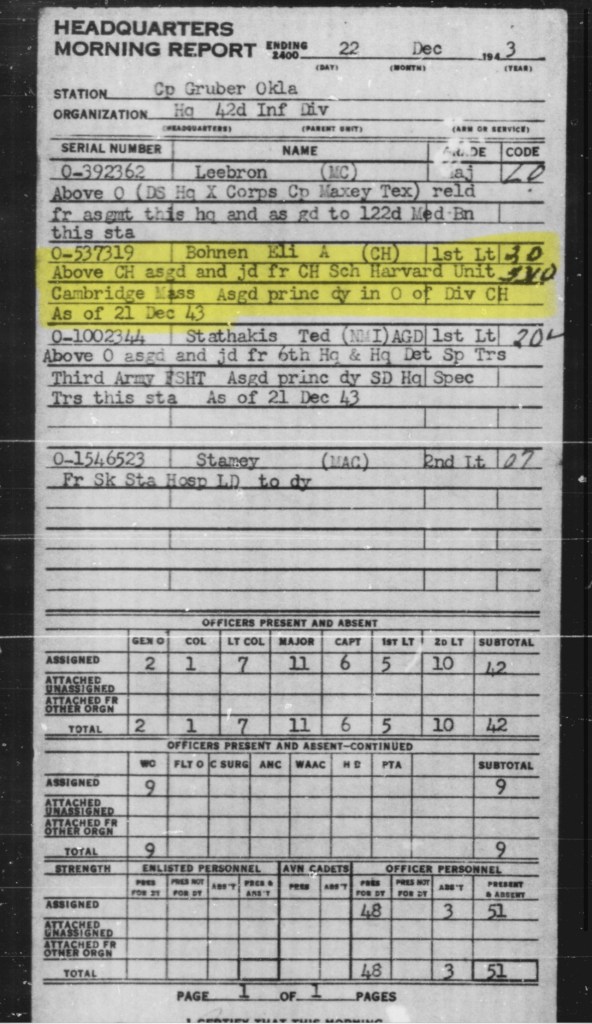
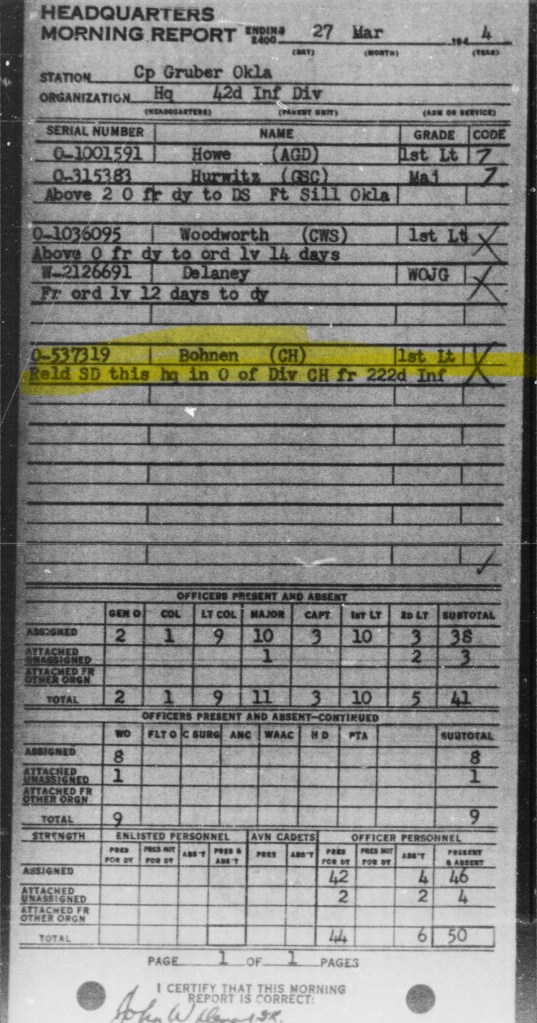
Rabbi Bohnen would go on to serve as a Jewish chaplain with the 42nd Infantry Division, known as the “Rainbow Division,” during its European campaign in the final months of the war. After arriving overseas in late 1944, he moved with the division through France and into Germany, providing religious services, counseling, and spiritual support to Jewish soldiers under combat conditions. His responsibilities included conducting worship services when circumstances allowed, assisting soldiers coping with combat stress, and helping Jewish troops observe religious traditions amid active operations.
By early 1945, Bohnen was with the division during its advance through southwestern Germany following the crossing of the Rhine. As the 42nd pushed through towns and rural areas during a period of rapid movement and intermittent rest, opportunities occasionally arose for organized religious observance. One such pause would lead directly to the Passover service held later that March.
The Rainbow Haggadah
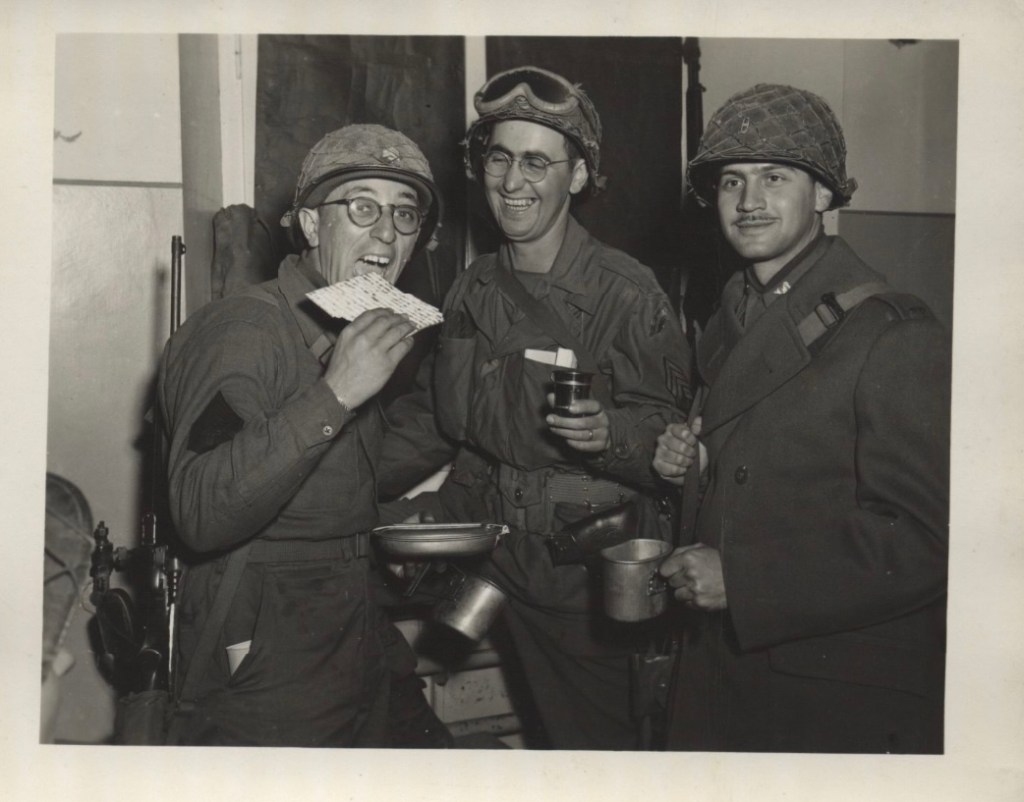
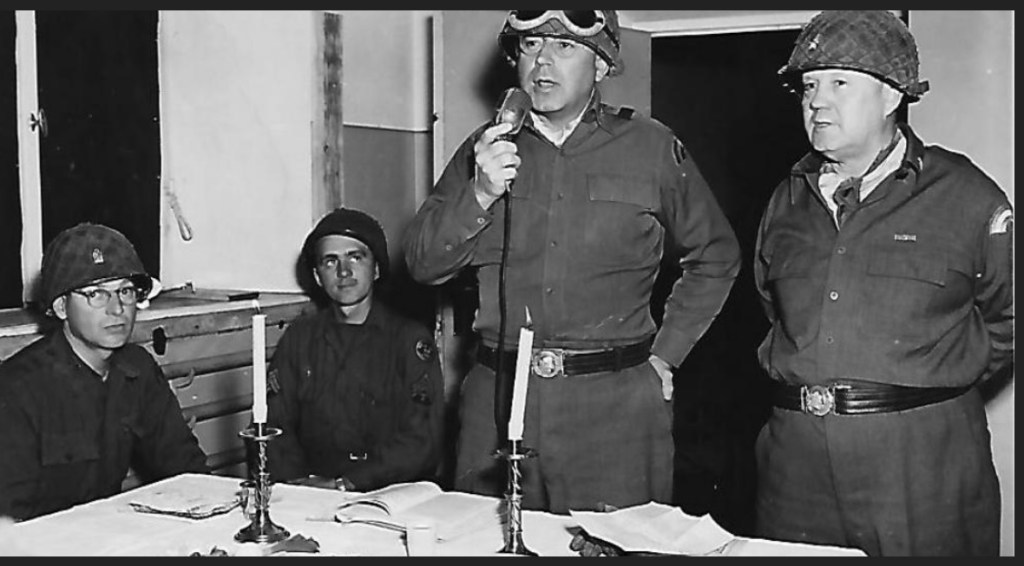
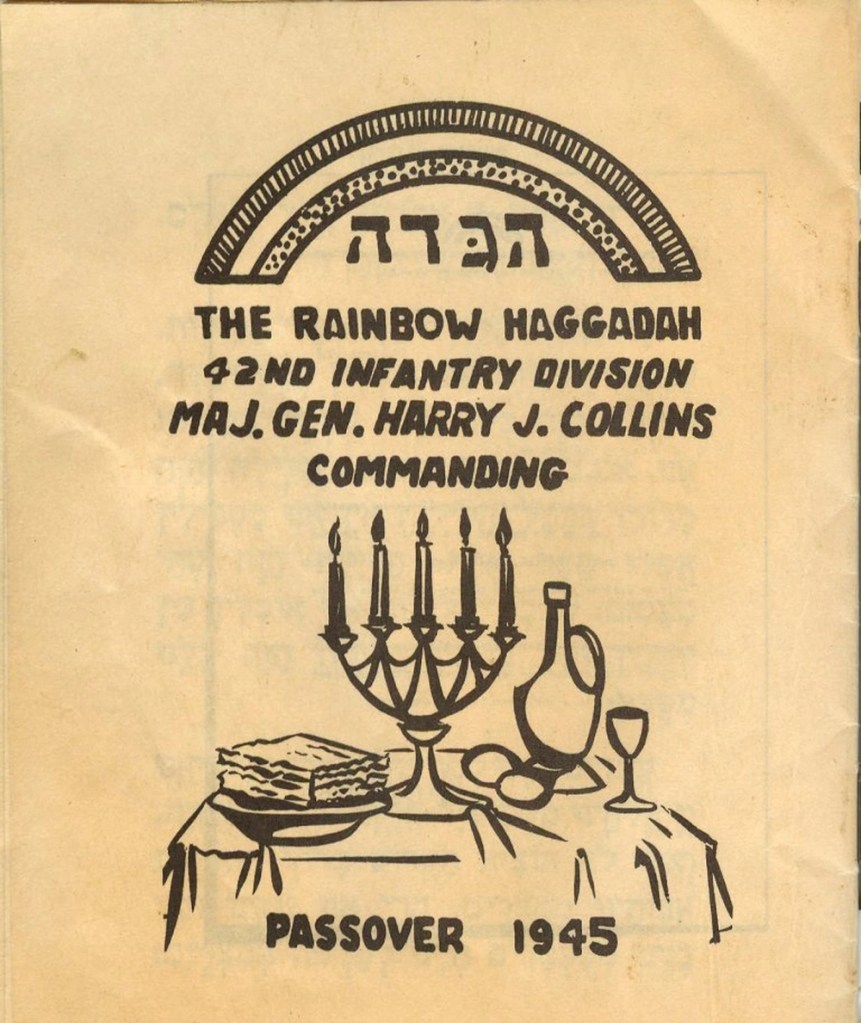
In late March of 1945, Rabbi Eli A. Bohnen led a Passover Seder in Dahn, Germany, during a two-day rest period when the town was deemed secure after the German retreat. One soldier of the 42nd Infantry Division recalled, “Now, Rabbi Bohnen looked at his Jewish calendar, and he said the next evening, which I think was either March 24th or 25th — [This was actually the 27th as the service was held on the 28th] — was going to be the first night of Passover. If possible, he would like to have some kind of Passover service.”
Major General Harry J. Collins, commanding general of the 42nd ID, who referred to Rabbi Bohnen as “Padre” and was notably fond of him, approved the idea and authorized two trucks to gather supplies. These included food, wine, and a small prayer book known as a Haggadah, used to guide the Passover Seder. Rabbi Bohnen and his assistant, Chaplain Eli Heimberg, used the Haggadah along with an old mimeograph machine—documented as having been cleaned with two German flags by Bohnen—to print more than 800 copies of a customized version that became known as the “Rainbow Haggadah.” Approximately 1,500 soldiers attended the Seder, nearly double the number of books produced.
The customized Haggadah was created by extracting Hebrew text from a standard version supplied by the Jewish War Board, which also helped provide additional necessities for the service. Using the two trucks, Bohnen, Heimberg, and another Jewish chaplain, David Eichhorn, gathered supplies and prepared for the observance. The Rainbow Haggadah is believed to be the first Haggadah printed in Germany since 1933 and stands as a symbol of pride and resilience for Jewish GIs and Jewish communities worldwide.
Dachau Concentration Camp
On April 29, 1945, after arriving in Germany several weeks earlier, the 42nd Infantry Division entered Dachau, immediately sensing that something was deeply wrong. One soldier recalled, “As we approached, there was a very distinctive smell… We knew it fairly well, the stench of death. But when you are in combat, you see dead animals all the time. We just told ourselves, it was dead farm animals.”
Upon reaching the gates of Dachau Concentration Camp, the division encountered the full reality of Nazi atrocities. Rabbi Bohnen and Chaplain Heimberg entered the camp, becoming the first Jewish military chaplains known to do so. A soldier who witnessed Bohnen speak in Yiddish to Jewish prisoners later recalled, “At that moment, it was as if all the pent-up emotions of the years in misery were unleashed. There was a burst of wailing and crying.”
In a letter written to his wife on May 1, 1945, Bohnen described the encounter: “We entered the camp and saw the living. The Jews were the worst off. Many of them looked worse than the dead. They cried as they saw us. I spoke to a large group of Jews. I don’t remember what I said, I was under such mental strain, but Heimberg tells me that they cried as I spoke.”
He further detailed the scenes he witnessed: “The human mind refuses to believe what the eyes see. All the stories of horrors are underestimated rather than exaggerated. We saw freight cars with bodies in them… They were lying in grotesque positions, just as they had died.” Within the camp, Bohnen delivered the memorial prayer for the dead, El Male Rachamim. Before leaving, he and Heimberg spoke with approximately 25 Polish Jews who desperately sought help reconnecting with family in the United States.
Displaced Persons Camp and Later Life
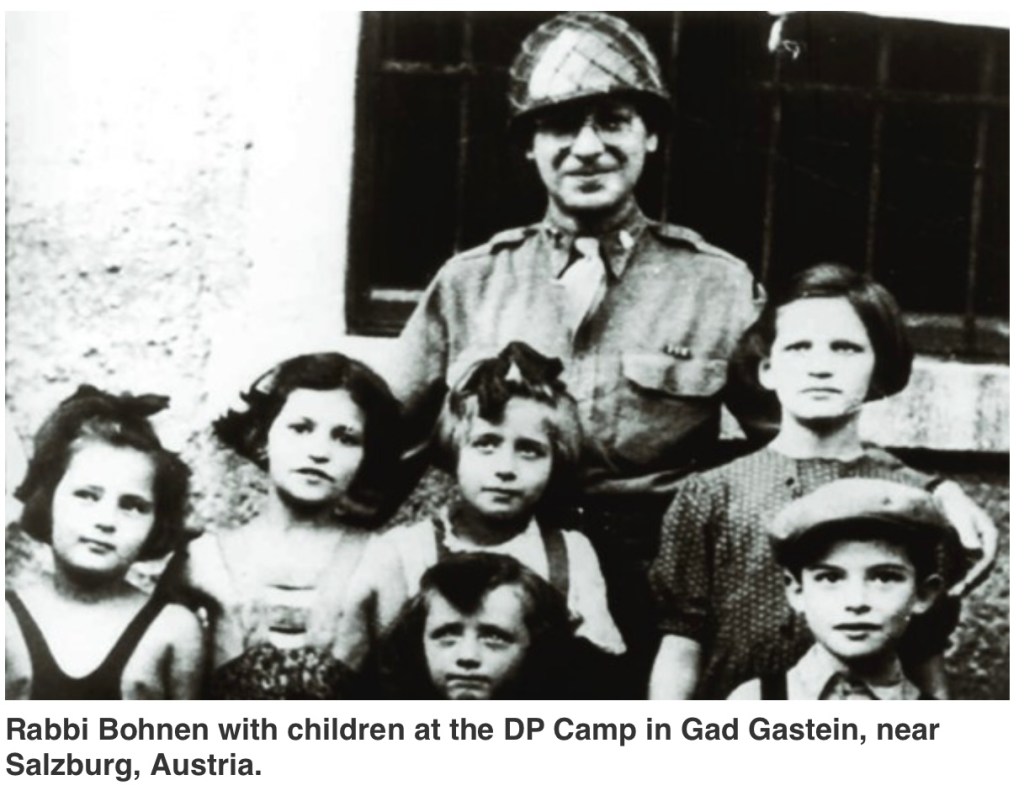
Following the end of hostilities, Rabbi Bohnen remained in Europe for nearly a year, serving as an advisor at a displaced persons camp in Bad Gastein, near Salzburg, Austria. There, he worked to support the rehabilitation and resettlement of displaced Jewish survivors.
After returning to the United States, he resumed his role as a respected rabbi within Rhode Island’s Jewish community and served on numerous civic and communal boards, including the United Fund, Jewish Family Welfare, the General Jewish Committee, and the Council of Community Services. He also served congregations in Pennsylvania, New York, and Rhode Island, and later became President of the Rabbinical Assembly.
Rabbi Bohnen was known for rarely speaking about his wartime experiences. Only later in life, as broader conversations about the Holocaust became more open, did he begin to share some of what he had witnessed. In concluding the letter written to his wife after Dachau, he reflected, “I shall never forget what I saw, and in my nightmares the scenes recur… No possible punishment would ever repay the ones who were responsible.”
Rabbi Eli A. Bohnen passed away in 1987, leaving behind a legacy defined by faith, service, and a quiet but enduring witness to history.



 Mass Militaria & Antiques