
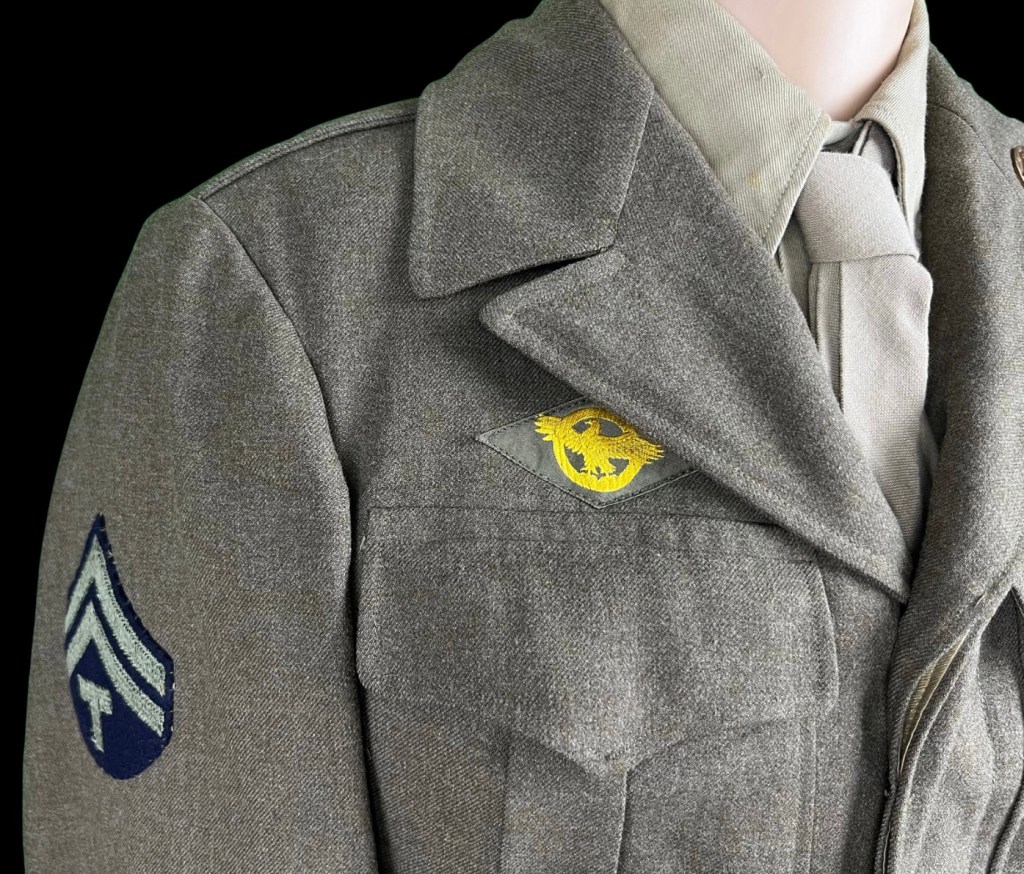
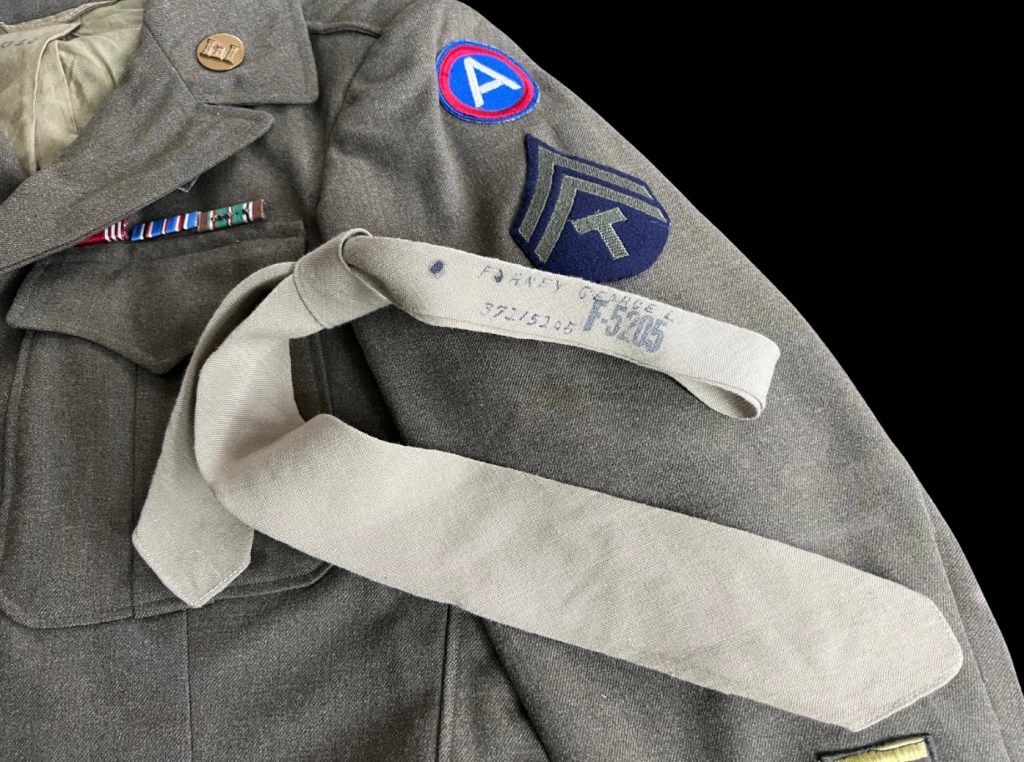
T/5 George L Forney
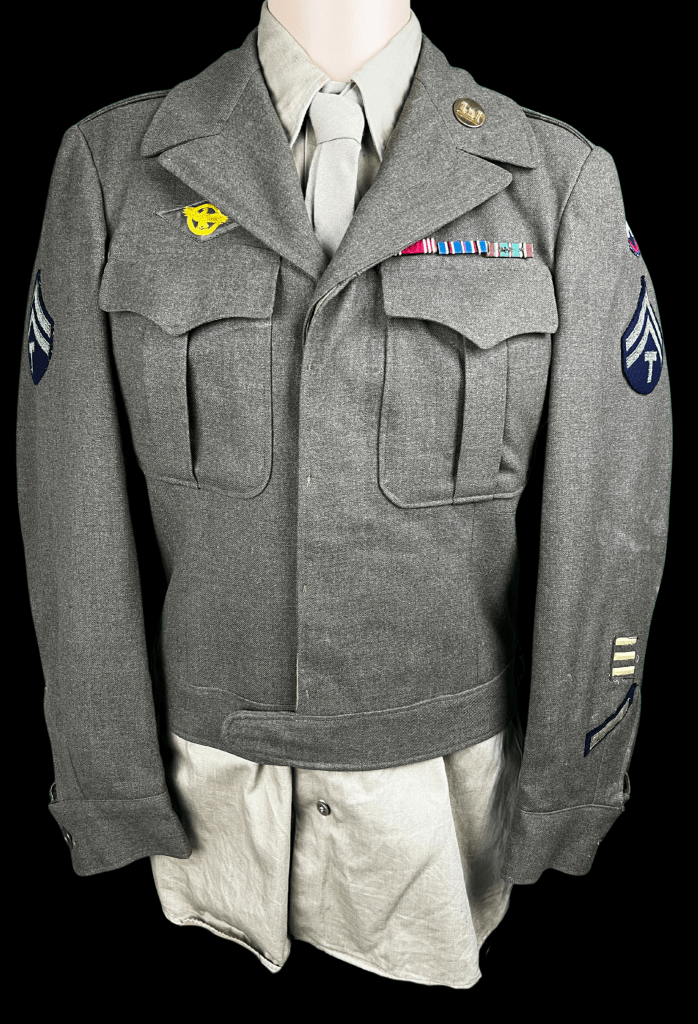
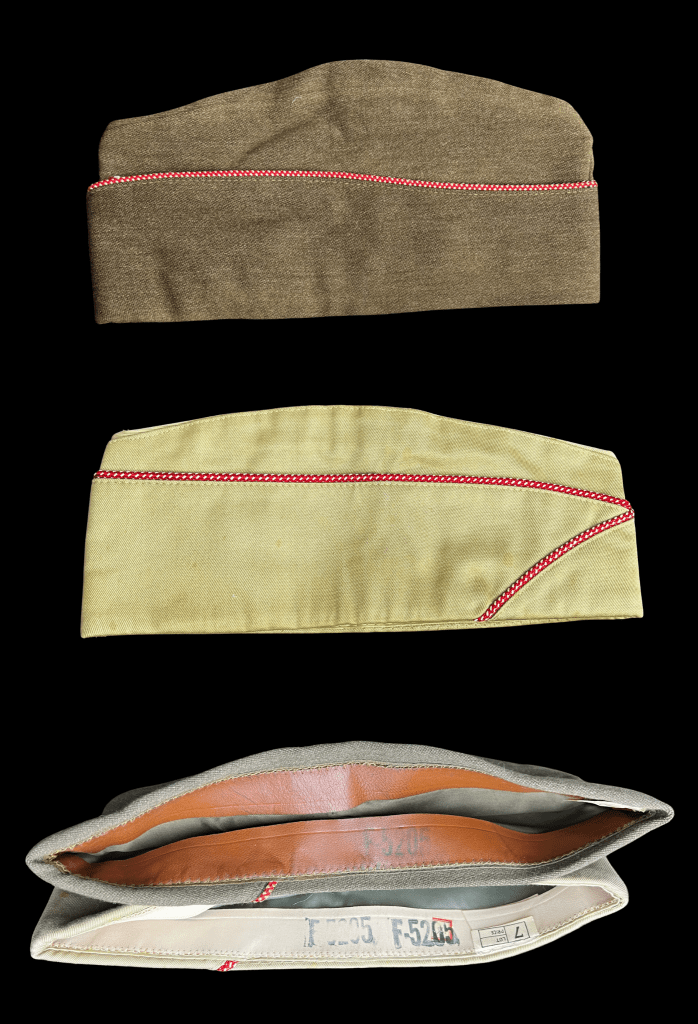
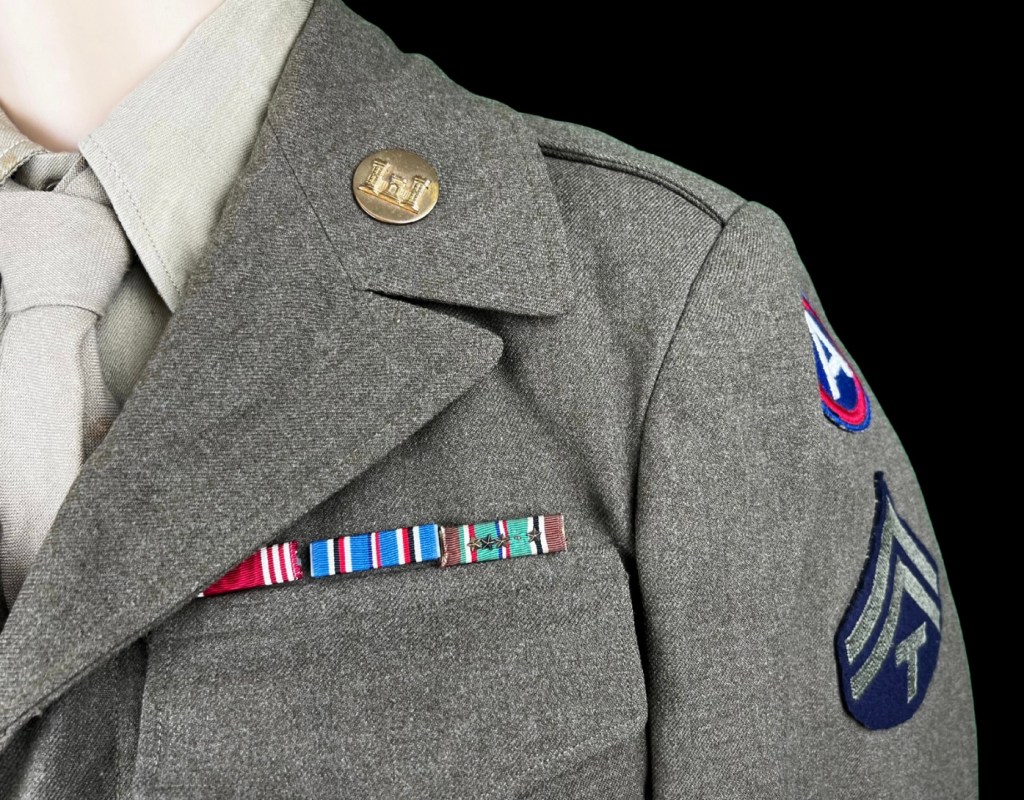
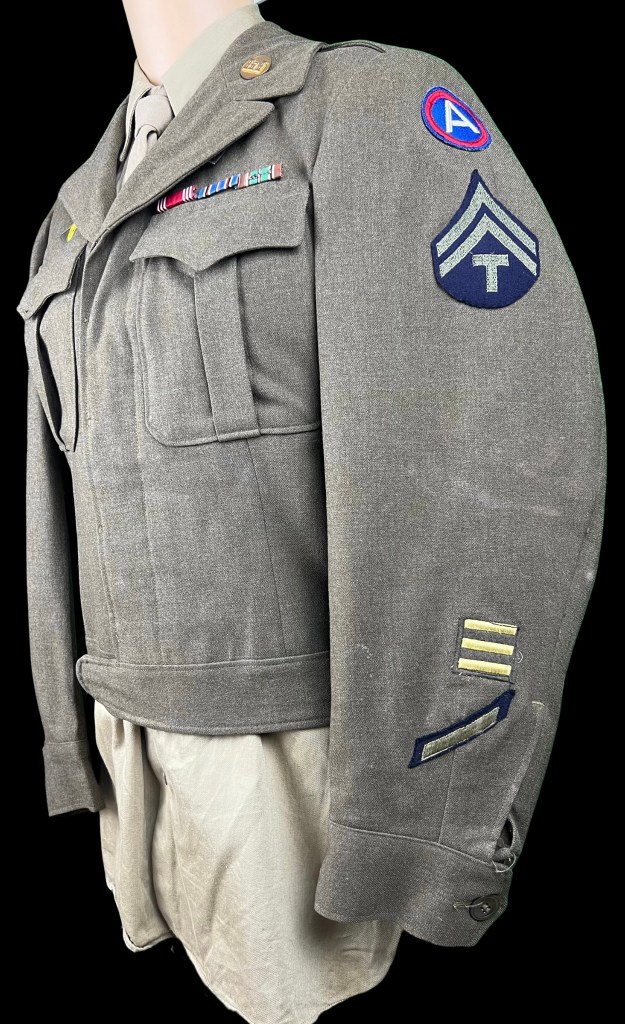
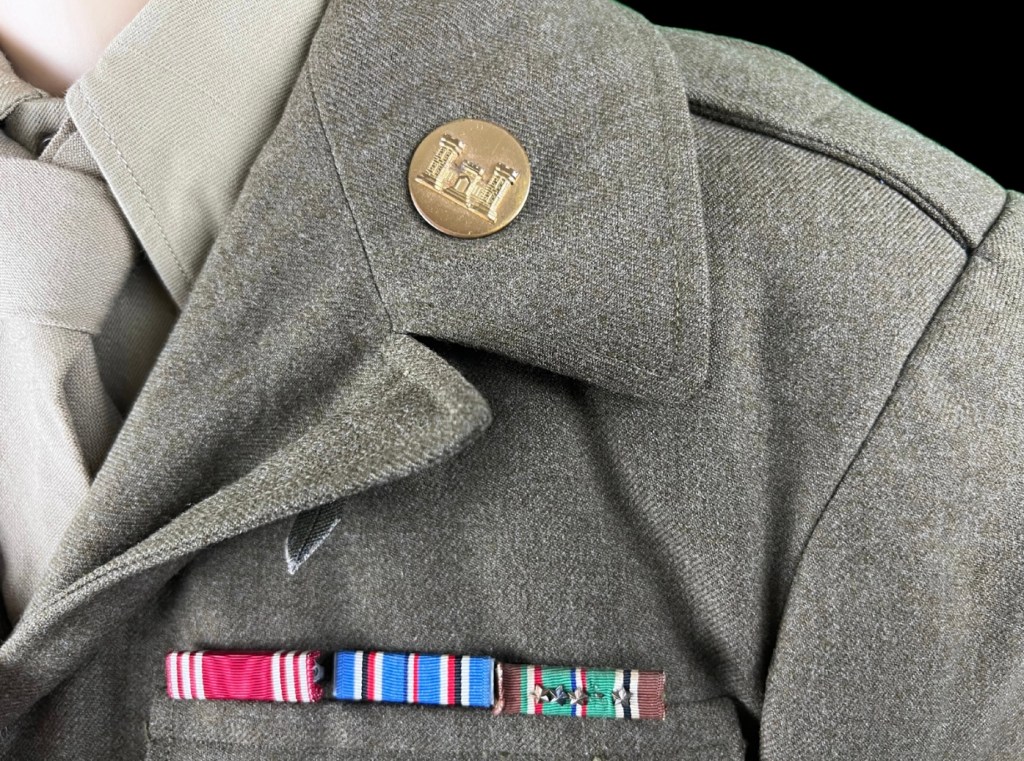
3rd Army – 88th Engineer Heavy Pontoon Battalion – Headquarters and Supply Co.
-
George L. Forney was born on March 22, 1921, in Ulysses, Kansas. During the Great Depression, he worked in the Civilian Conservation Corps, gaining experience in physically demanding labor projects that emphasized discipline and teamwork. He later moved to Portland, Oregon, in 1942. In 1943, he married Margie Colvin, beginning a family that would grow to include children, grandchildren, and great-grandchildren.
Training and Stateside Service
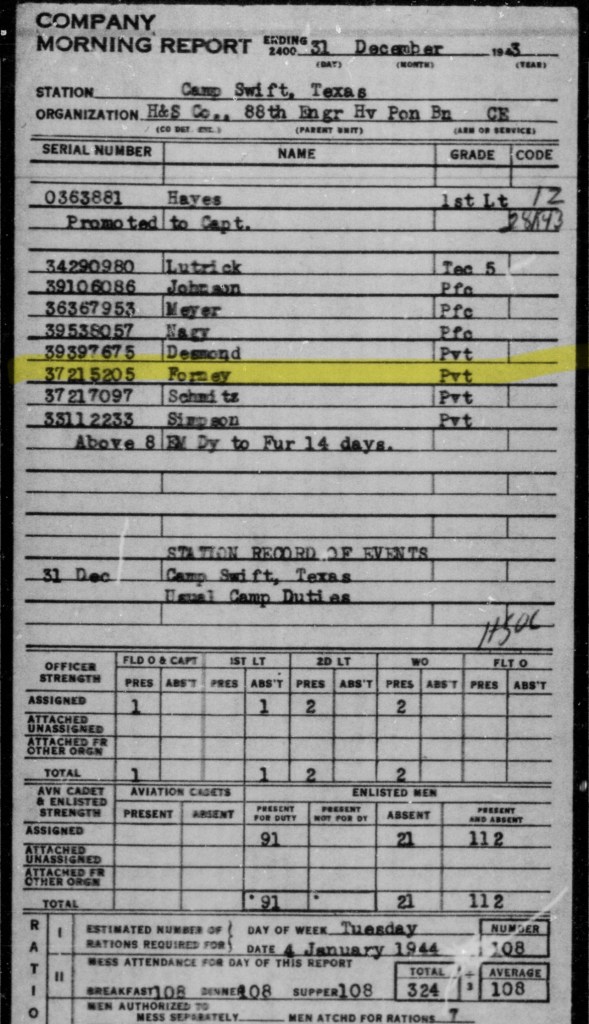
George first appears in military records on the morning report of Headquarters and Supply Company, 88th Engineer Heavy Pontoon Battalion dated December 31, 1943, at Camp Swift, Texas, holding the rank of private. He appears again in mid-January 1944, marking the final documented stateside entries before the battalion prepared for overseas movement.During this period, Forney trained with the 88th Engineer Heavy Pontoon Battalion, a specialized engineering unit responsible for constructing and operating large pontoon bridges and ferries. Training focused on assembling heavy floating bridge sections, operating boats under combat conditions, and moving men and vehicles across rivers while under threat from enemy fire. These skills were essential for supporting advancing infantry and armored units during river crossings in Europe.
The battalion later departed the United States as part of the Army’s buildup for operations in the European Theater, traveling overseas via troop transport and staging through established ports before moving forward into France.
Overseas Service in Europe
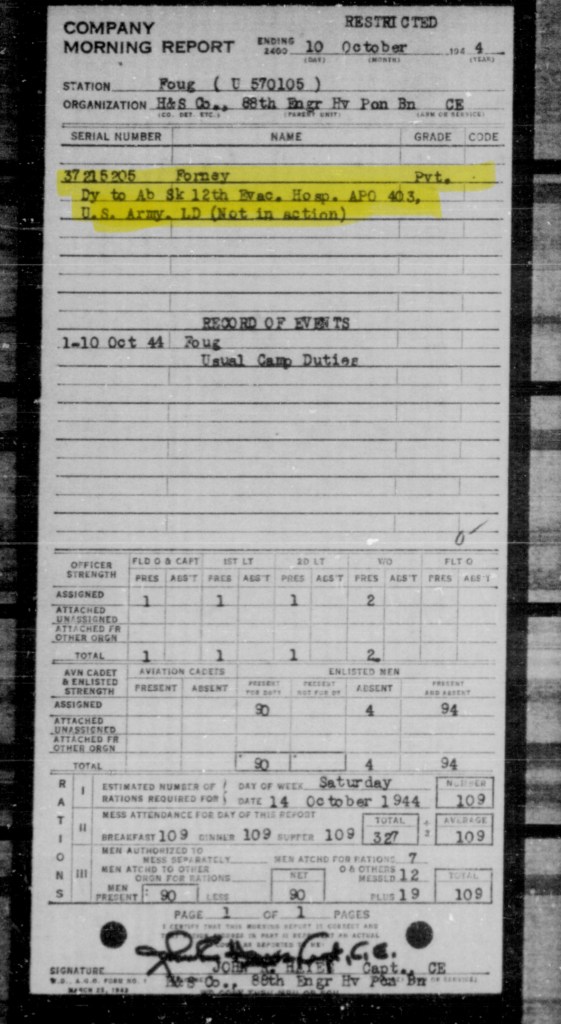
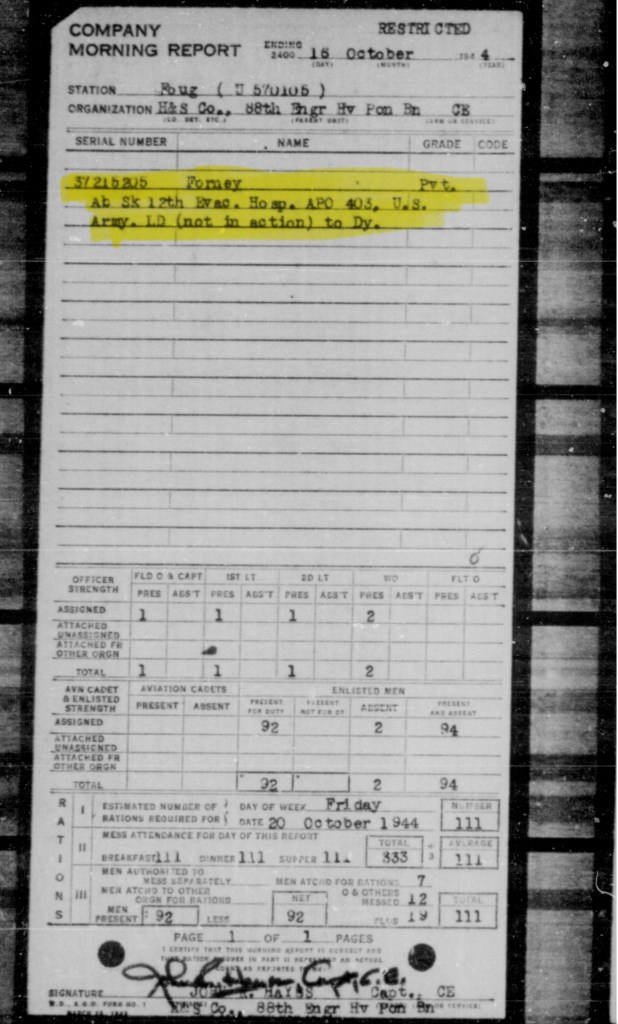
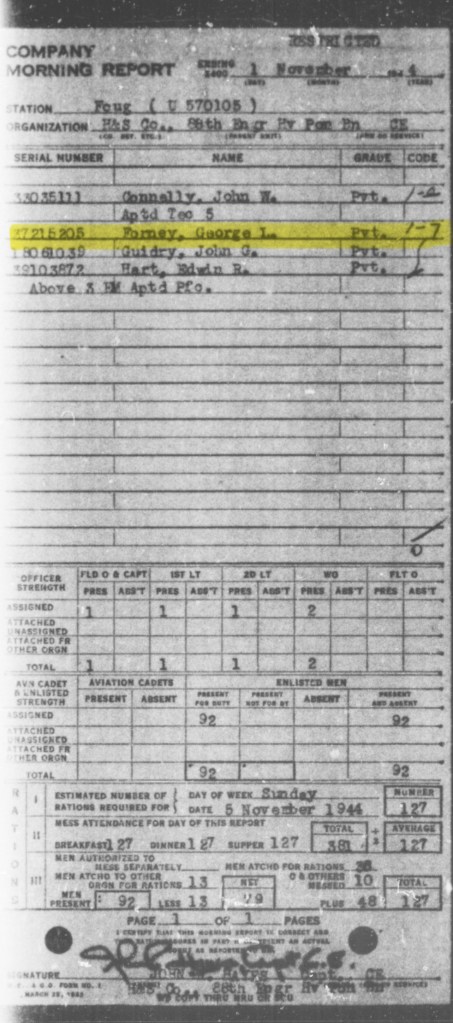
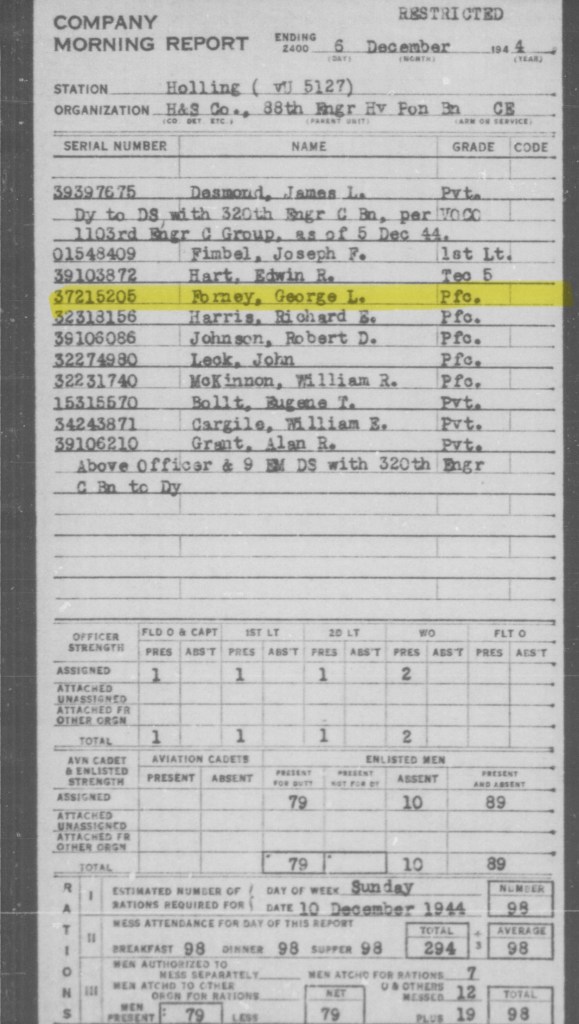
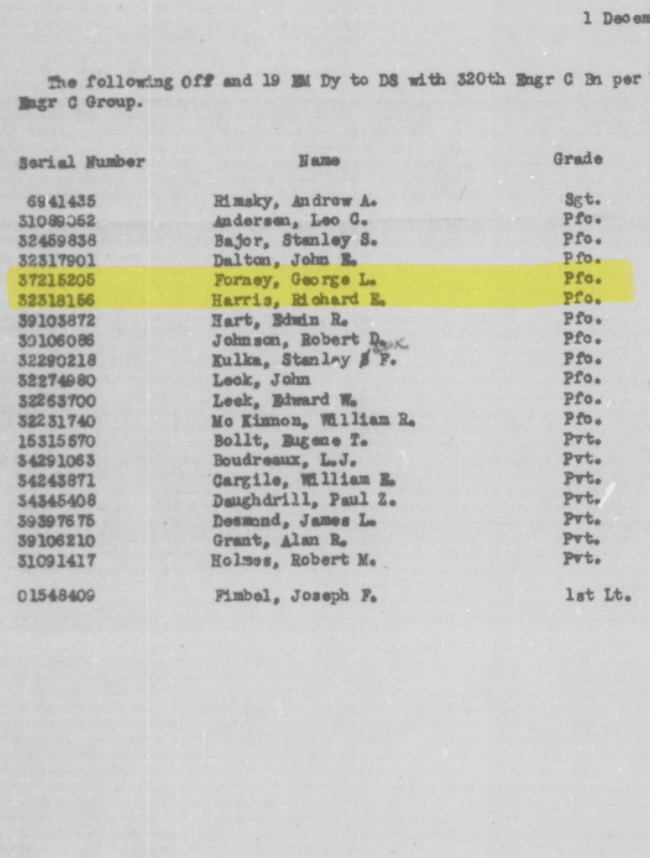
The first documented evidence of George Forney overseas appears on October 10, 1944, when he is listed as absent and sick at the 12th Evacuation Hospital in Foug, France. Morning reports from October 16 show him still hospitalized, indicating a period of illness that temporarily removed him from duty during a critical phase of Allied operations in northeastern France.By November 1, 1944, Forney had recovered and returned to regular duty, with no further mention of illness in the morning reports. On December 1, 1944, records show that personnel from Headquarters Company, 88th Engineer Heavy Pontoon Battalion, including Forney, were temporarily attached to the 320th Engineer Combat Battalion. This attachment placed him under a different engineer unit to support ongoing operations, likely related to bridge construction, maintenance, or river-crossing preparations during continued Allied advances.
The significance of this attachment lies in the role engineer combat battalions played at this stage of the war, often working near the front lines to ensure mobility for infantry and armored forces. Temporary reassignments like this were common when additional engineering manpower was needed for urgent missions.
Less than a week later, on December 6, 1944, a morning report lists Forney back with Headquarters and Supply Company, 88th Engineer Heavy Pontoon Battalion, now located near Holling, France, likely a small town or staging area. This is the final available morning report documenting his movements overseas. Based on the known history of the 88th, he remained with the battalion for the remainder of the war, continuing to support Allied operations through engineering work essential to sustaining the advance across Europe.
Postwar Life and Legacy
After the war, George returned to Portland, Oregon, where he built a long civilian career as a mail carrier with the U.S. Postal Service, serving for 27 years. George L. Forney passed away on January 24, 2007, at the age of 85.



 Mass Militaria & Antiques