
Constantine C. Peters
US Army Air Corps – 122nd Liaison Squadron – 68th Reconnaissance Group
-
Constantine C. Peters grew up in Attleboro, Massachusetts, with his five siblings. He was known as a bright and well-rounded student, graduating from Attleboro High School in 1934. Before the war, he assisted his father in running the family business on Park Street, Attleboro, MA.
Pre-WWII / Civilian Experience
Having gained some civilian flying experience before the war, Constantine decided to enlist in the United States Army Air Corps shortly after the outbreak of World War II.
Enlistment and Training
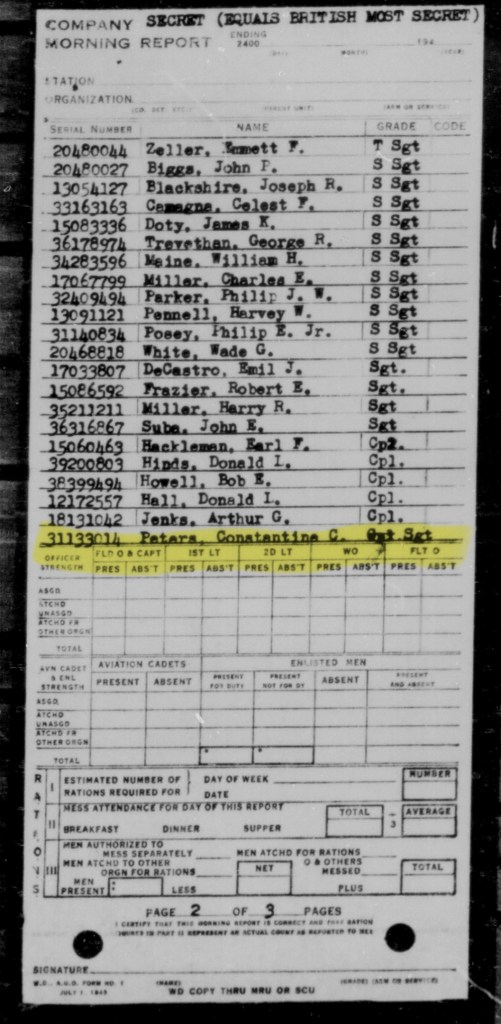
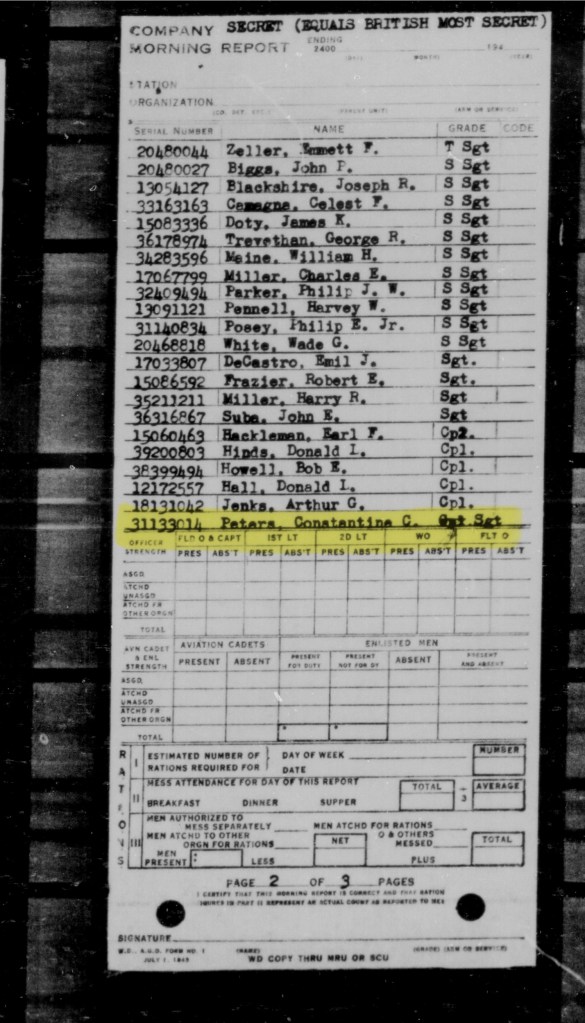
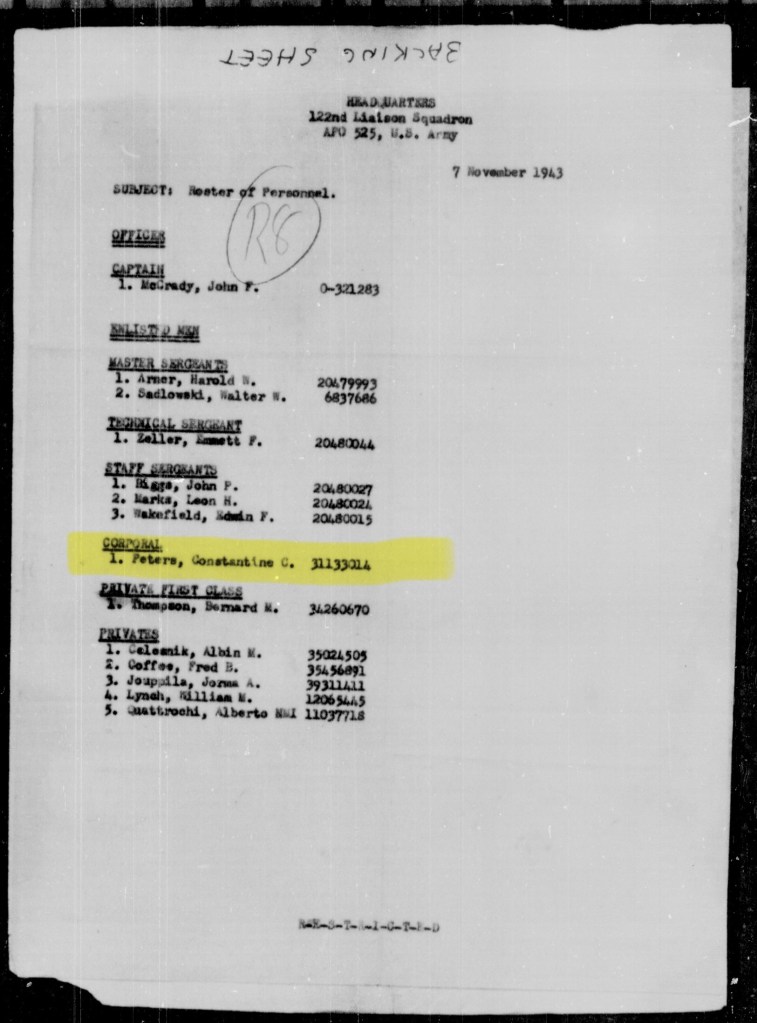
On June 5th, 1942, Constantine enlisted in the Army Air Corps. After completing extensive training, he was assigned to the 122nd Liaison Squadron of the 68th Reconnaissance Group with the MOS 772 (Liaison Pilot).
Overseas Service / Mediterranean Theater
Constantine arrived overseas in the Mediterranean Theater and flew his first combat missions during Operation Torch. From there, his squadron patrolled the Mediterranean from bases in North Africa and Italy, engaging in strafing runs, bombing missions, and U-boat hunting. The unit also trained fighter pilots and air crews and conducted reconnaissance missions, though the unit performed relatively few traditional observation or liaison tasks.
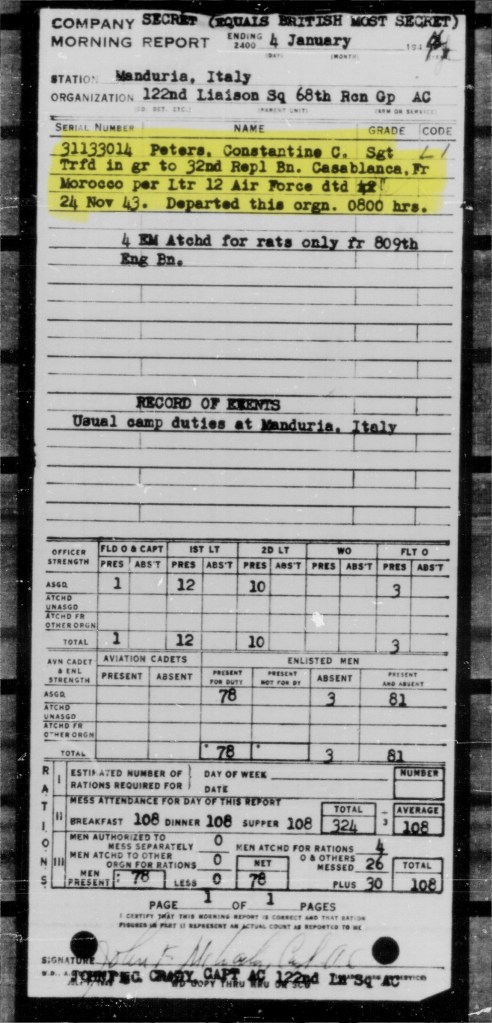
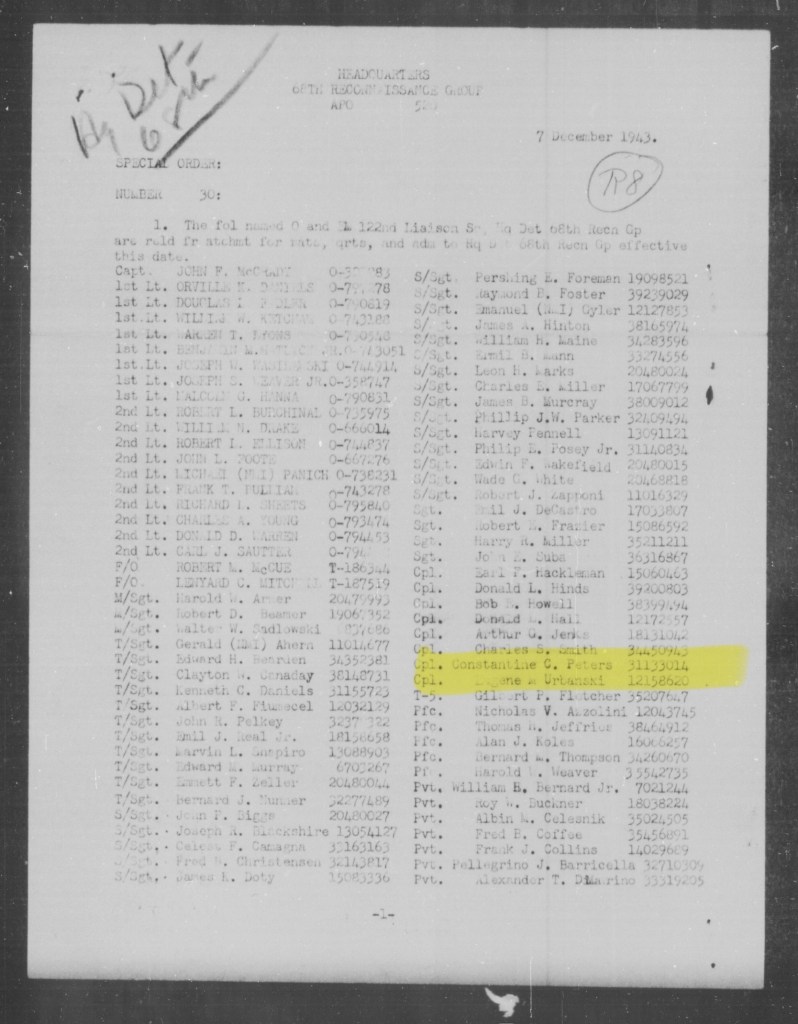
In October 1943, Constantine became involved with the Office of Strategic Services (OSS) for special operations in France. A historical study notes:
“In anticipation of this expansion, the Special Flight Section was discontinued and the OSS planes and air crews were formed into a new organization which took the designations and Tables of Organization and Equipment (TO&E) of the 122nd Liaison Squadron and the 68th Reconnaissance Group. The Group would provide a headquarters for the squadron. Spaatz selected these two units as the basis for his ‘Special Operations Flight’ because both were currently involved in secondary crew training duties which were apparently no longer necessary. Spaatz assigned the units to the newly formed Fifteenth Air Force.”
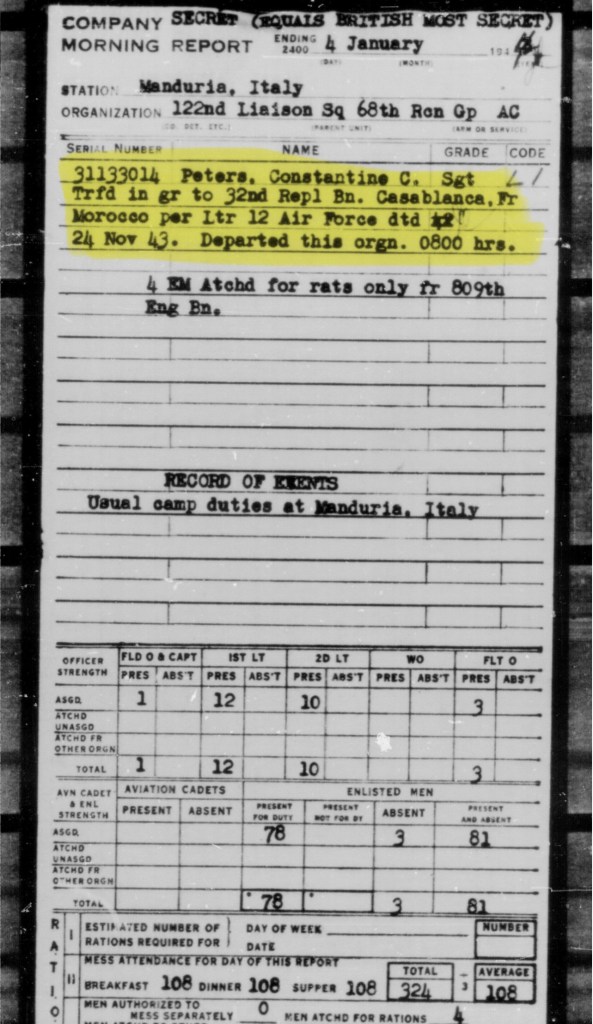
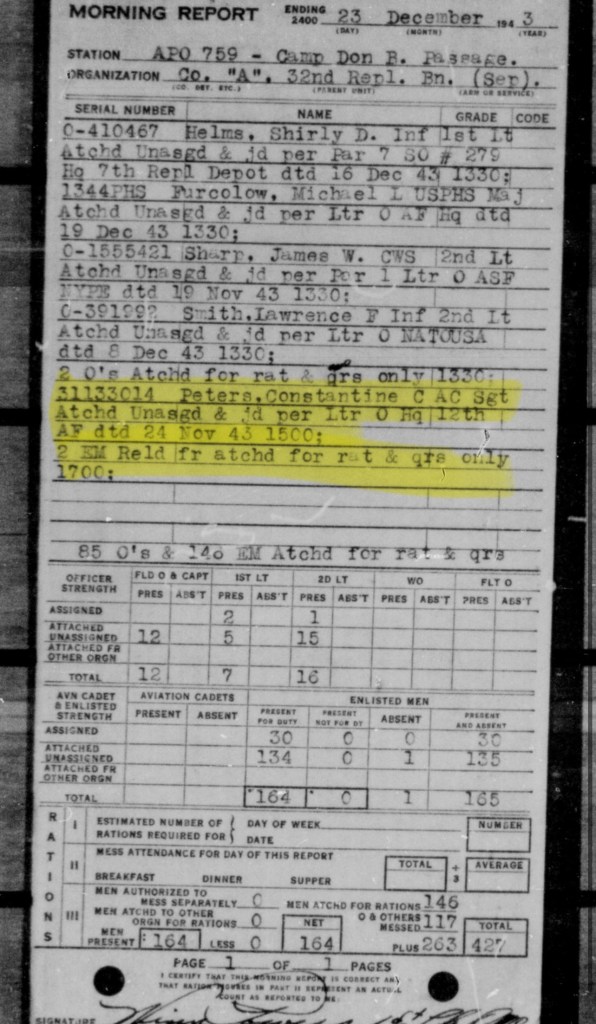
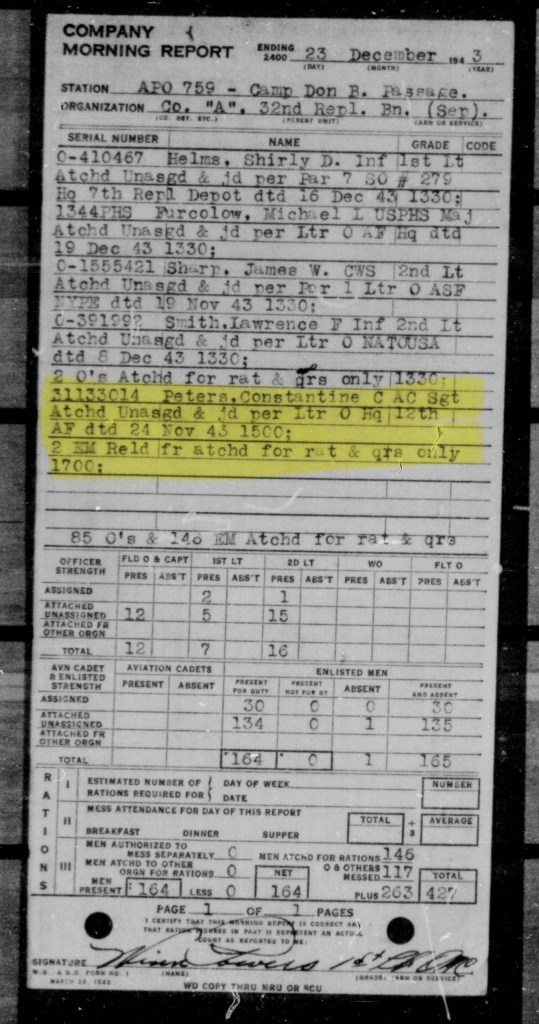
In December 1943, the unit moved to Italy, and Constantine returned to the United States shortly thereafter for R&R after 15 months of continuous service.
Return Home and Reassignment
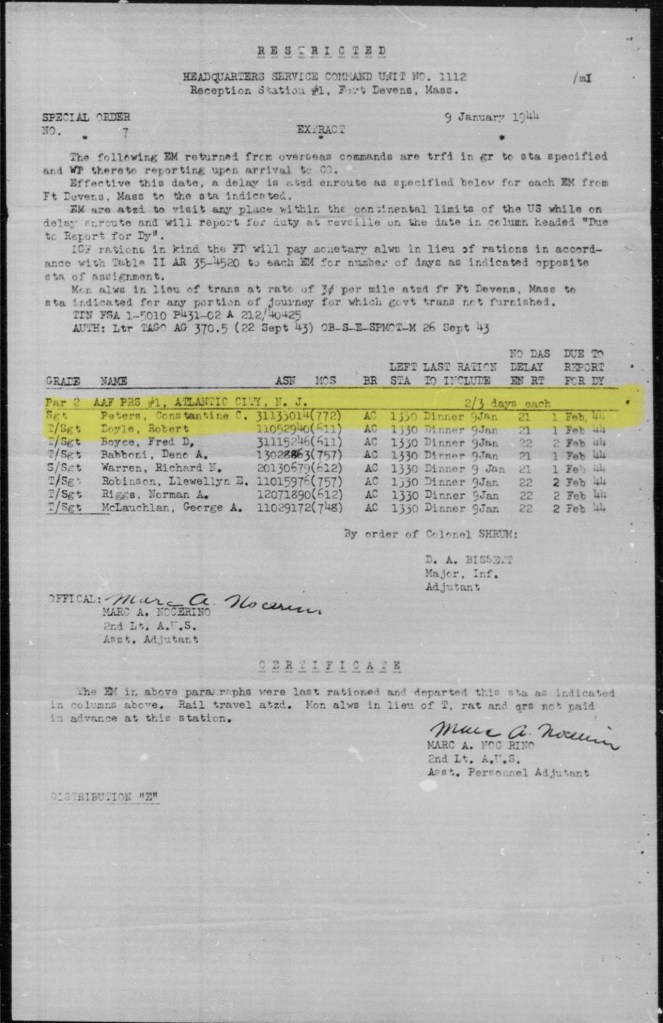
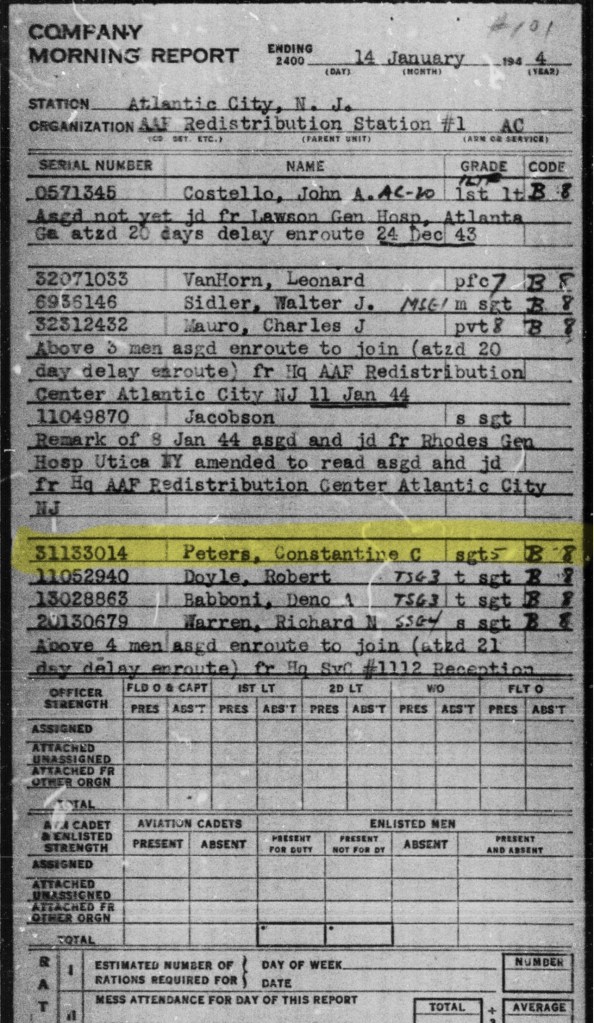
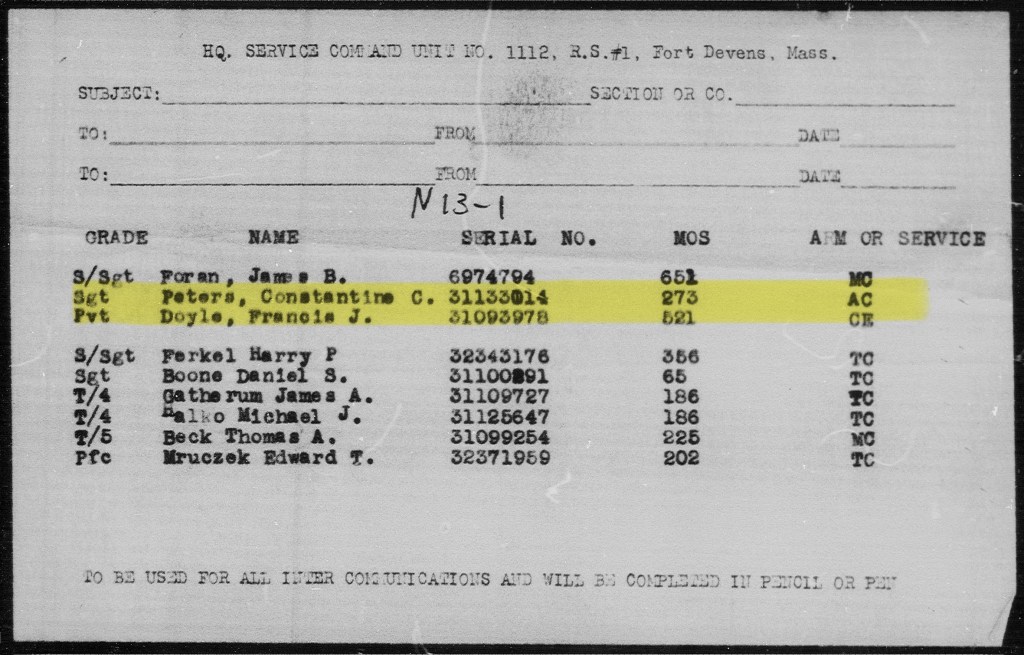
On January 9th, 1944, Constantine returned to the U.S. and was granted a 21-day furlough. An article in the Attleboro Sun on January 14th, 1944, described his homecoming and reflections on his service overseas.
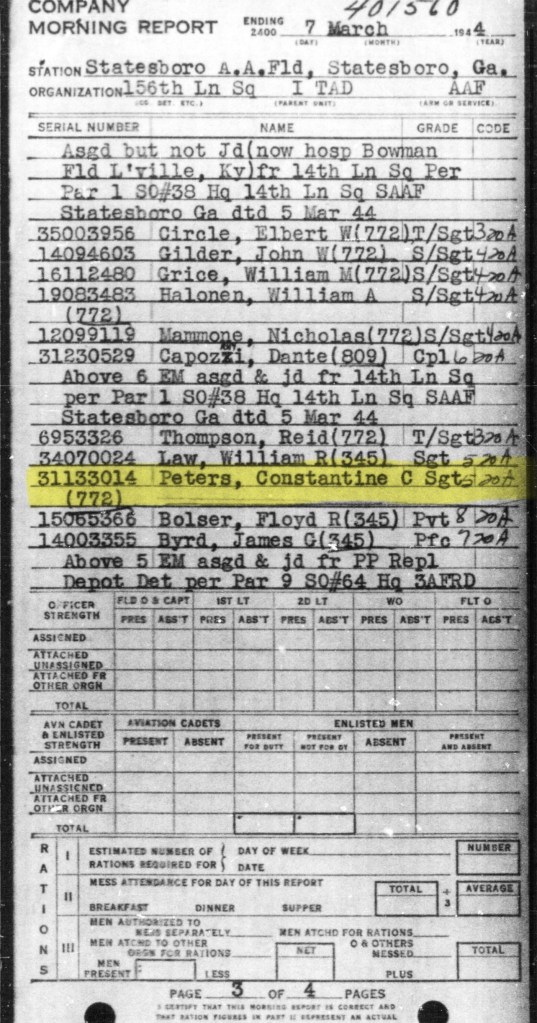
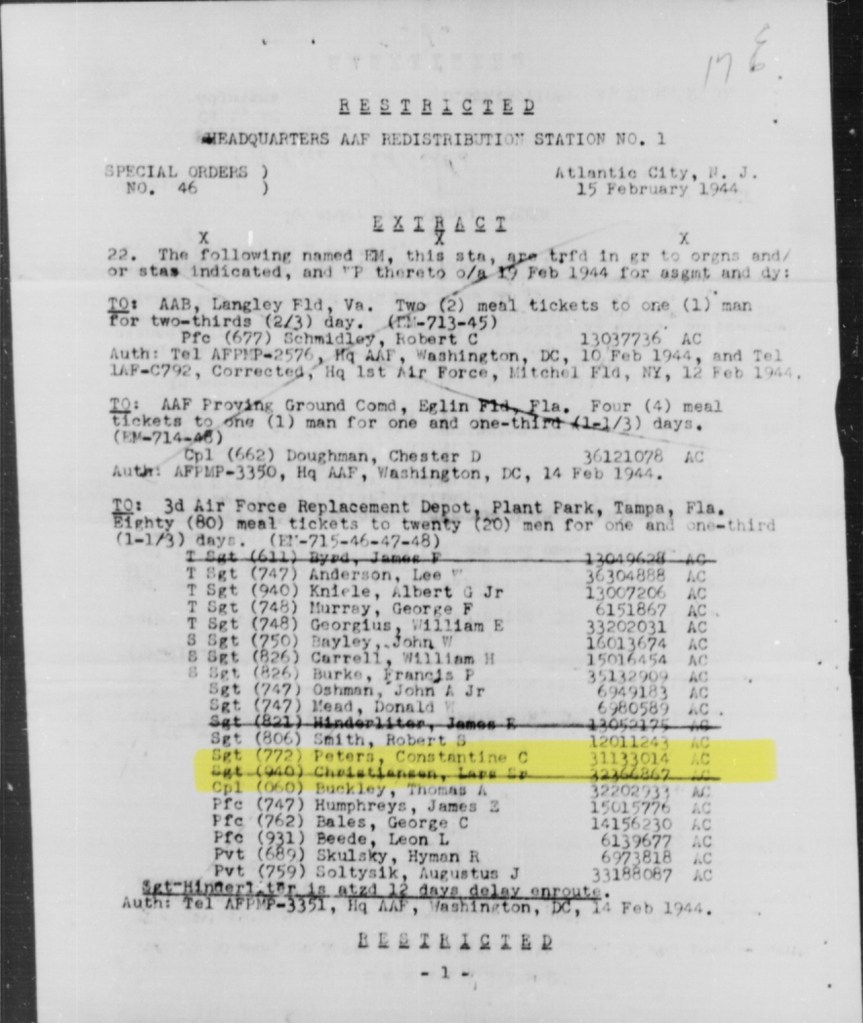
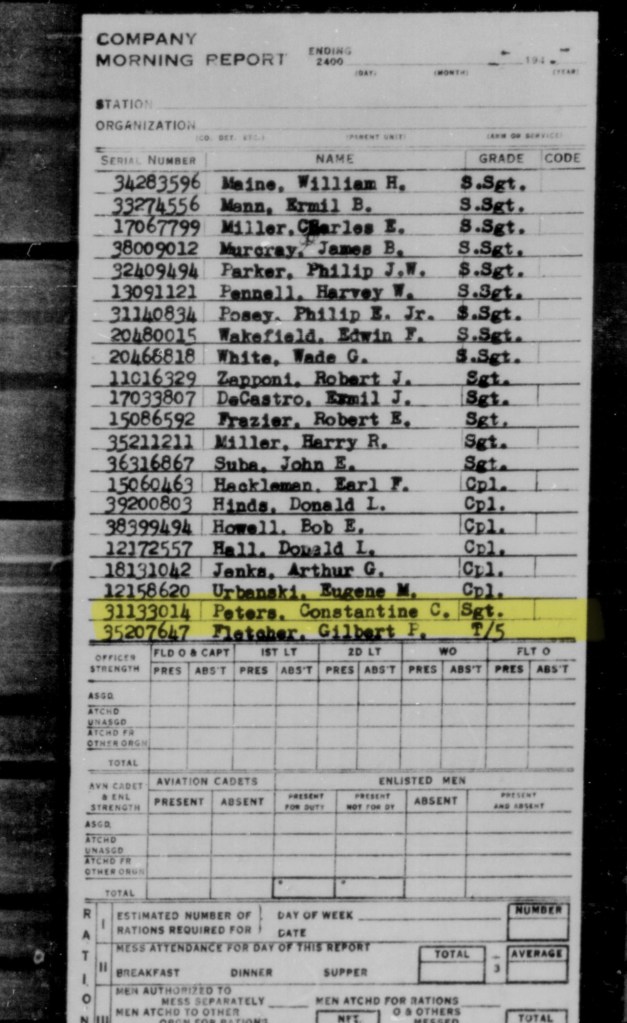
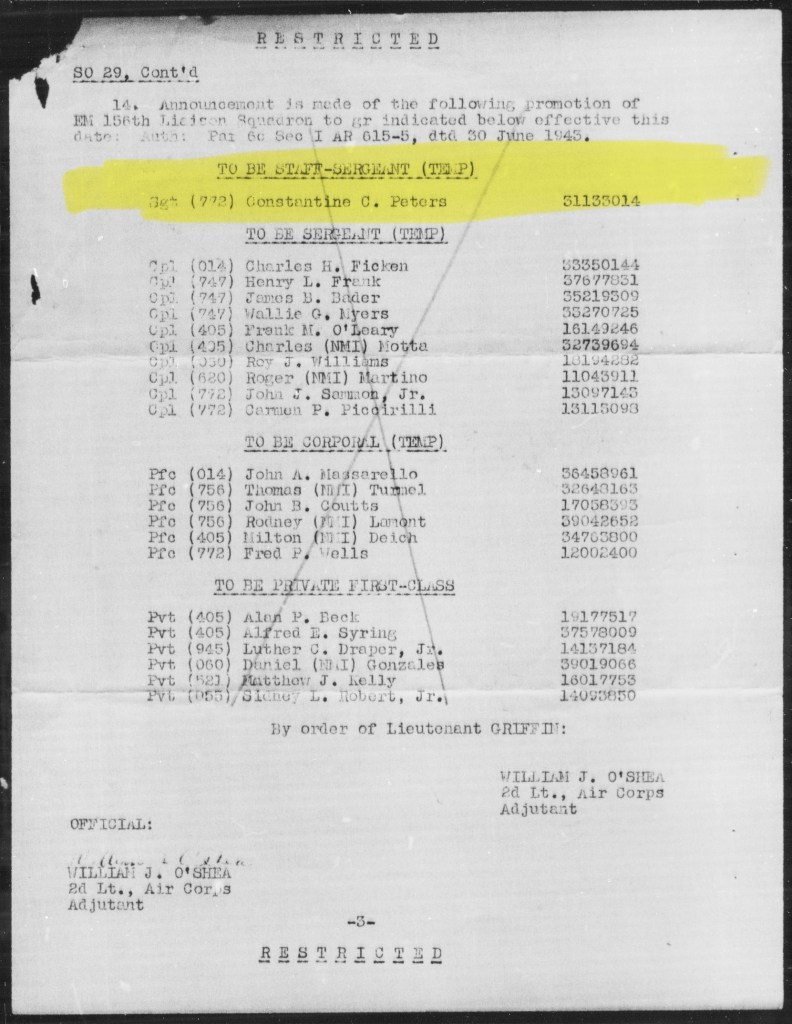
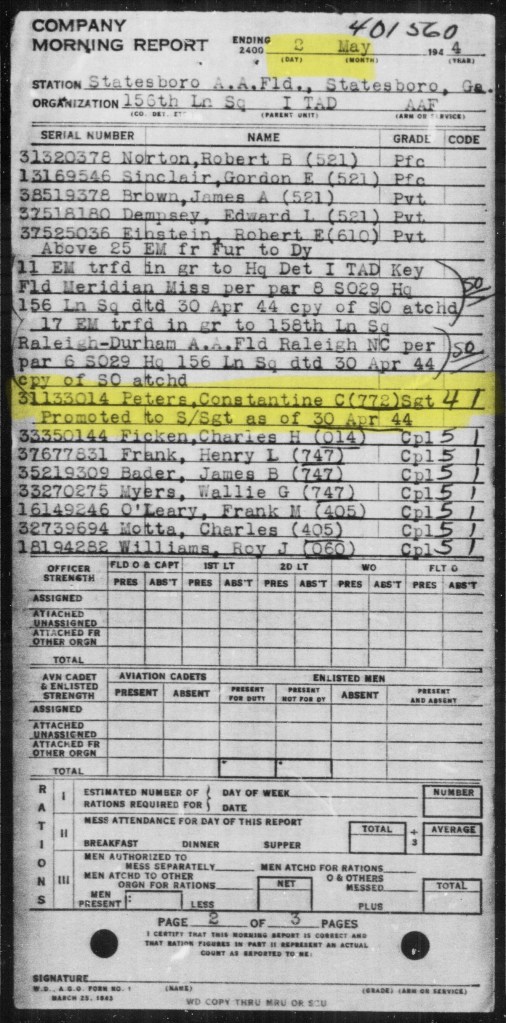
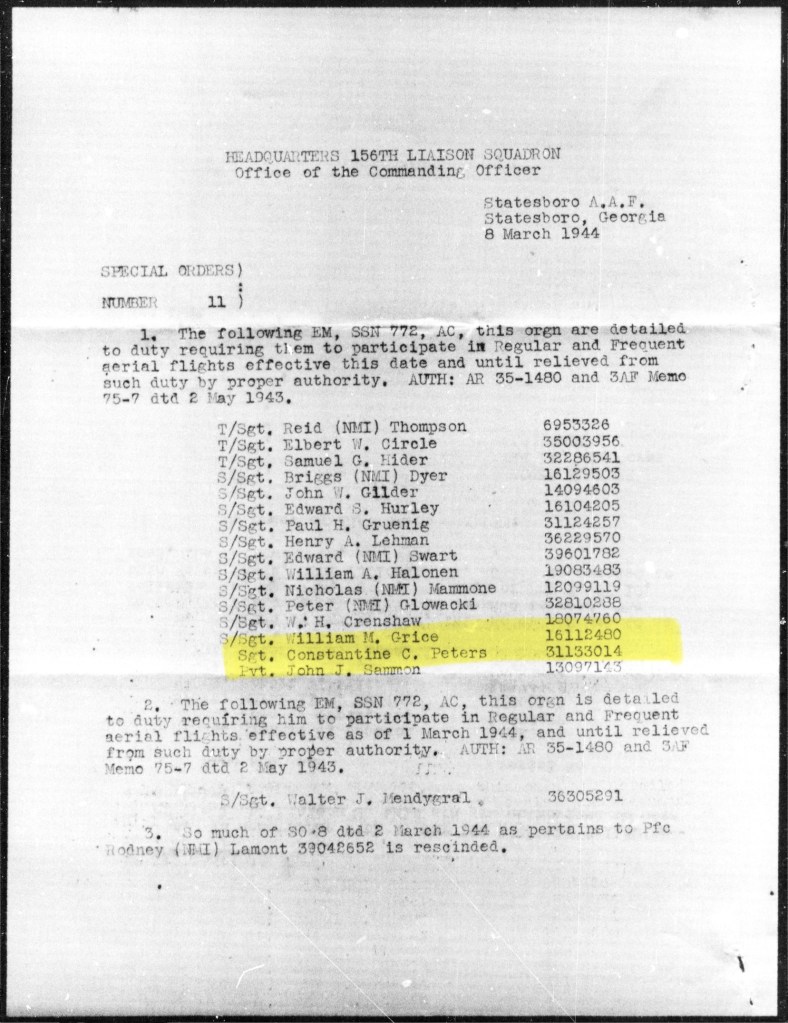
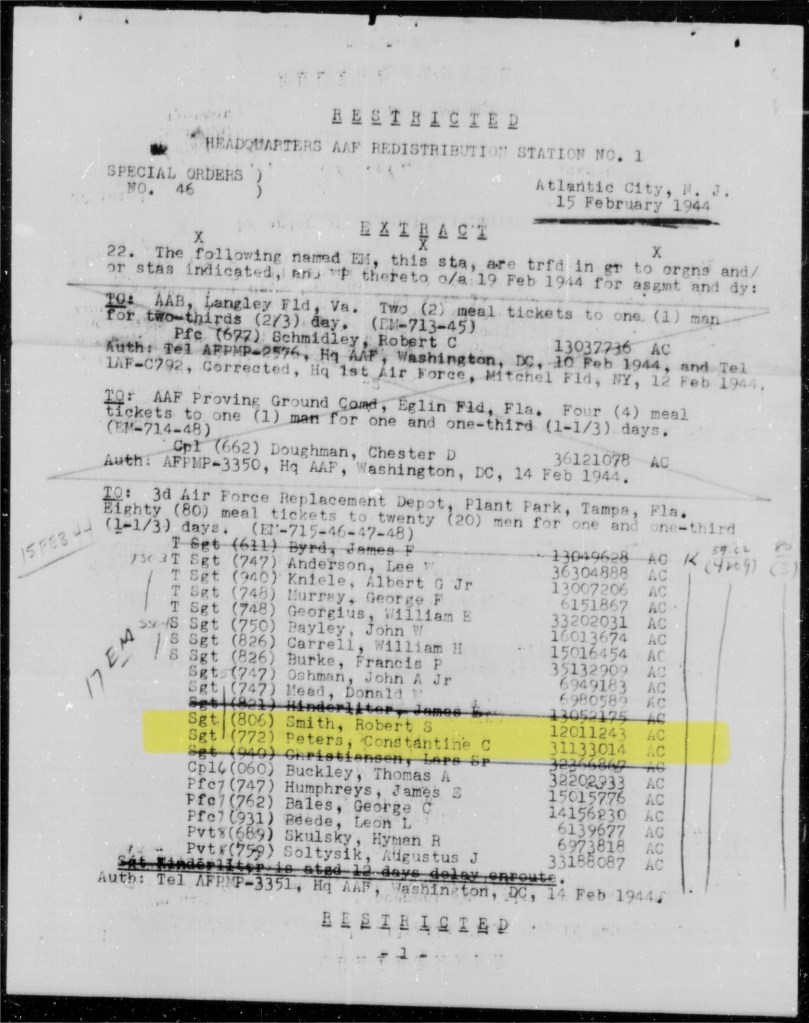
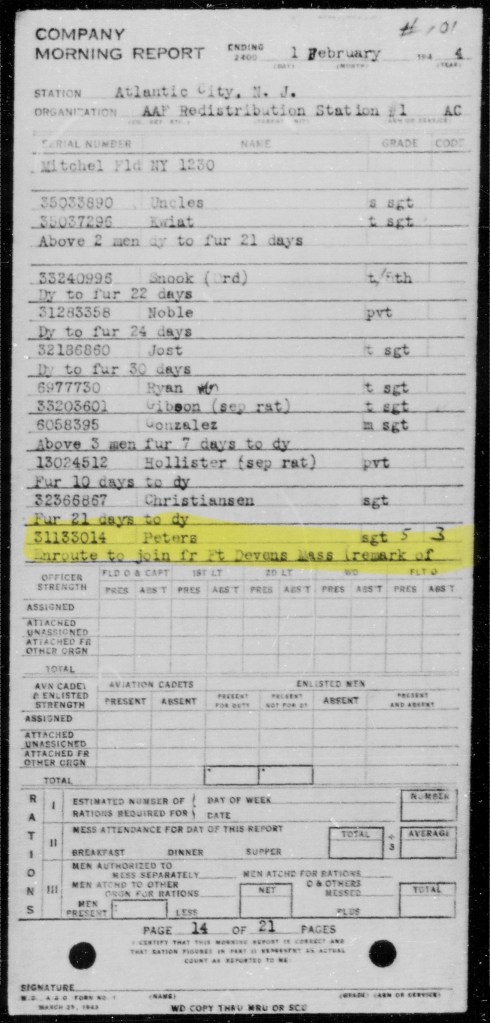
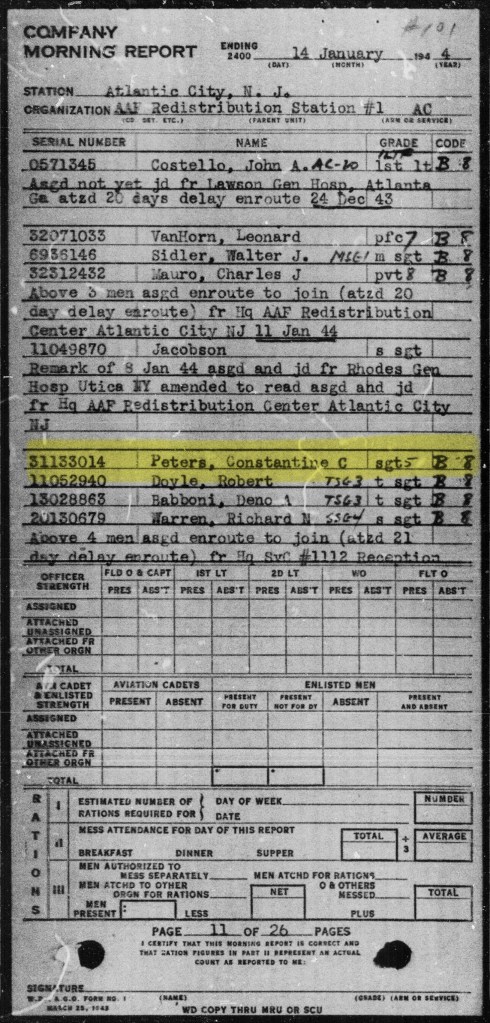
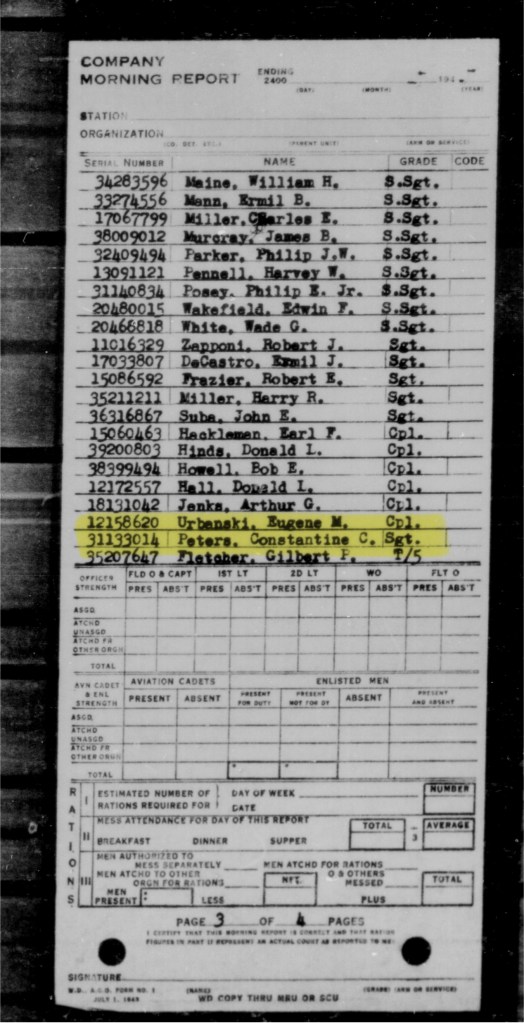
On February 1st, 1944, he reported to the AAF Redistribution Station No. 1 in Atlantic City, New Jersey, and was subsequently transferred to Plant Park, Tampa, Florida. On March 7th, he arrived at Statesboro Army Air Field in Georgia with the 156th Liaison Squadron. His duties included regular and frequent aerial flights until relieved by proper authority. On April 30th, 1944, Constantine was promoted to Staff Sergeant, the only sergeant in his squadron to receive that rank.
Death in Service
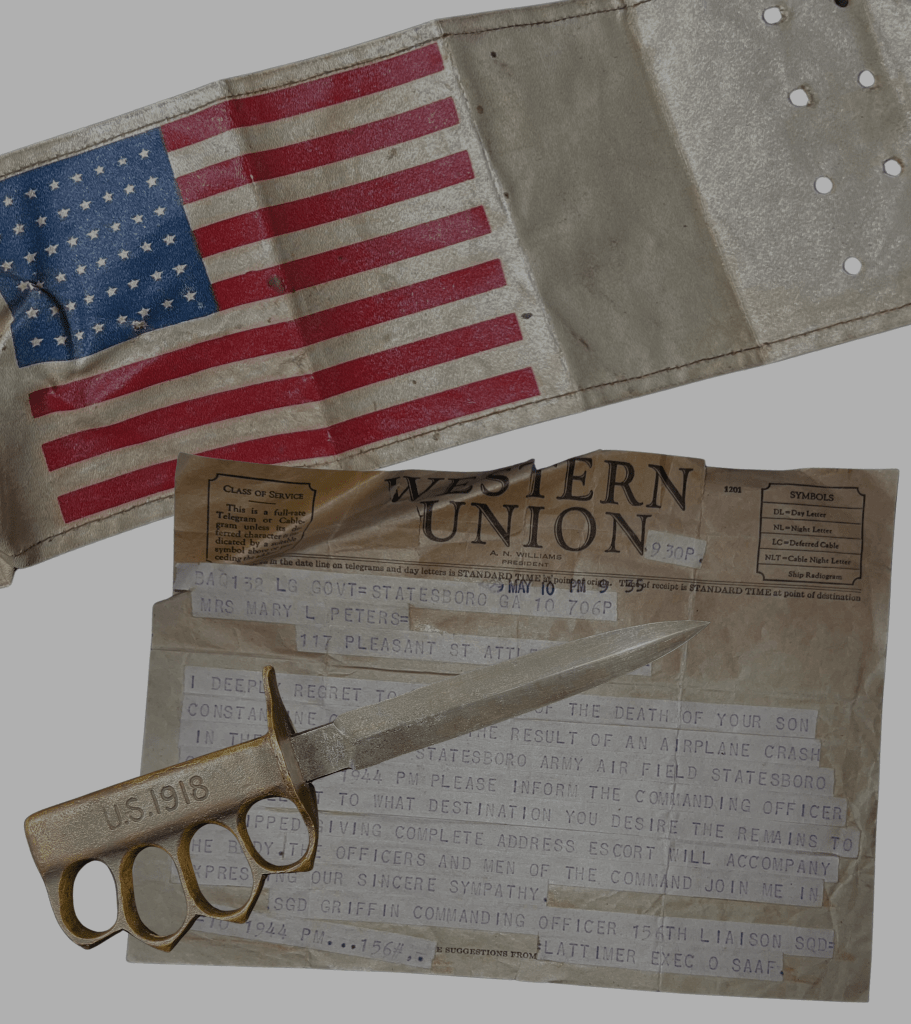
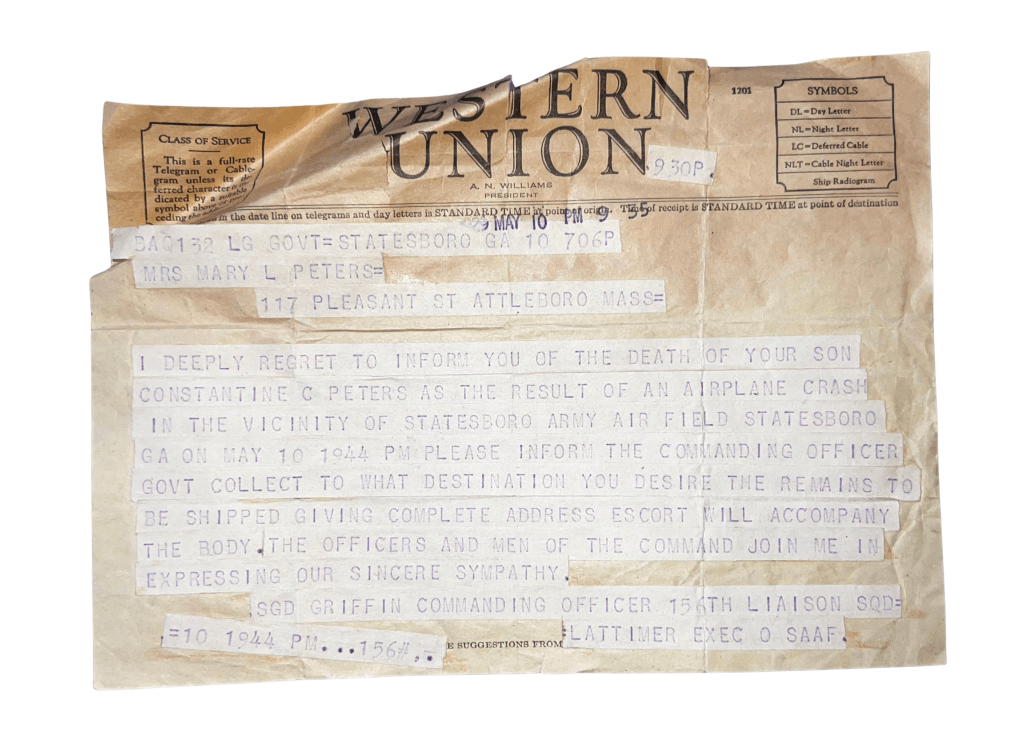
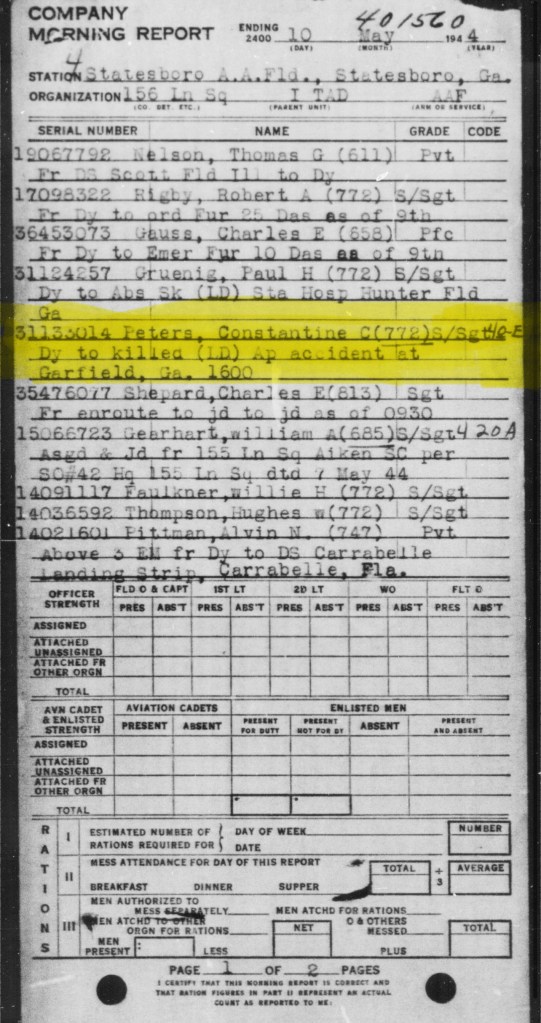
On May 10th, 1944, during a routine cross-country flight at Statesboro Army Air Field, Constantine’s aircraft crashed, killing him instantly while his co-pilot survived unharmed. The loss deeply affected his family, friends, and the community as a whole. The commanding officer of the 156th Liaison Squadron sent the following telegram to the family:
“I deeply regret to inform you of the death of your son, Constantine C. Peters, as the result of an airplane crash in the vicinity of Statesboro Army Air Field, Statesboro, Georgia, on May 10, 1944. Please inform the commanding officer, government collect, to what destination you desire the remains to be shipped, giving complete address. An escort will accompany the body. The officers and men of the command join me in expressing our sincere sympathy.”
Legacy and Memorial
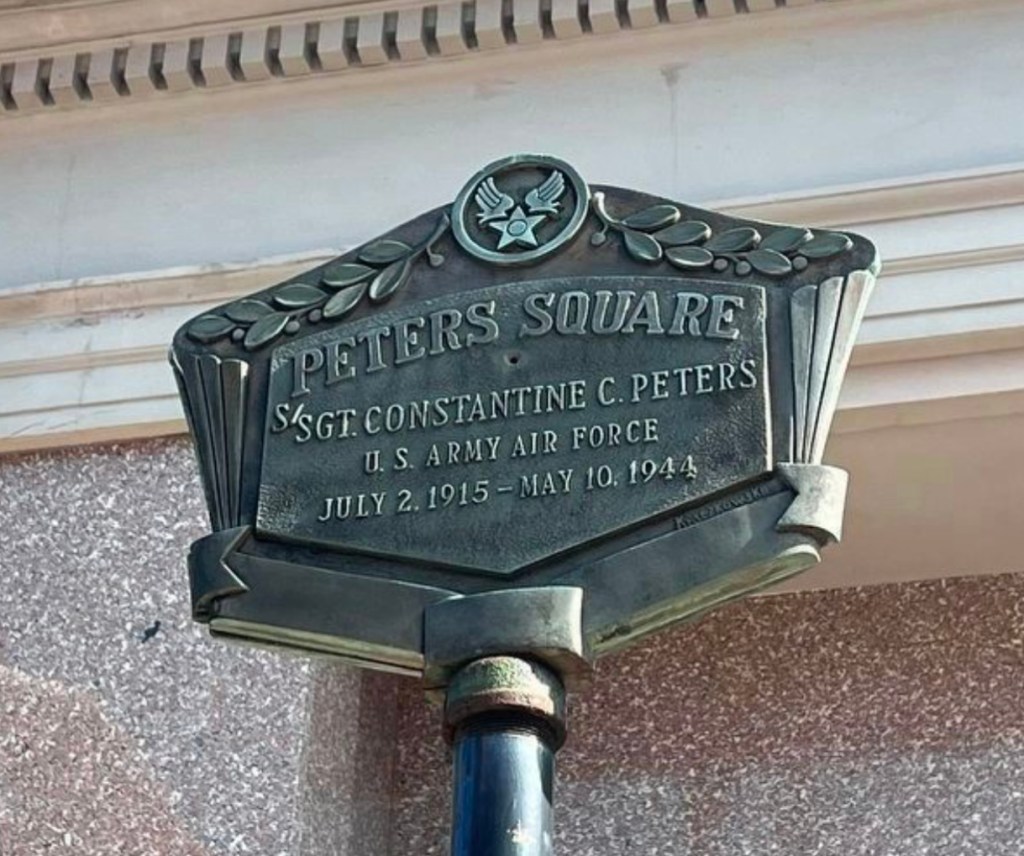
Following his death, friends and family sought to preserve Constantine’s memory. In 1951, they petitioned to rename the intersection of Park Street, Bank Street, and Railroad Avenue to “Peters Square,” near his father’s business. The petition, signed by over 40 family members and friends, was approved and dedicated during the Armistice Day celebration that year. Attleboro saw one of its largest community turnouts since World War I for the event, which included the unveiling of S/Sgt. Peters’ memorial plaque. Constantine was the first Attleboro serviceman to be killed during World War II, and both the plaque and the square bearing his name remain today.



 Mass Militaria & Antiques