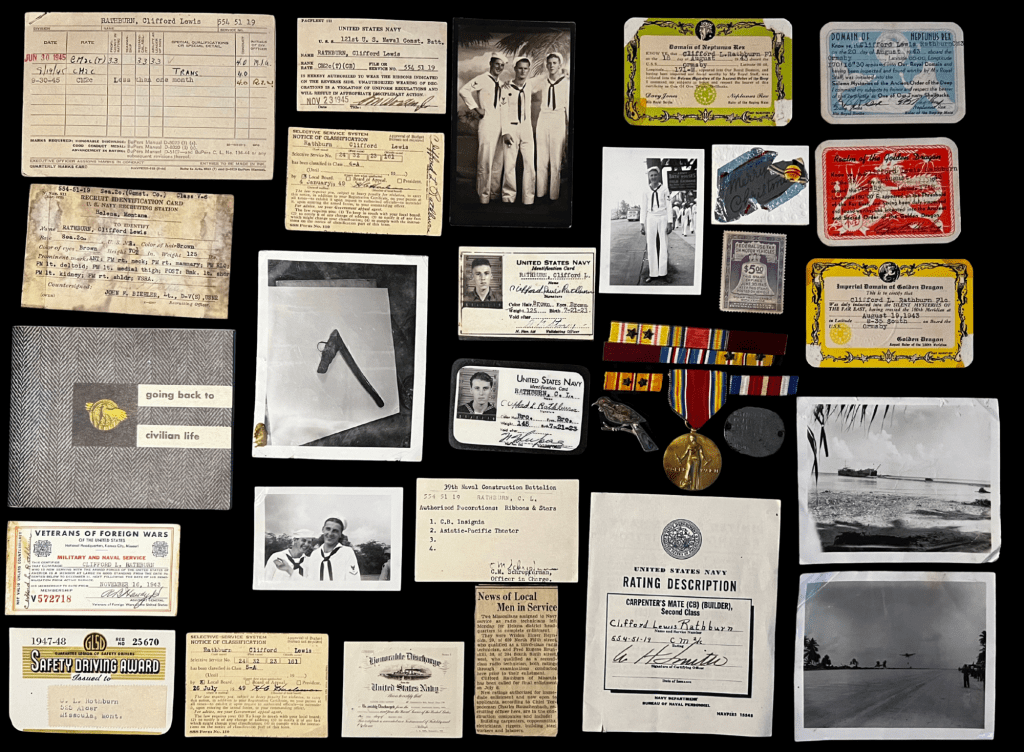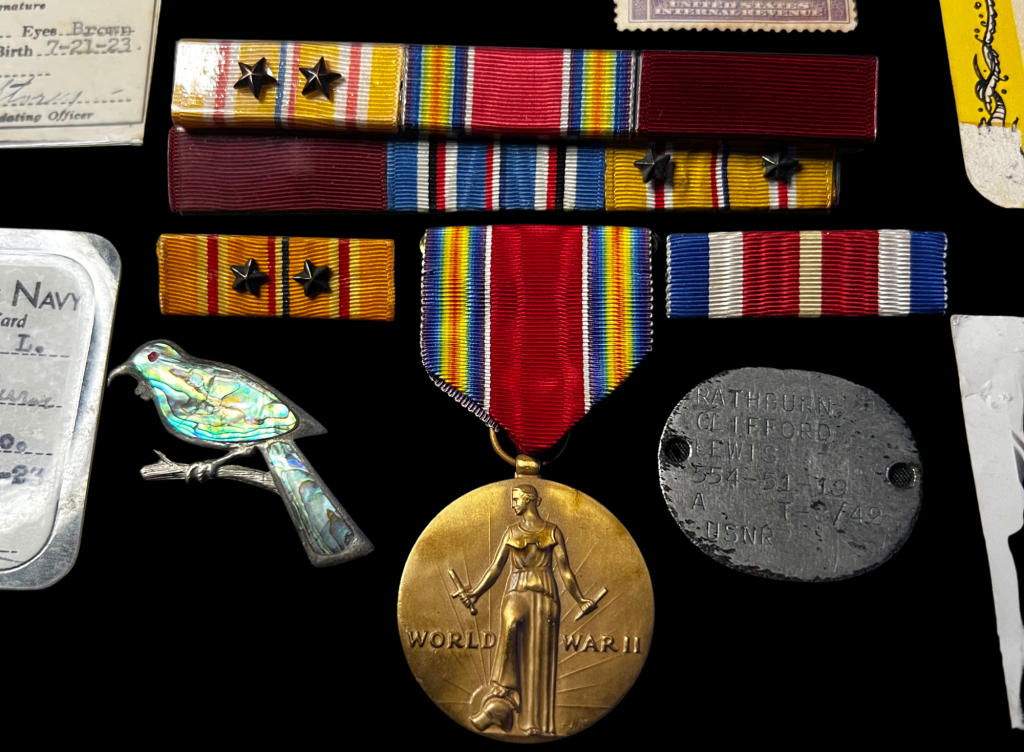
CM3c Clifford L. Rathburn
U.S. Navy – 16th/ 39th/ 51st Naval Construction Battalion
-
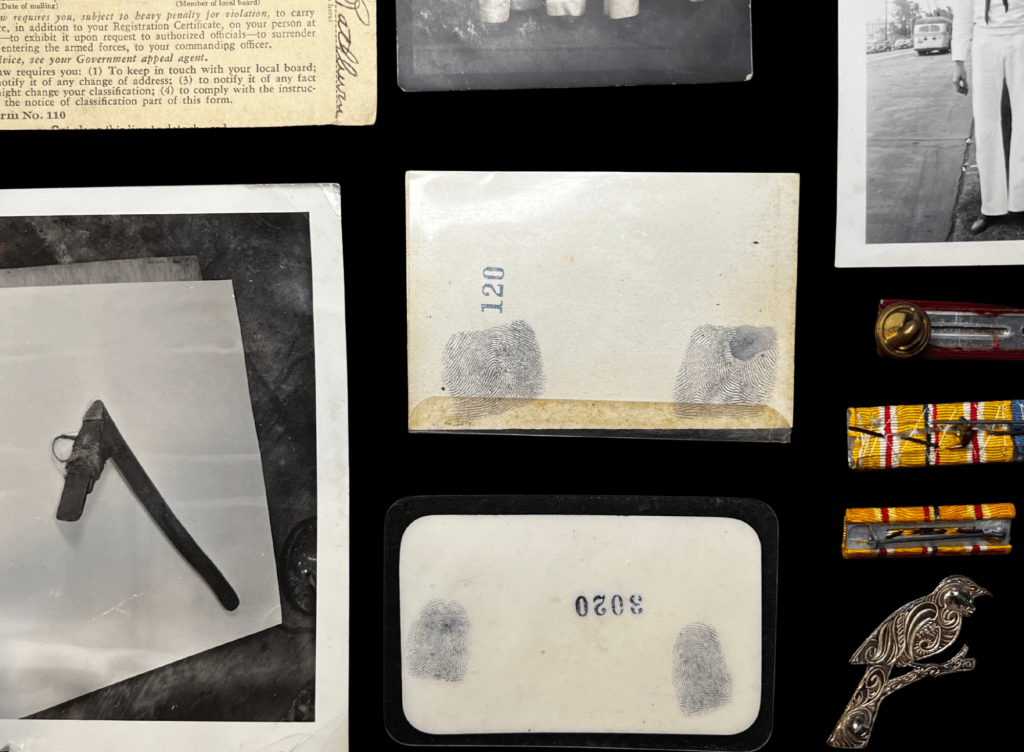
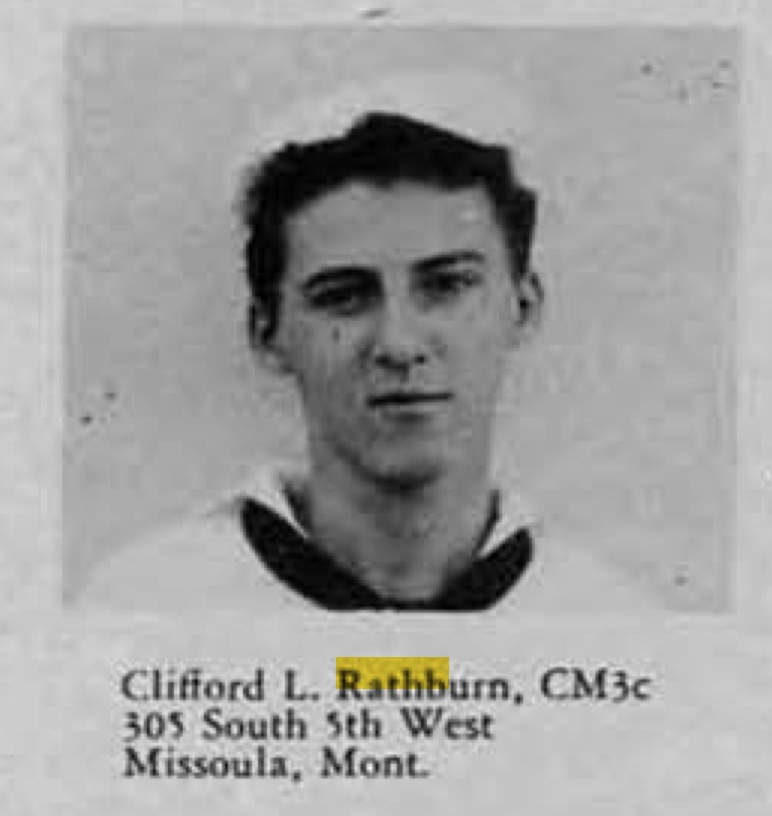
Clifford Lewis Rathburn was born on October 15, 1919, in Montana and lived in Missoula prior to entering the Navy during WW2. Like many early Seabees, Rathburn appears to have come into the Navy with civilian trade experience that could be adapted directly into military construction work, eventually advancing to the rate of Carpenter’s Mate Third Class (CM3c).
Formation of the 16th Naval Construction Battalion
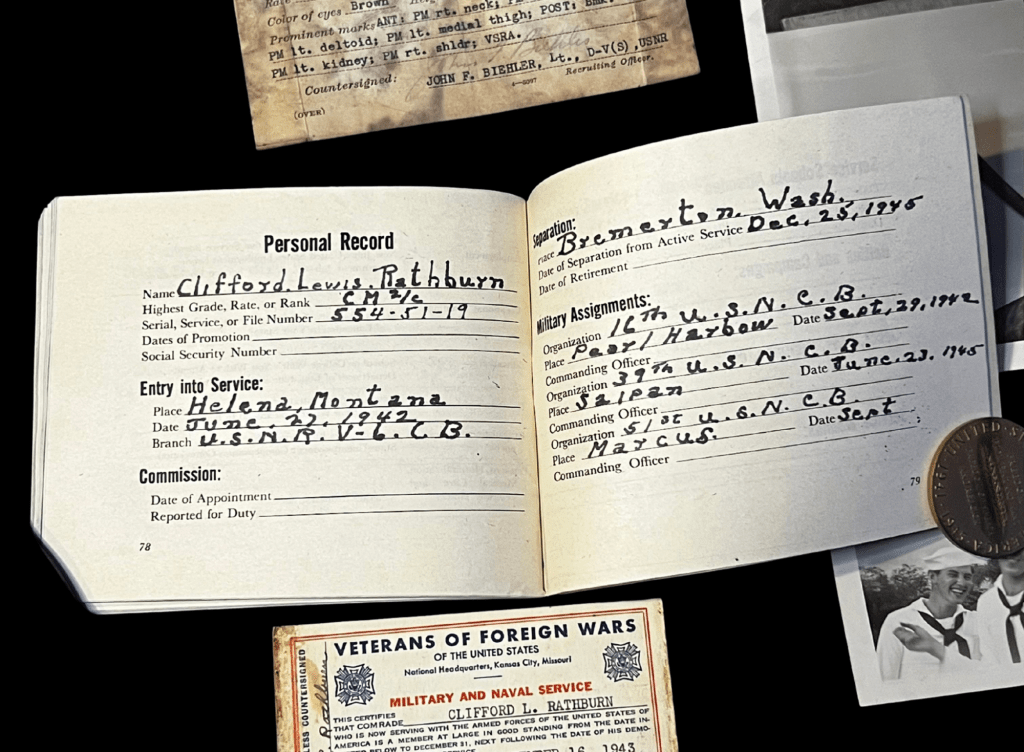
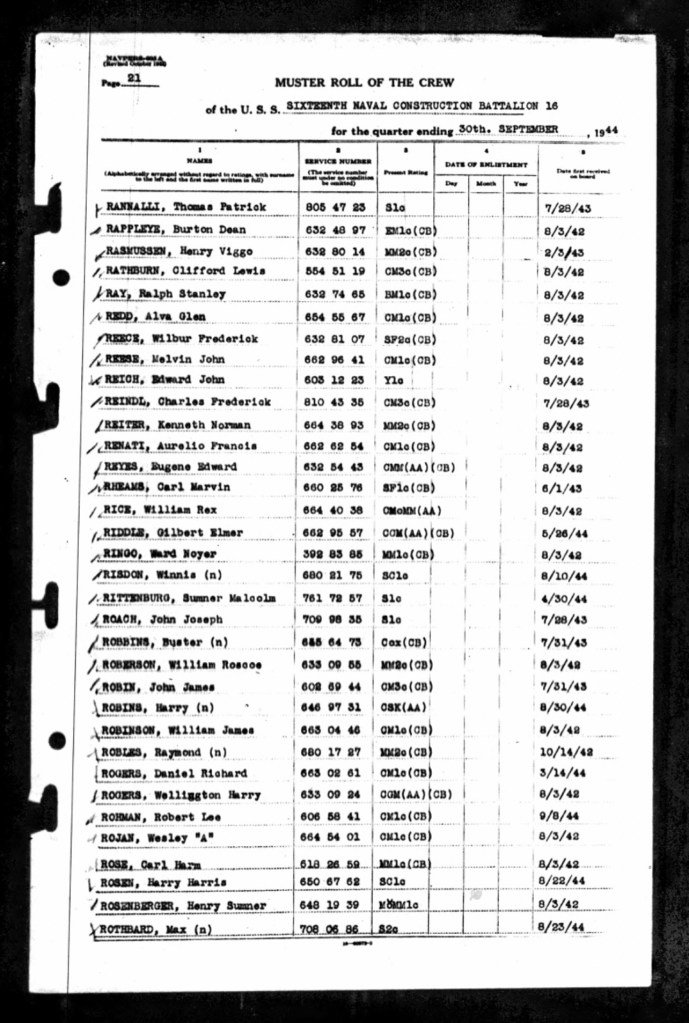
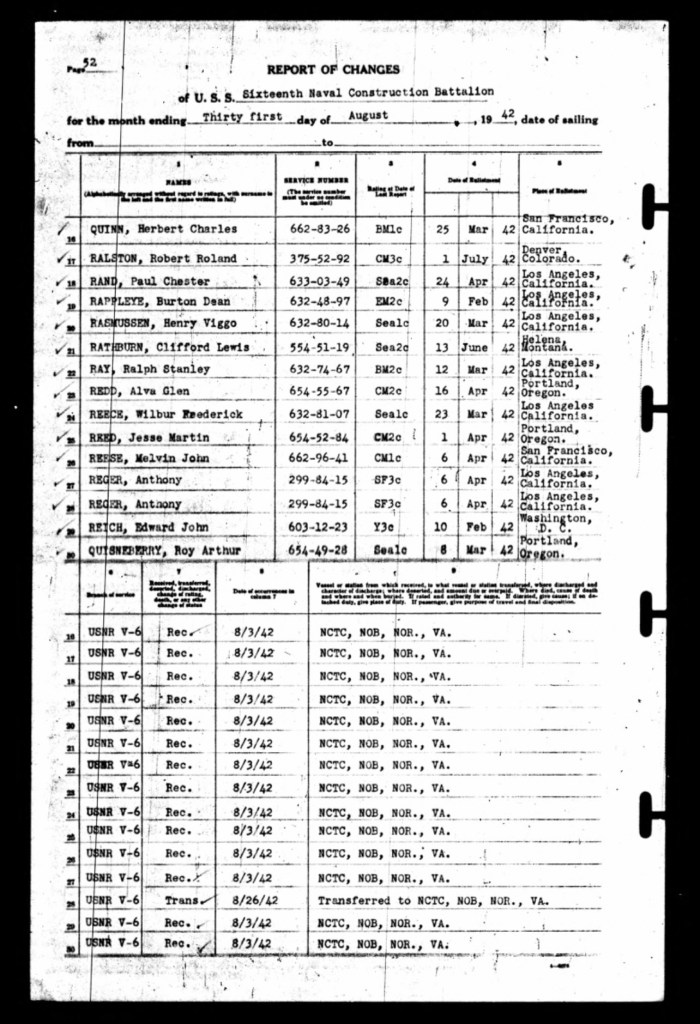
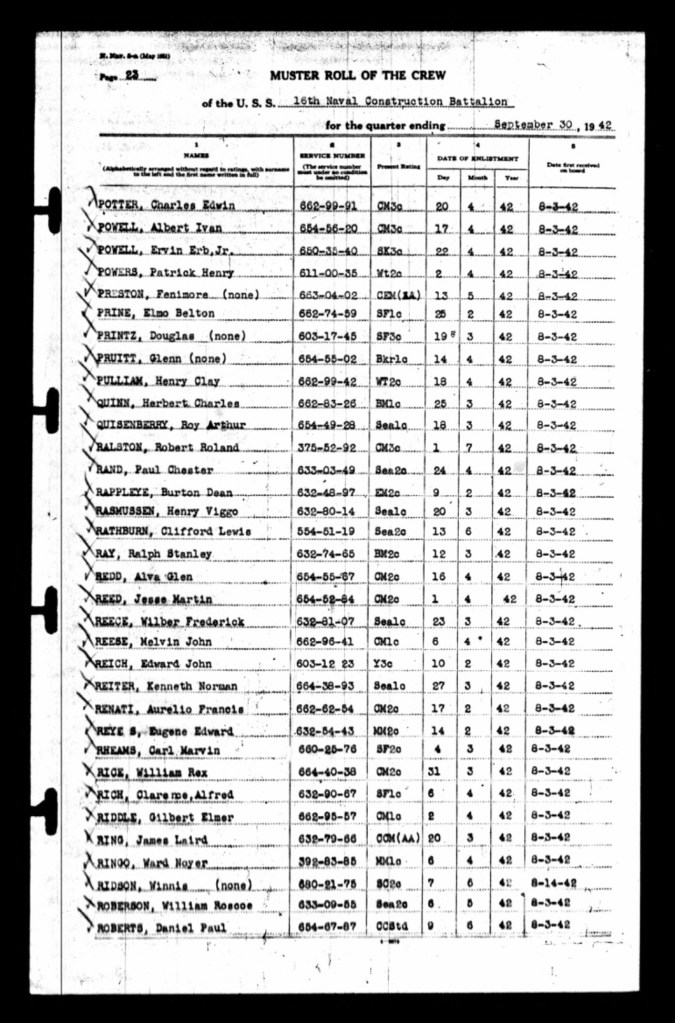
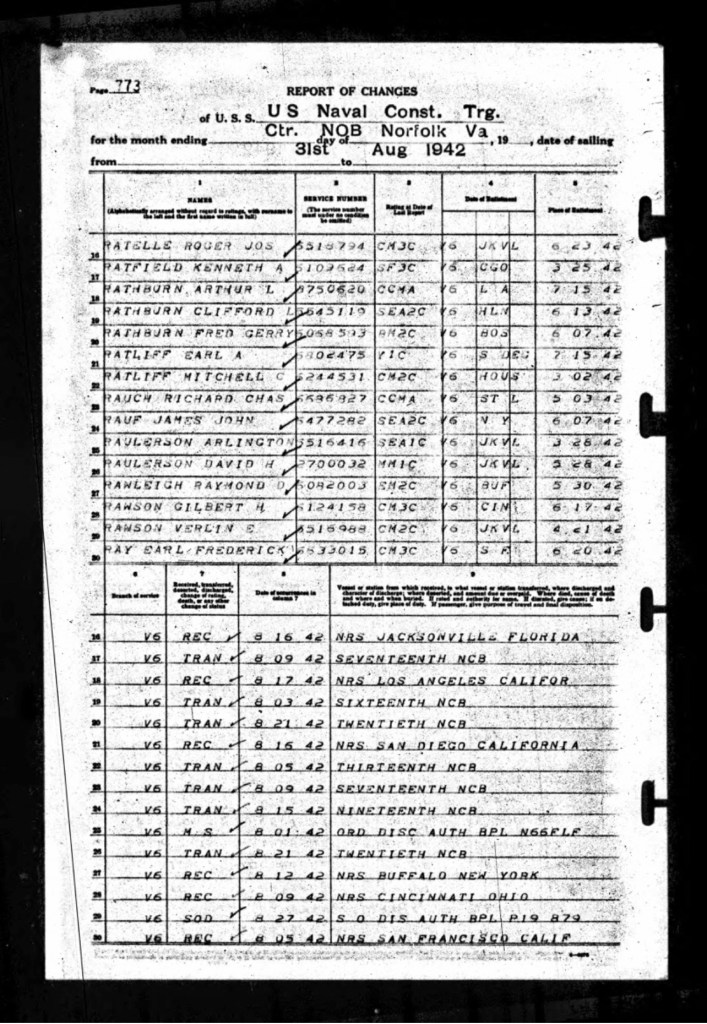
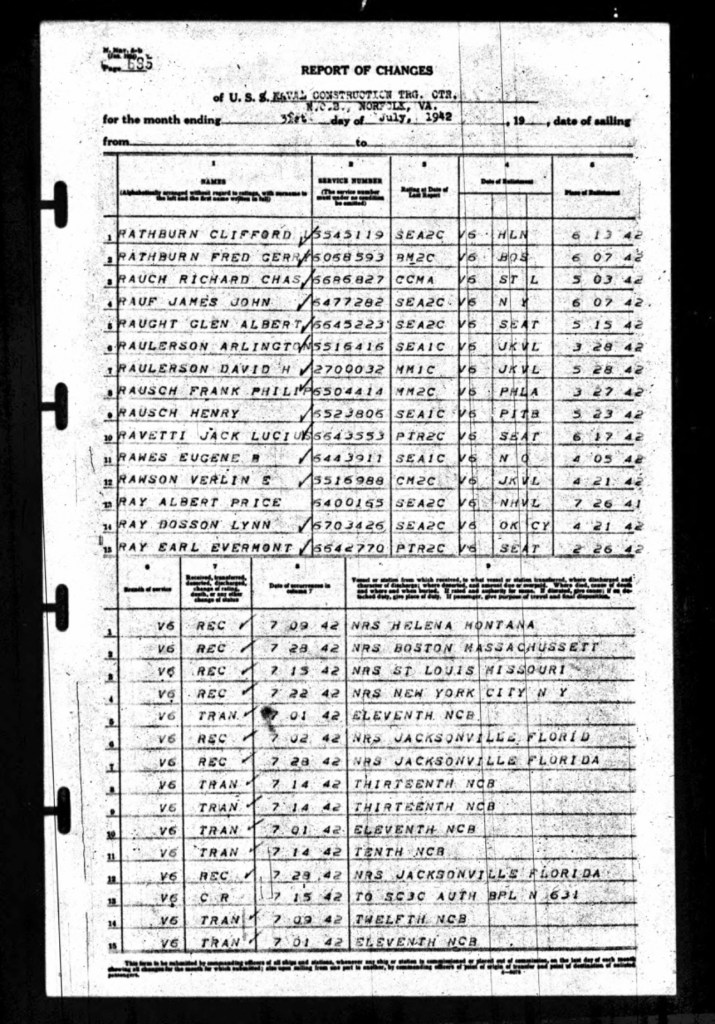
Rathburn entered naval service in 1942 during the rapid wartime expansion of the Navy’s Construction Battalions. Muster rolls place him at the U.S. Navy Construction Training Center at Norfolk, Virginia, during July and August 1942, exactly when the earliest Seabee battalions were being organized and trained for overseas deployment.
The 16th Naval Construction Battalion was officially established on August 2, 1942, at Camp Allen, Norfolk, Virginia, before moving to nearby Camp Bradford for intensive military and combat training. The battalion later transferred to Port Hueneme, California, where Marines provided additional field and weapons instruction in preparation for deployment overseas.
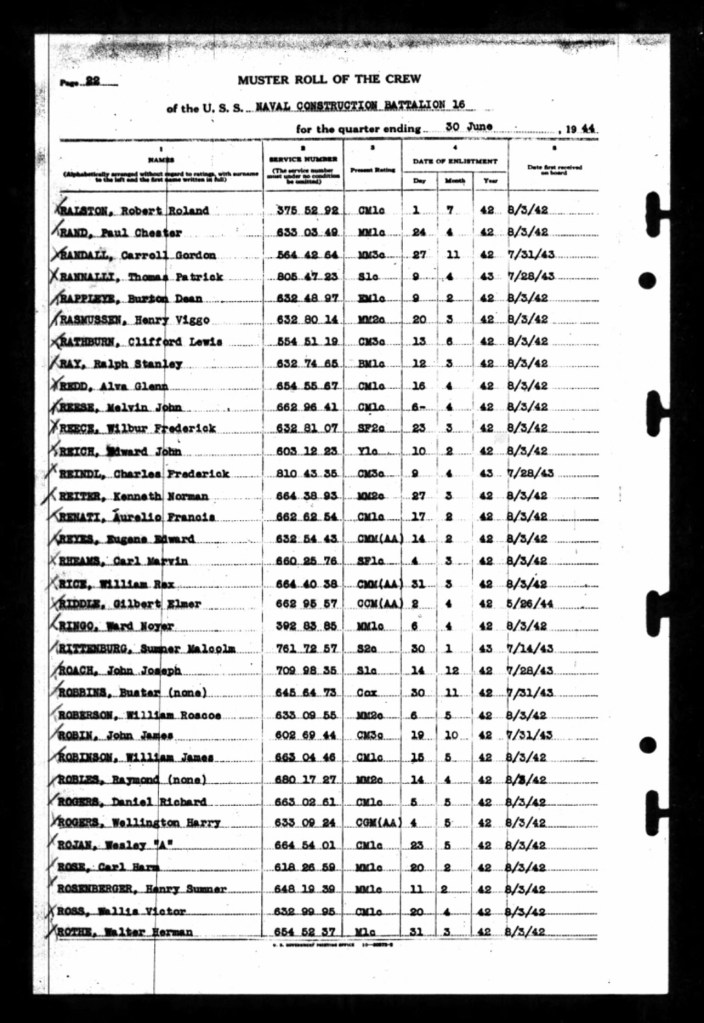
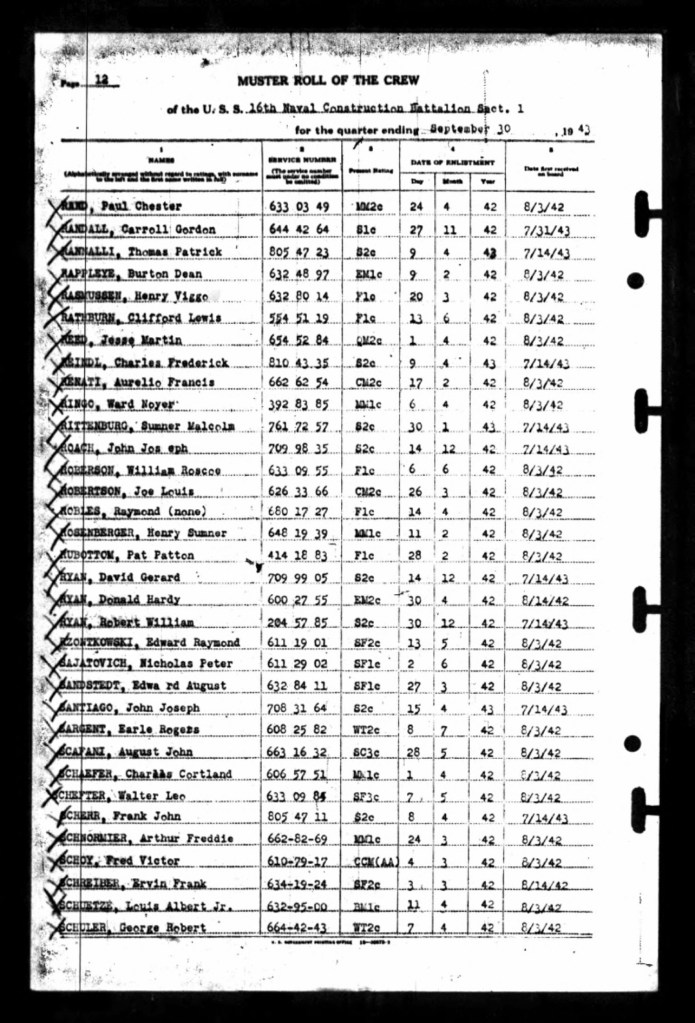
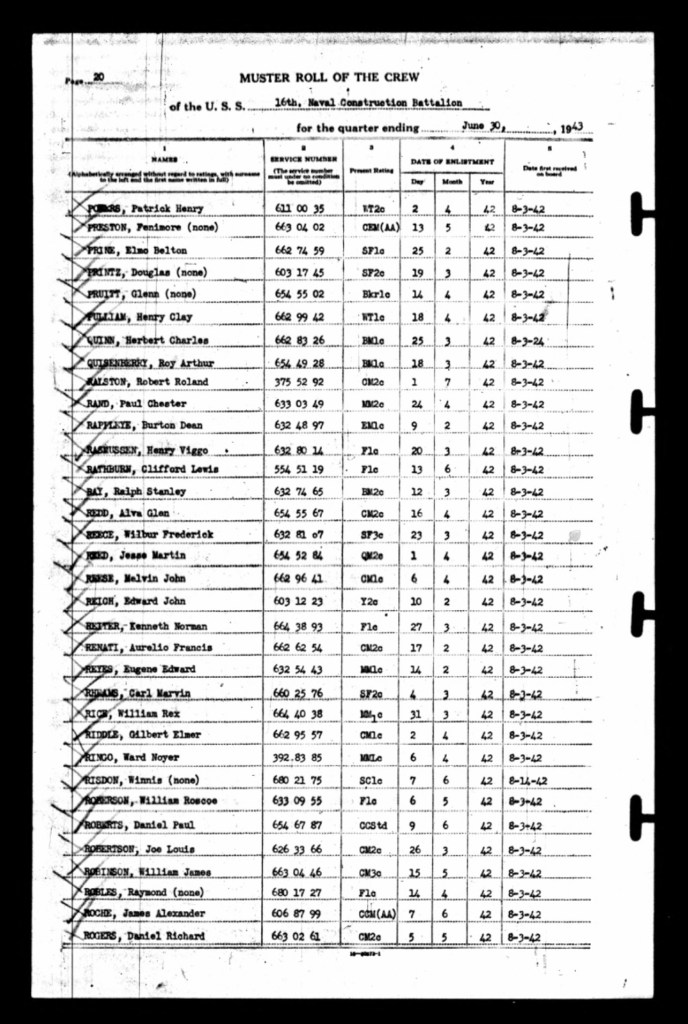
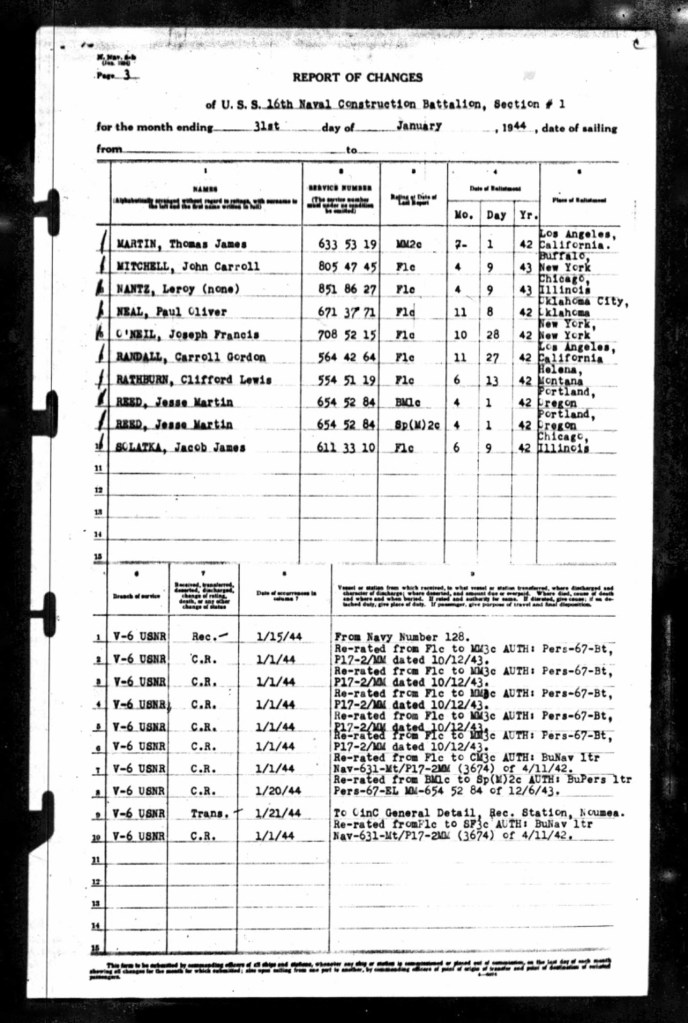
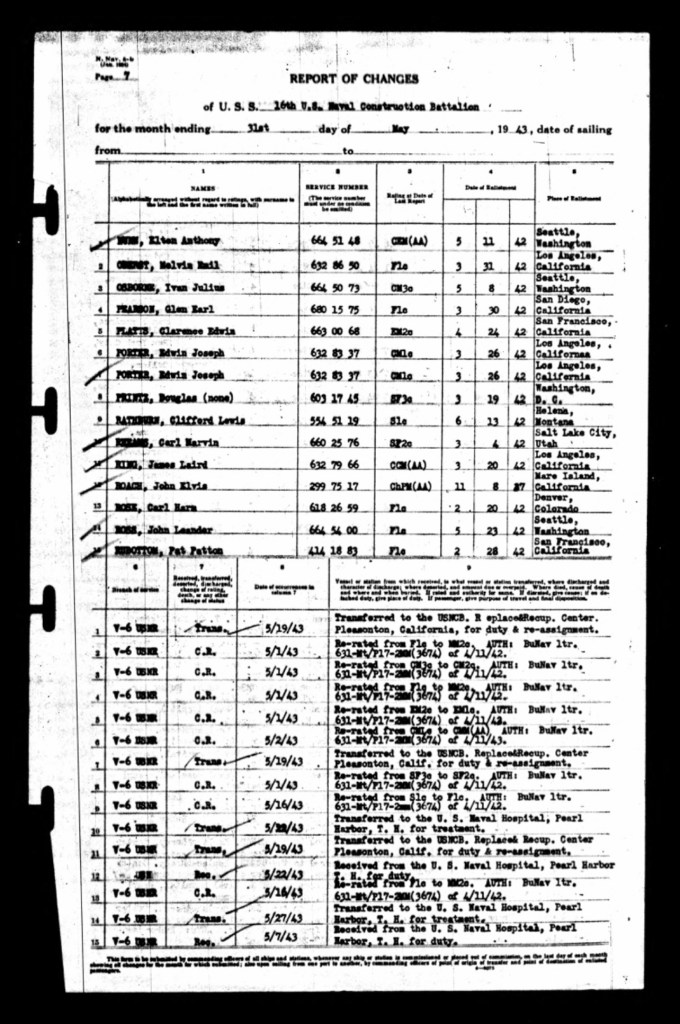
Rathburn was assigned to D Company of the battalion, remaining with the 16th for the majority of the war. A surviving 1943 muster roll lists him with Section 1 of the battalion and records him under the rating of Fireman First Class (F1c), suggesting he initially entered the Navy in an engineering or mechanical specialty before later transferring into the carpenter ratings where he eventually became CM3c.
Pearl Harbor and Pacific Construction Work
The 16th Naval Construction Battalion departed the United States in late September 1942 and arrived at Pearl Harbor in early October. At the time, Seabee units in Hawaii were still relatively new, and the battalion was immediately assigned to major construction duties supporting the expanding Pacific Fleet. The 16th completed unfinished Navy contracts and helped enlarge the enormous logistical network that would support future offensives across the Pacific.
As a member of D Company, Rathburn would have participated directly in these construction operations. Seabees in Hawaii worked long hours building barracks, roads, fuel tank farms, ammunition depots, repair facilities, docks, and waterfront installations needed to sustain naval operations after the attack on Pearl Harbor.
The battalion’s work was physically demanding and occasionally dangerous even away from the front lines. Construction crews operated heavy equipment around the clock while dealing with shortages, tropical conditions, and constant pressure to complete projects as quickly as possible for combat operations moving westward across the Pacific.
Ellice Islands, Tarawa, and Combat Conditions
In August 1943, the 16th Naval Construction Battalion deployed from Hawaii to the Ellice Islands in support of the Central Pacific offensive. The battalion was tasked with constructing major airfields and base facilities needed to support bombing missions and amphibious operations against Japanese-held islands farther west.
Official battalion histories record that detachments from the 16th were sent to Tarawa, Makin, and Apamama during the Gilbert Islands campaign. These operations placed Seabees dangerously close to active combat zones.
At Tarawa in particular, Seabee personnel arrived shortly after one of the bloodiest amphibious assaults of the Pacific war. Work crews operated among wrecked landing craft, damaged equipment, and unburied casualties while attempting to restore and expand the shattered airfield for immediate military use.
Japanese air raids remained a constant threat throughout many of these forward areas. Seabees frequently worked during blackout conditions or suspended construction to take defensive positions during alerts. At several Central Pacific bases, enemy aircraft targeted runways, fuel dumps, and supply areas that Seabee battalions had only recently completed. Construction crews were often expected to repair bomb damage almost immediately after attacks in order to keep air operations functioning.
The tropical environment itself also posed serious dangers. Men of the 16th worked under intense heat and heavy rains while dealing with coral dust, primitive living conditions, disease threats, and shortages of fresh water and supplies. Heavy machinery frequently bogged down in soft coral or mud, forcing Seabees to improvise solutions while maintaining demanding construction schedules tied directly to upcoming combat operations.
As a Carpenter’s Mate assigned to D Company, Rathburn likely participated in the rapid erection of Quonset huts, framing of operational buildings, dock construction, and camp expansion work that transformed newly captured islands into functioning military bases within days or weeks of occupation, something the Seabees would become famous as doing in record time.
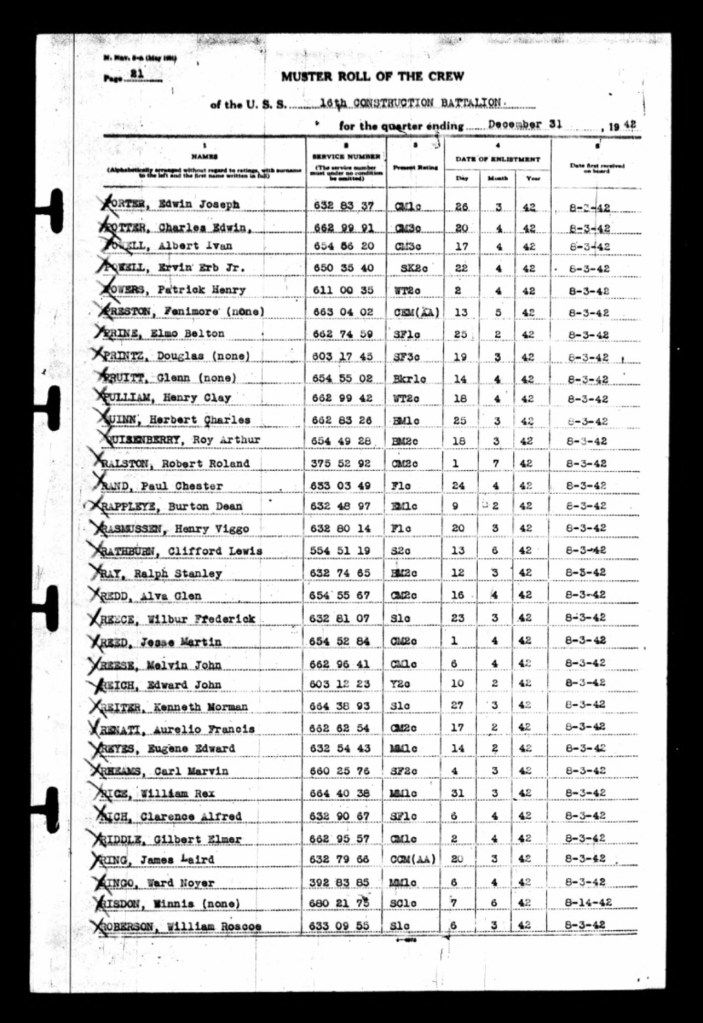
By February 1944, the battalion had returned to Pearl Harbor, where it remained for over a year continuing major naval construction projects supporting the accelerating Pacific offensives. Throughout this period Rathburn continued to appear consistently on muster rolls the 16th Naval Construction Battalion.
Transfers and the End of the War
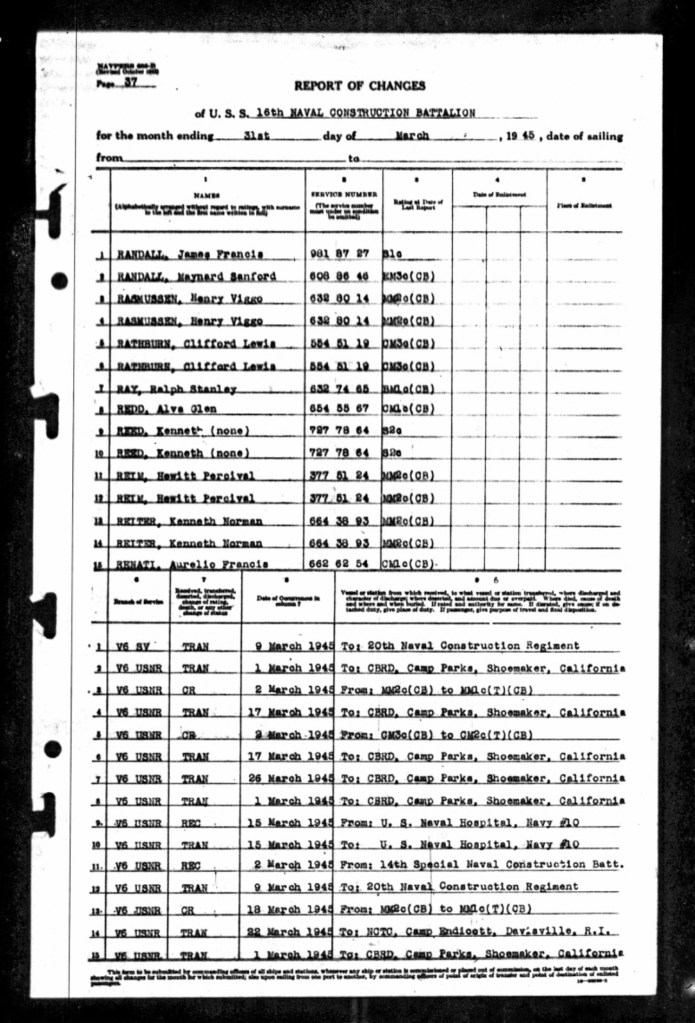
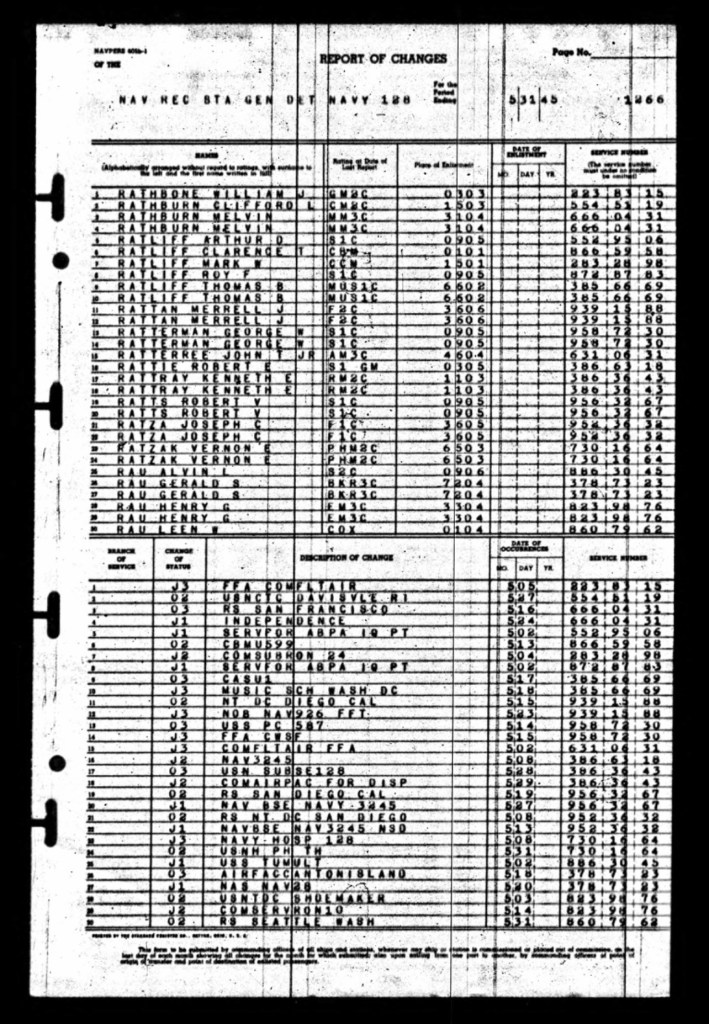
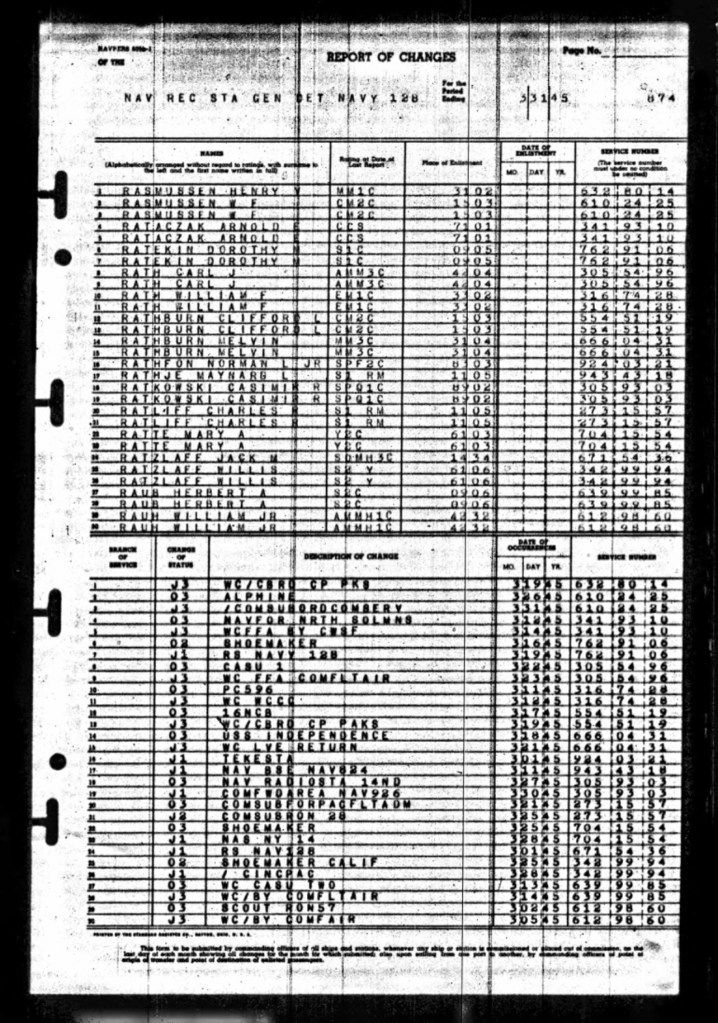
By March 31, 1945, Rathburn appears on a muster roll from “Navy Rec Sta Gen Det Navy 128,” indicating temporary reassignment away from the 16th Naval Construction Battalion. Such late-war transfers became increasingly common as experienced Seabees were reassigned to replacement pools, transport details, or newly organized battalions preparing for future operations.
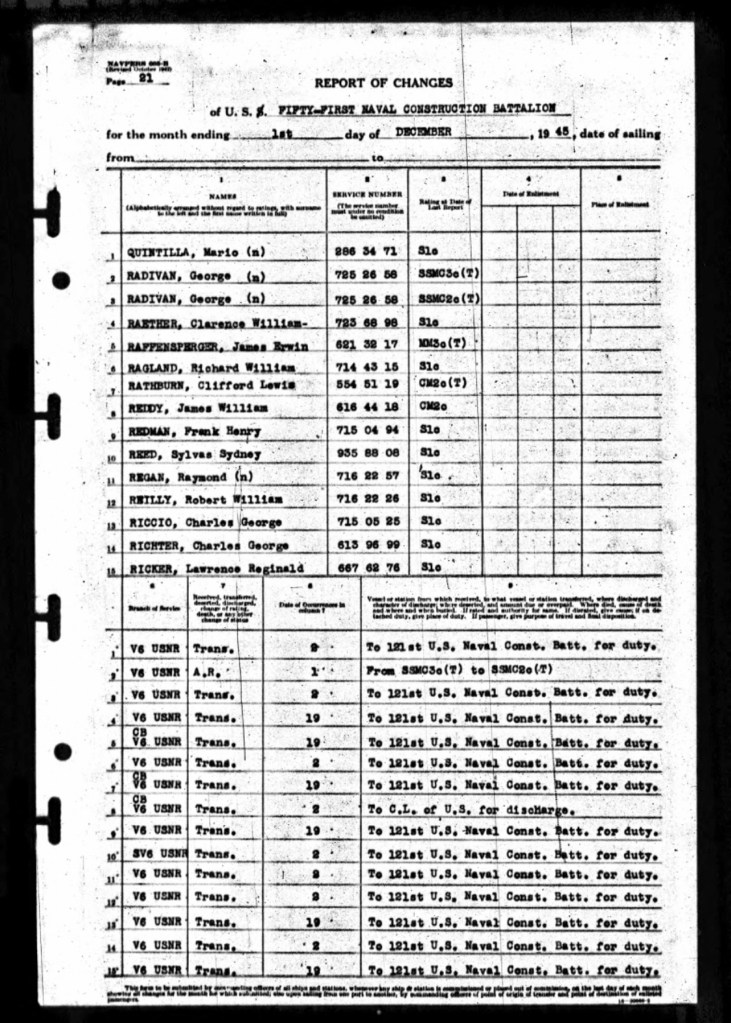
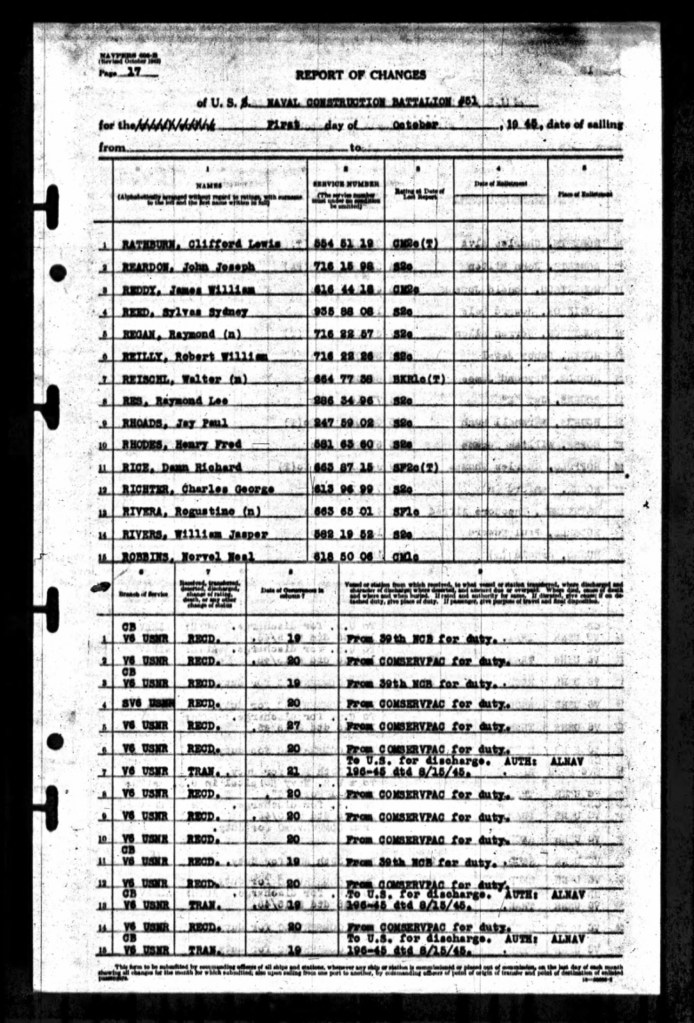
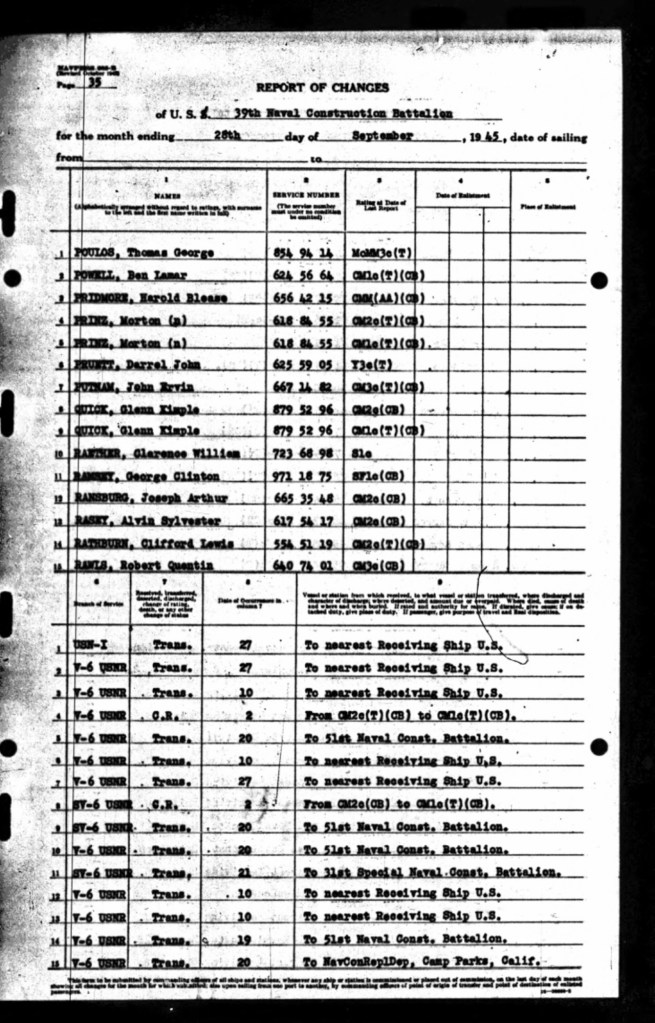
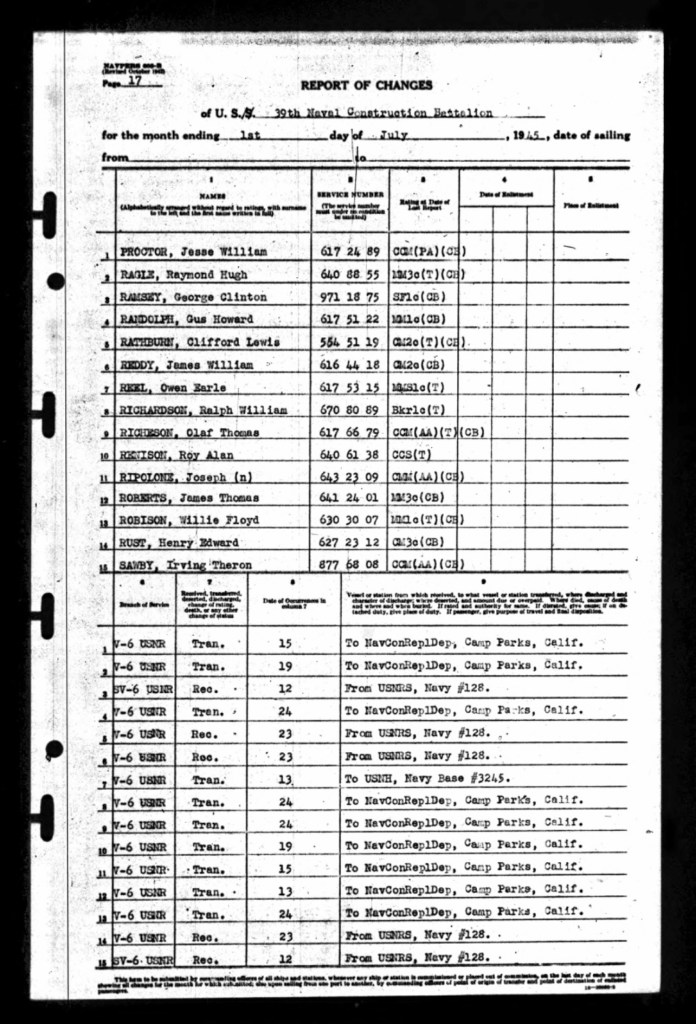
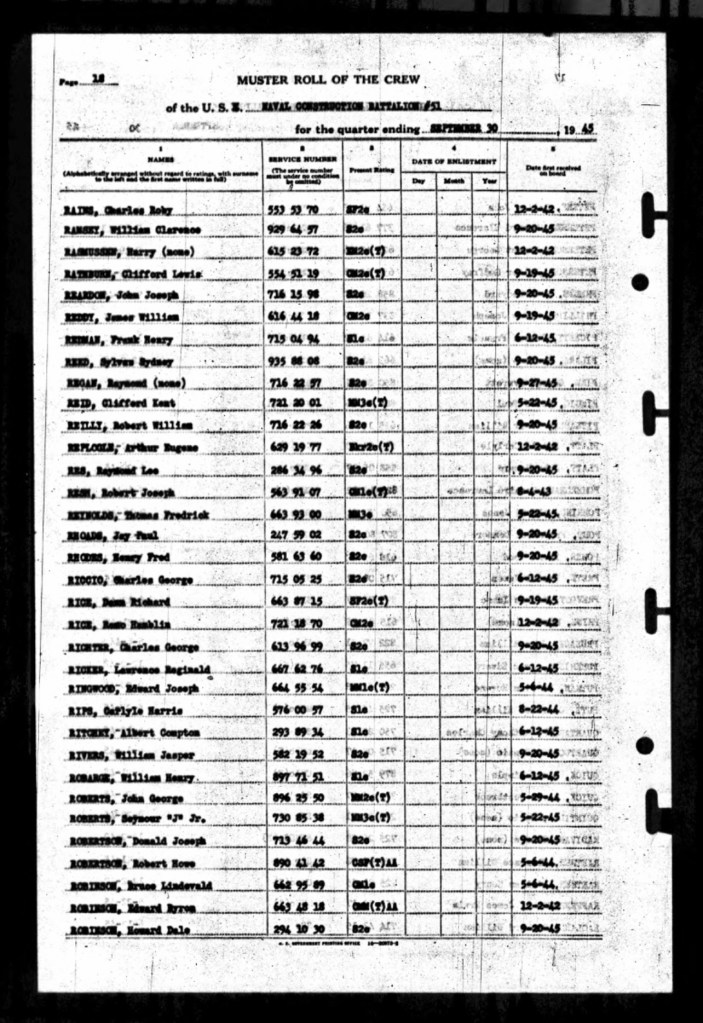
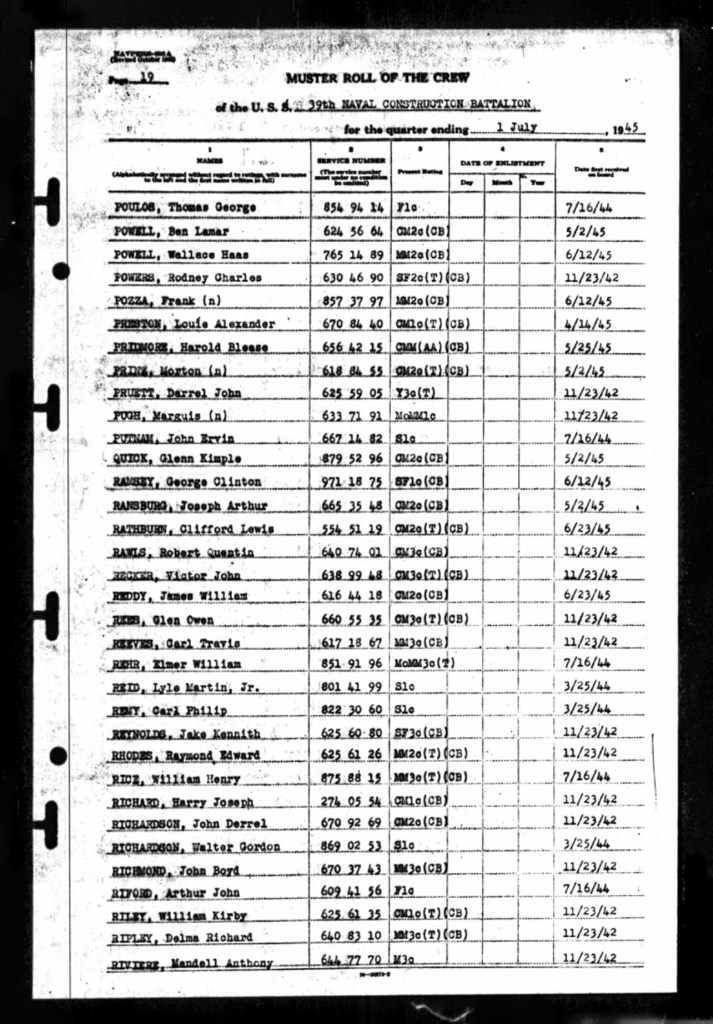
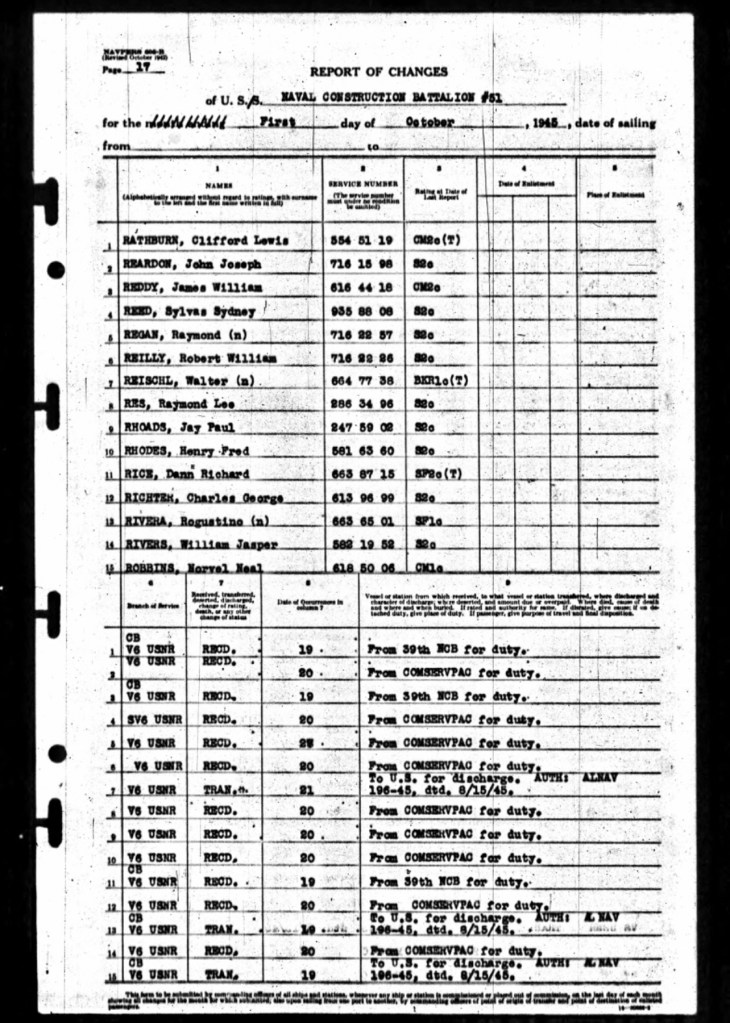
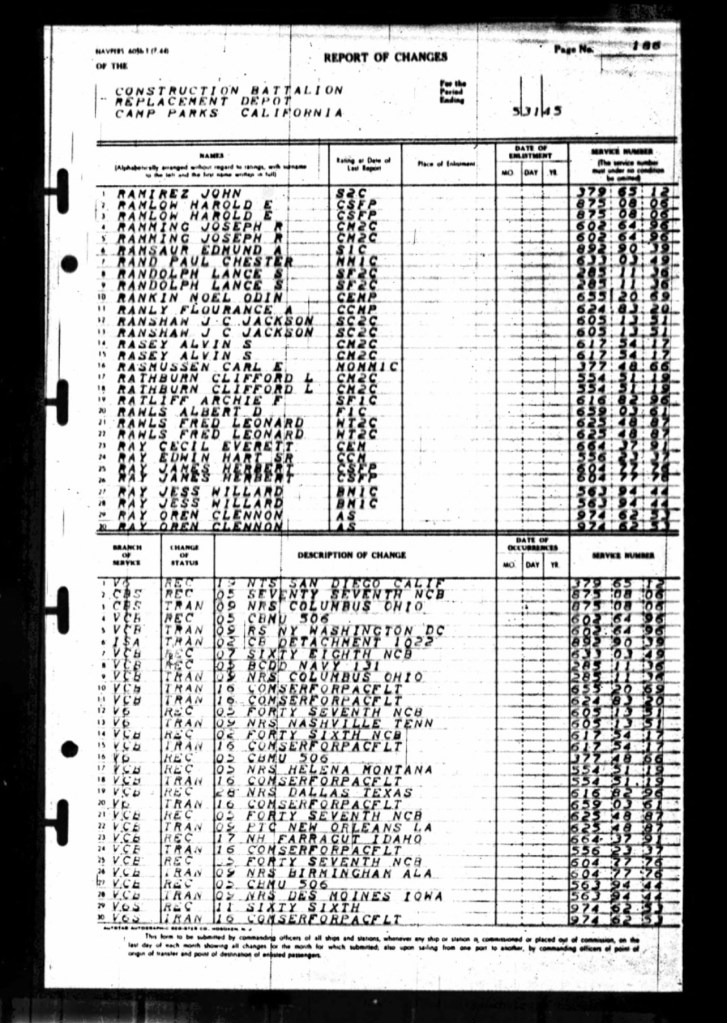
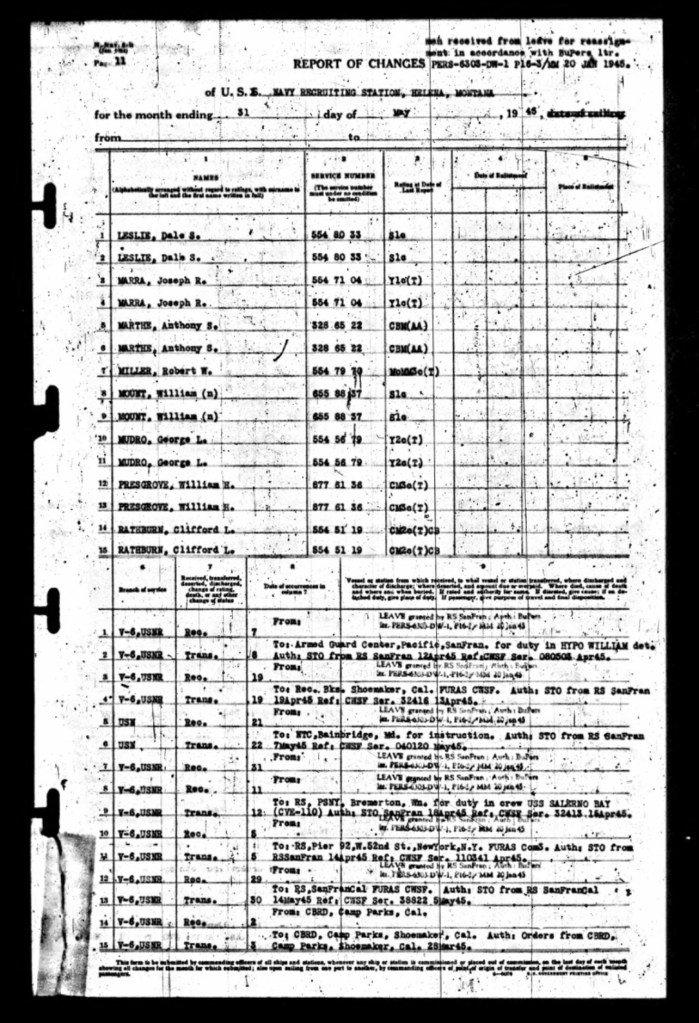
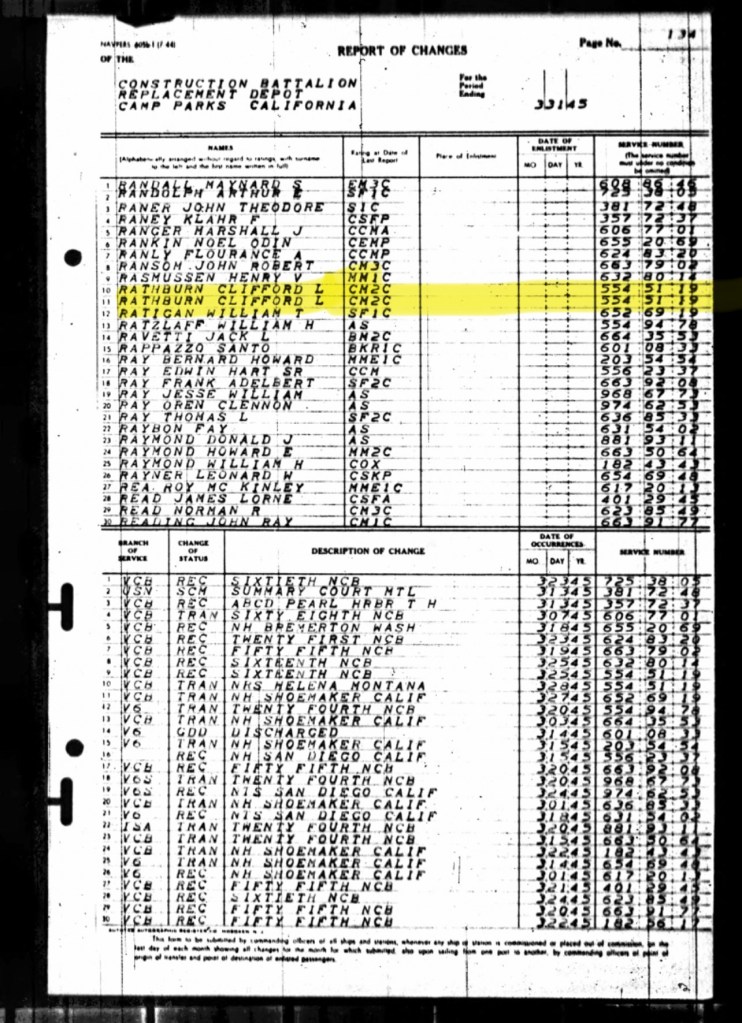
In May 1945 he was stationed at the Construction Battalion Replacement Depot Camp Parks, one of the Navy’s principal replacement and redistribution centers for Seabee personnel. Beginning in July 1945, Rathburn appears on muster rolls of the 39th Naval Construction Battalion. Following Japan’s surrender, he later transferred to the 51st Naval Construction Battalion in late September 1945.
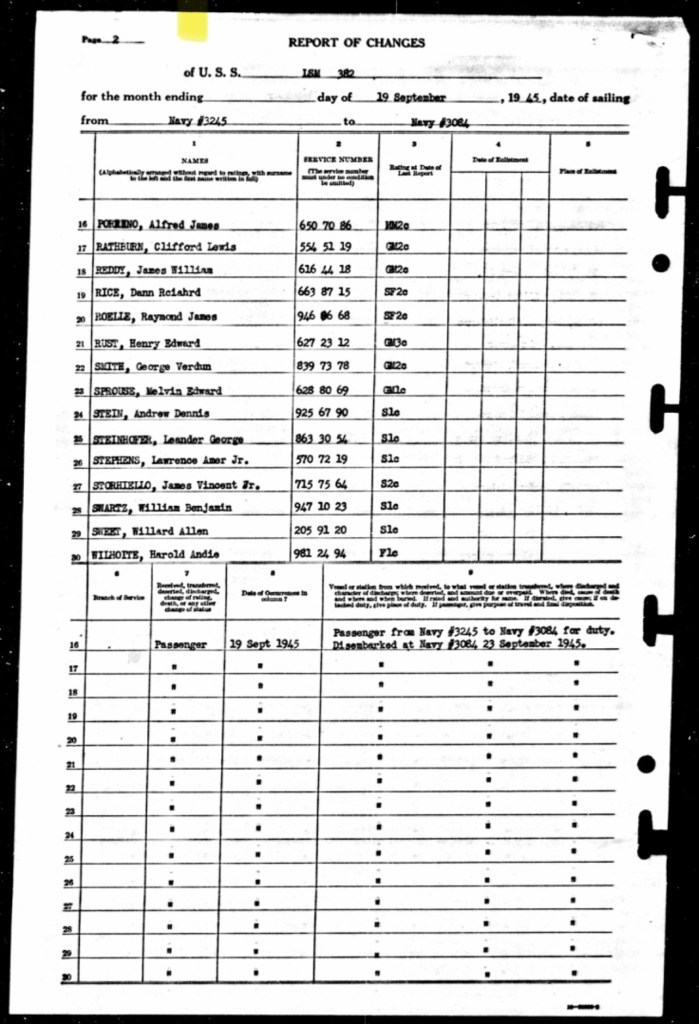
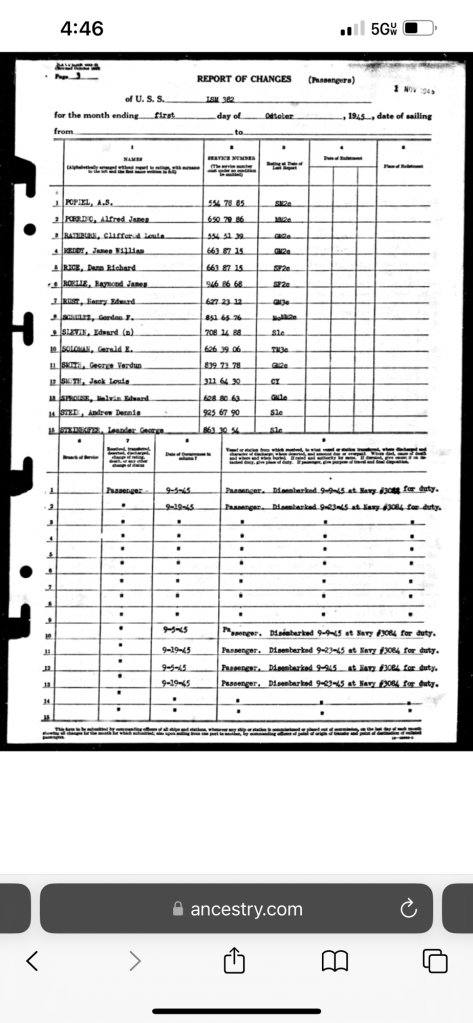
During September and October 1945 he also appears aboard the LSM-382, a vessel type heavily used for moving Seabee personnel, construction equipment, and supplies between Pacific islands during the occupation and redeployment period following the war. Muster rolls continue placing Rathburn with the 51st Naval Construction Battalion through December 1945, after which his surviving wartime records largely disappear as the Navy rapidly demobilized servicemen returning home after victory in the Pacific.
Clifford, having raised a family with a loving wife, would pass away on March 28th, 1998 at the age of 74. He is buried in the exact town he departed from when he joined the Navy in 1942.