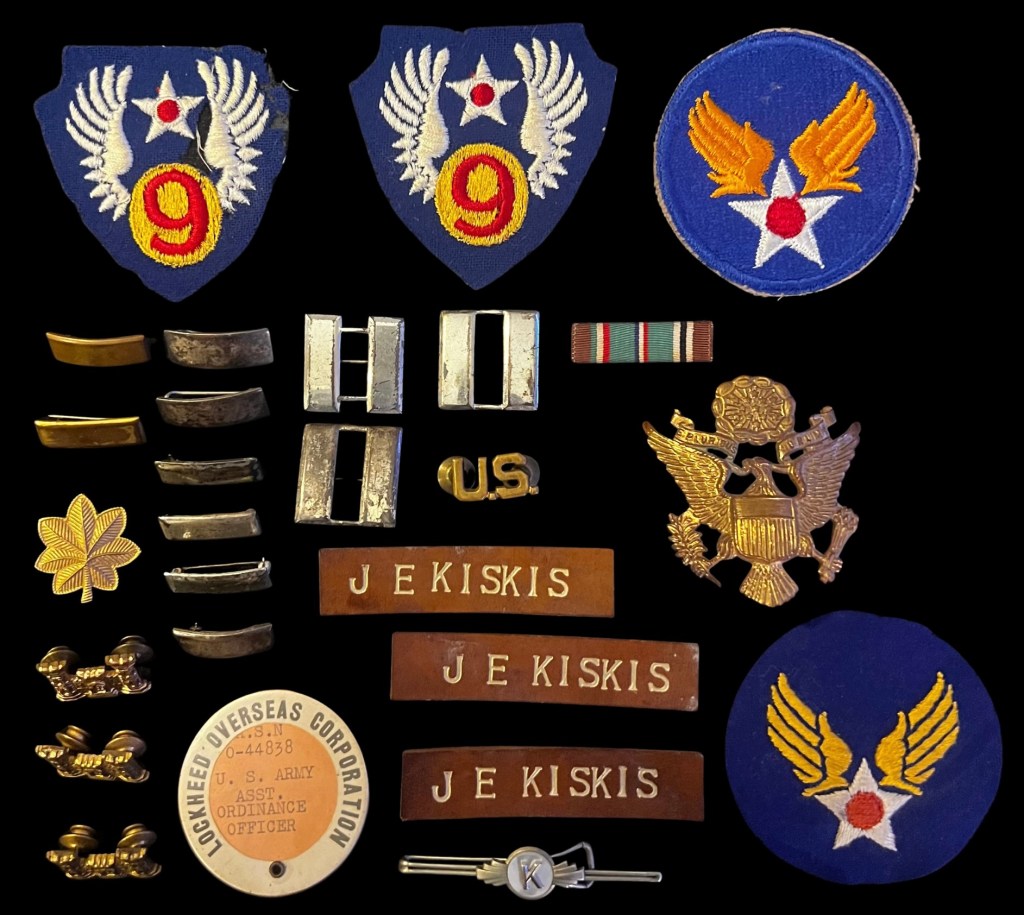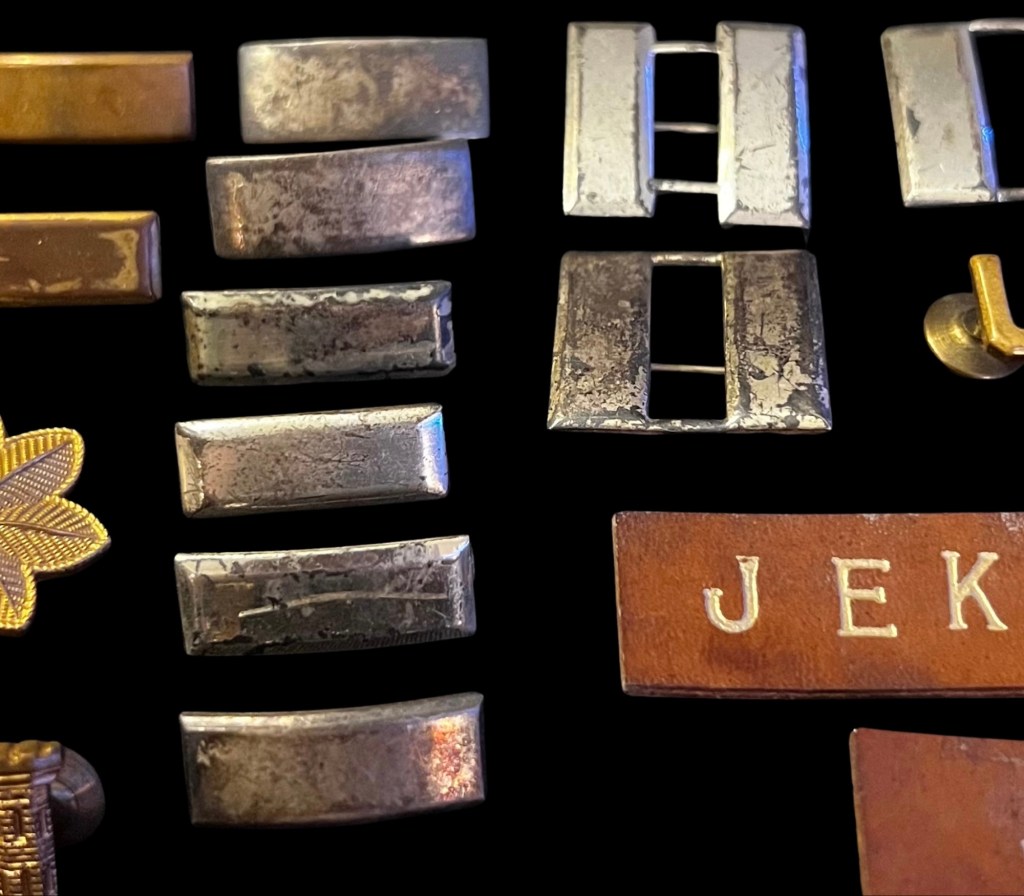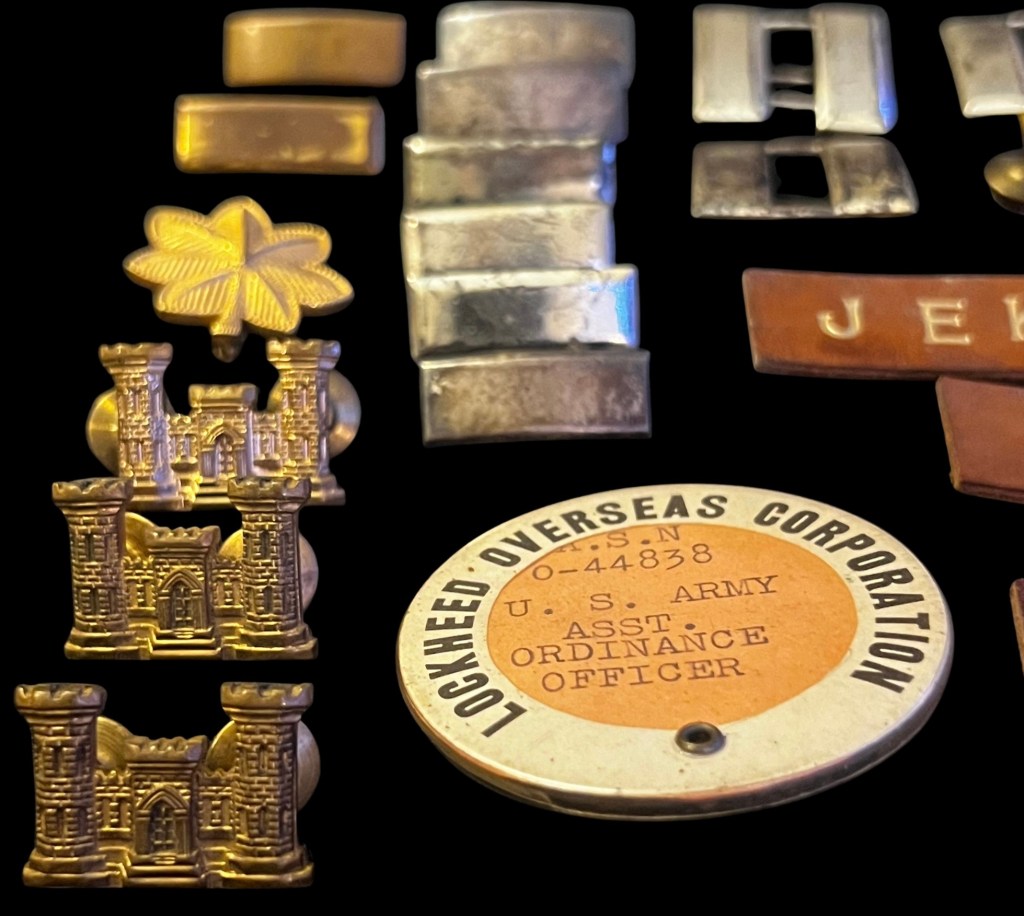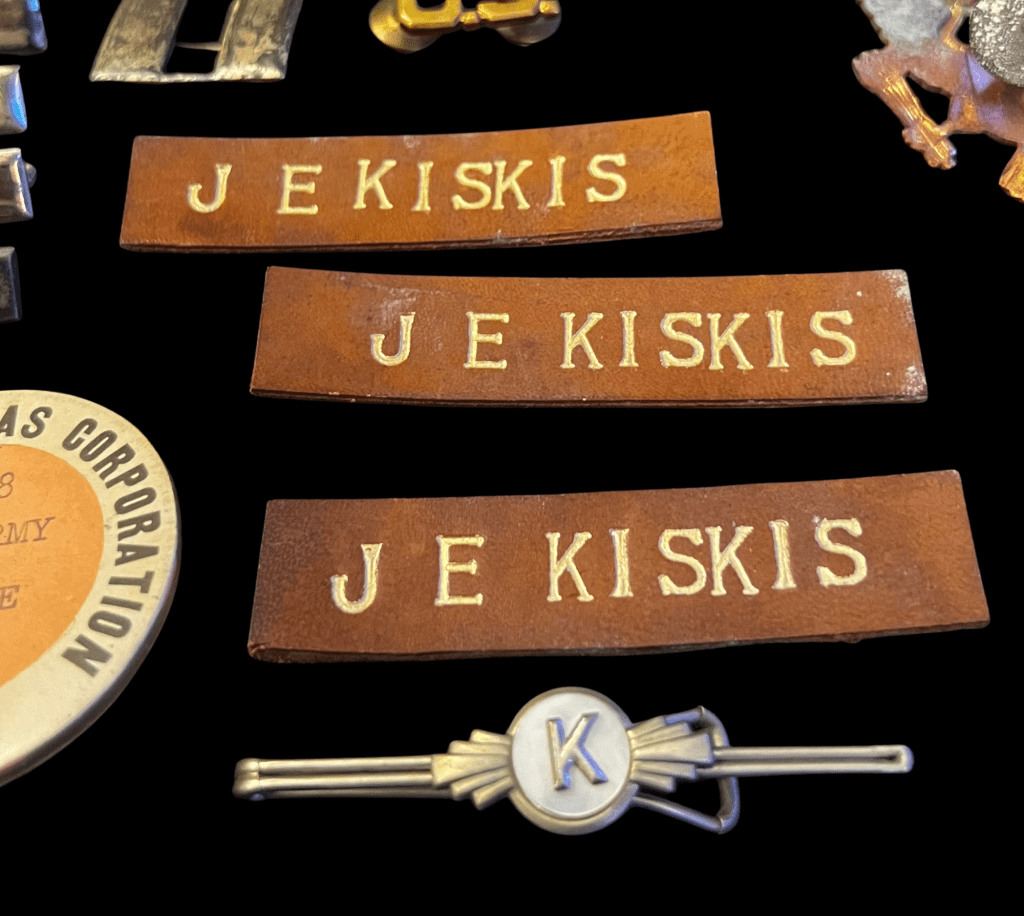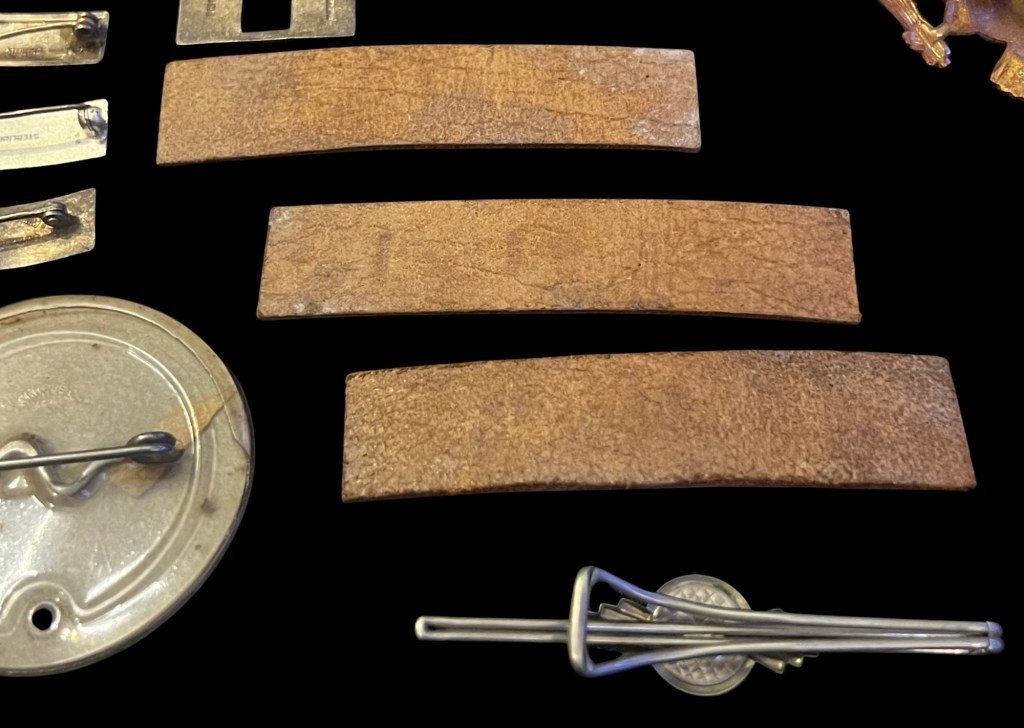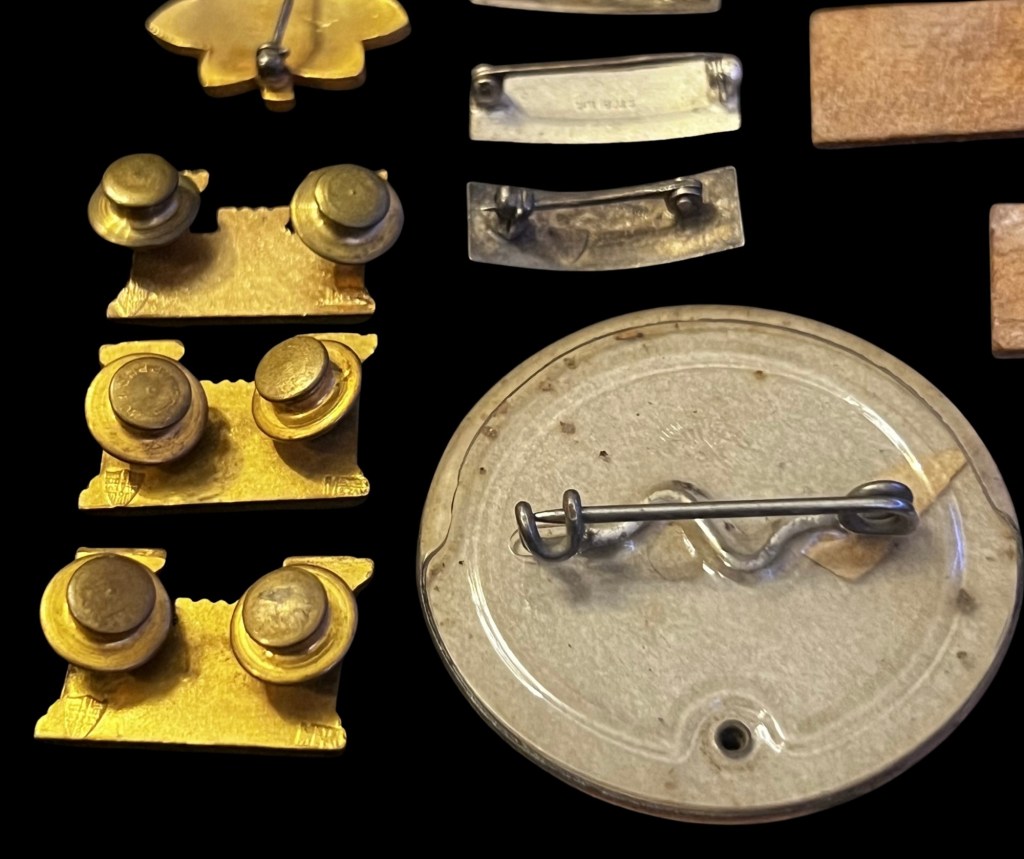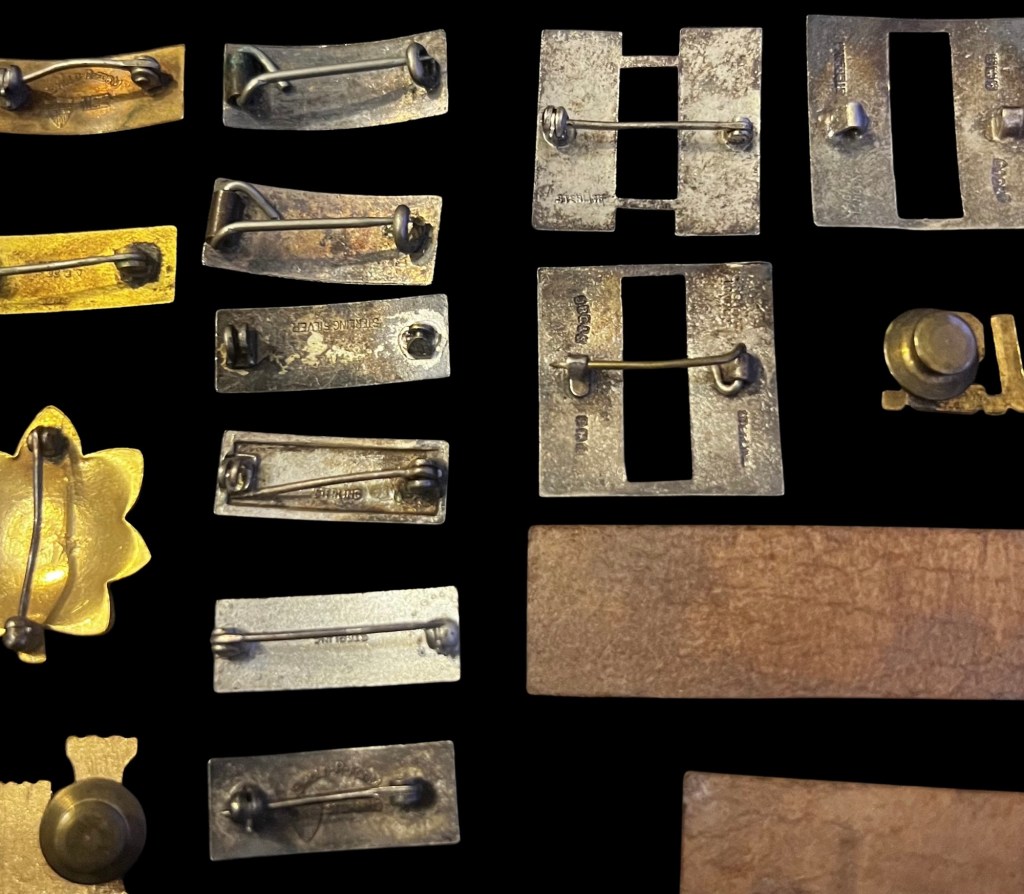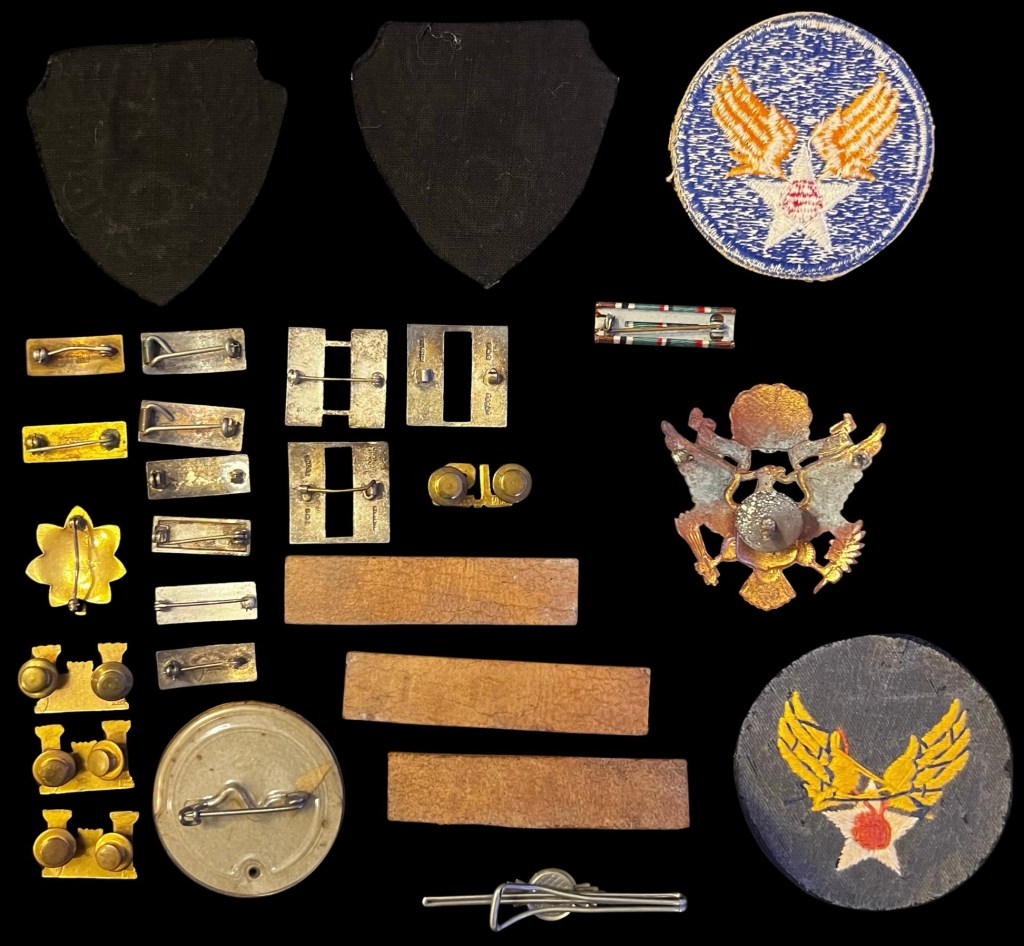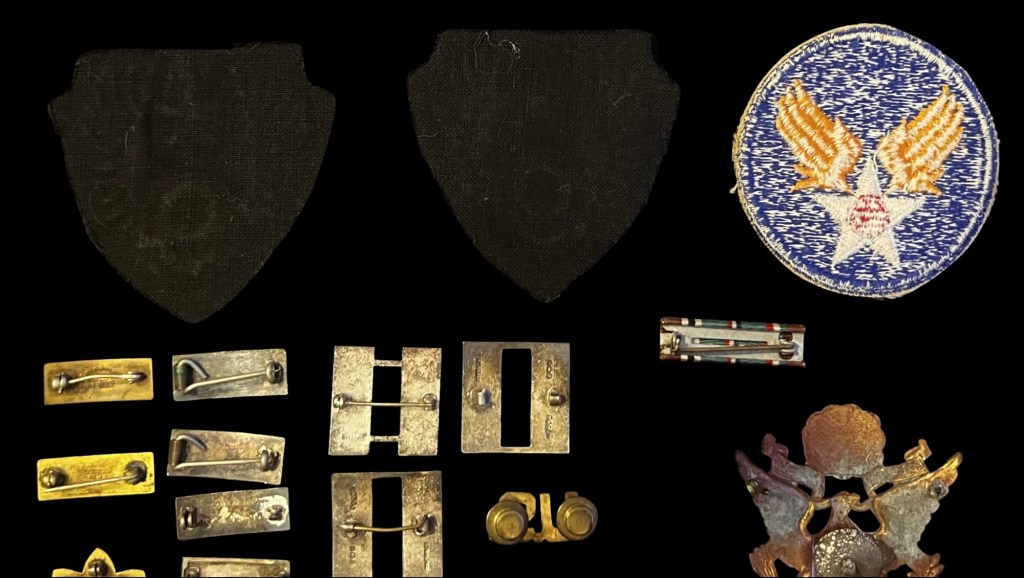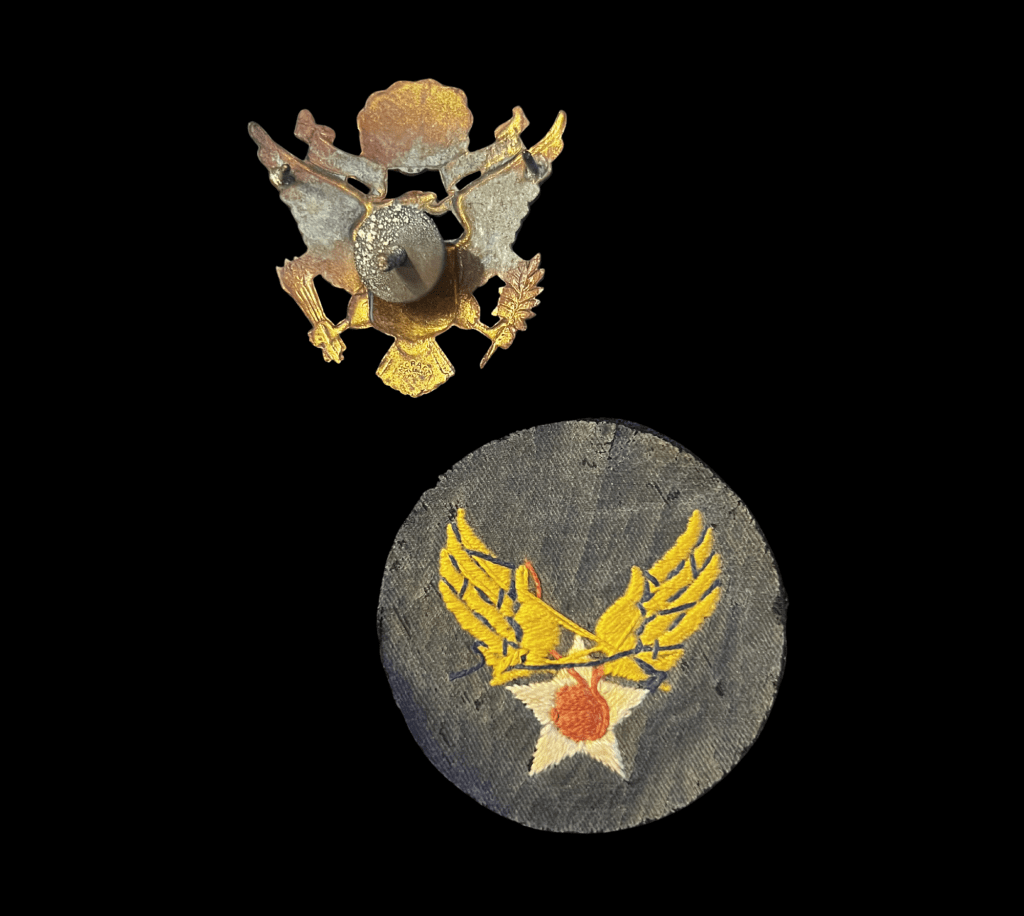
Major Joseph E Kiskis
U.S. Army – Ordnance Officer – 8th/9th AF – 427th Bomb Squadron, 303rd Bomb Squadron – 4th/ 29th Combat Crew Replacement Groups
-
Joseph E. Kiskis of New Britain, Connecticut, was an Army Air Forces ordnance officer who served with the Eighth and Ninth Air Force during World War II. His surviving records place him in Northern Ireland and England during late 1943, including a temporary assignment with the famous 303rd Bomb Group, the “Hell’s Angels.”
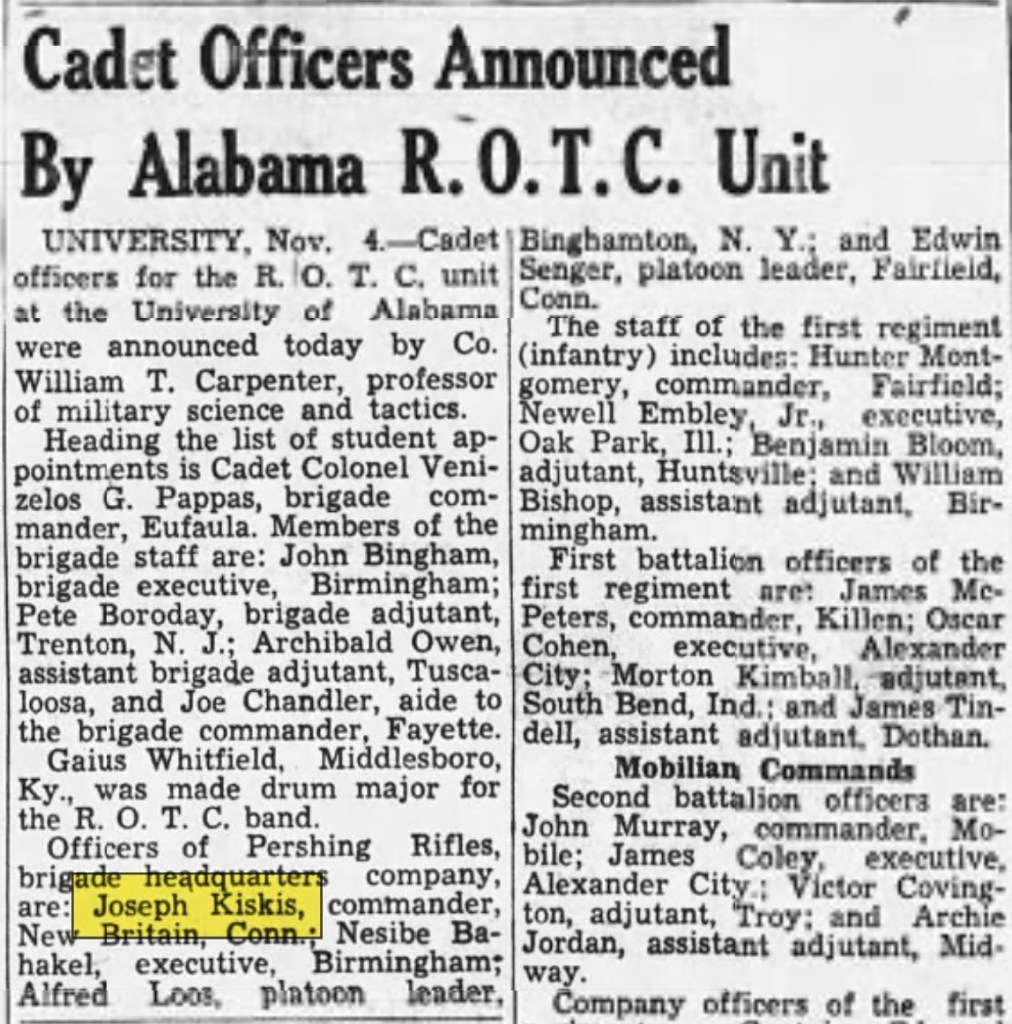
Before the war, Kiskis attended the University of Alabama where he studied engineering and participated in the ROTC advanced division.
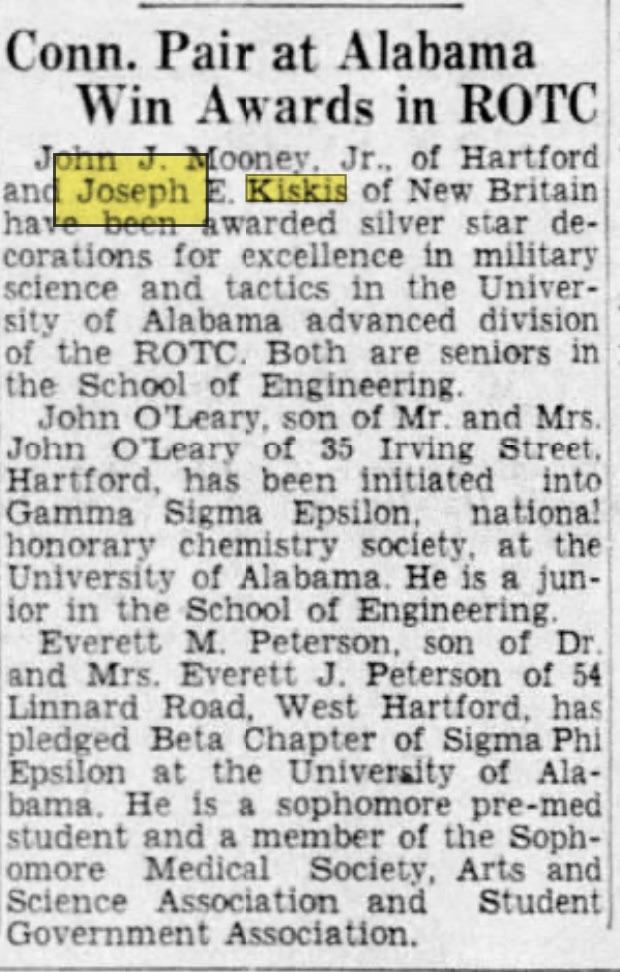
On November 23, 1940, The Hartford Daily Courant published an article titled:
“Conn. Pair at Alabama Win Awards in ROTC”
The newspaper stated:
“John J. Mooney Jr., of Hartford and Joseph E. KisKis of New Britain have been awarded silver stars for excellence in military science and tactics in the University of Alabama advanced division of the ROTC. Both are seniors in the School of Engineering.”
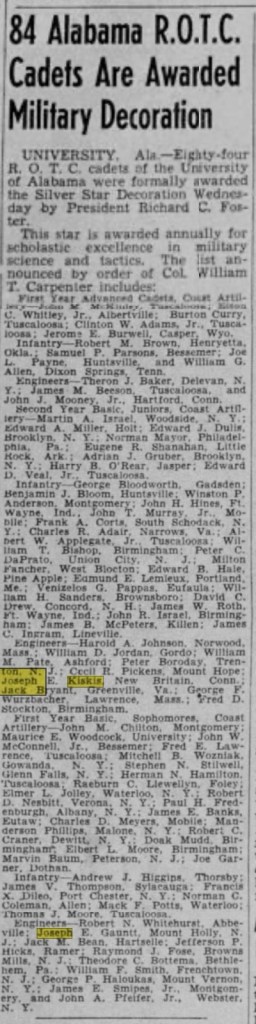
The article also noted that Kiskis was one of only 84 ROTC cadets to receive the award directly from University President Richard C. Foster. His engineering background later fit naturally with ordnance work in the Army Air Forces.
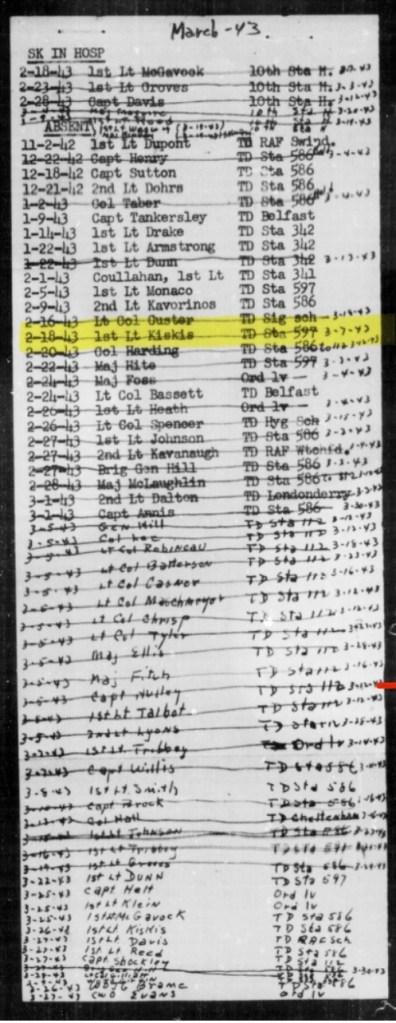
No confirmed records have been found for Kiskis as an enlisted man, likely due to his service number changing after becoming an officer. The first wartime records currently located show him in March 1943 as a first lieutenant listed on a morning report and the farthest any documents go is December 1943. Though a short time, this brief period shares a whole lot about his experiences.
Assignment to VIII Air Force Composite Command
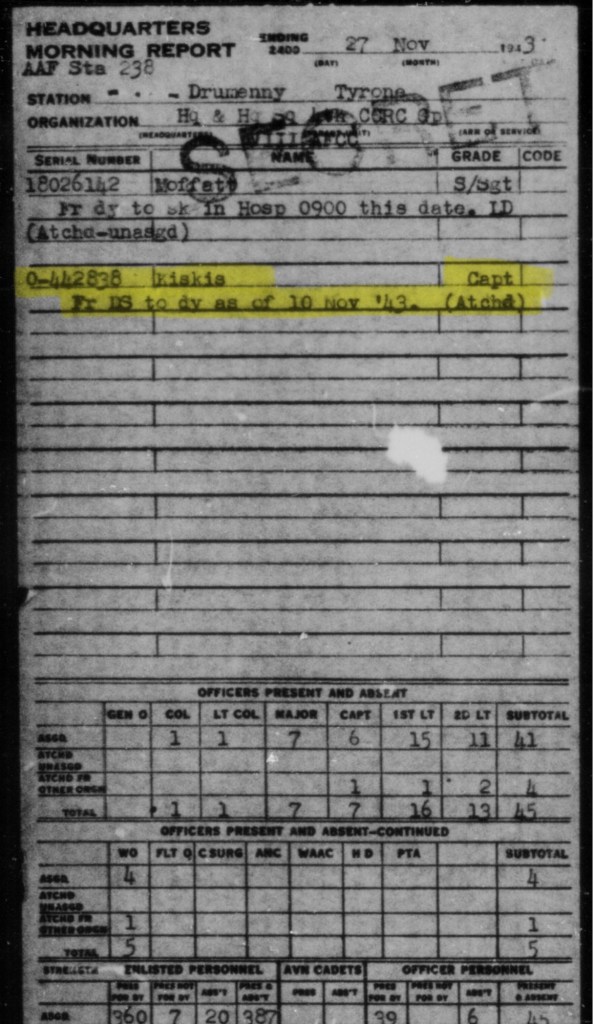
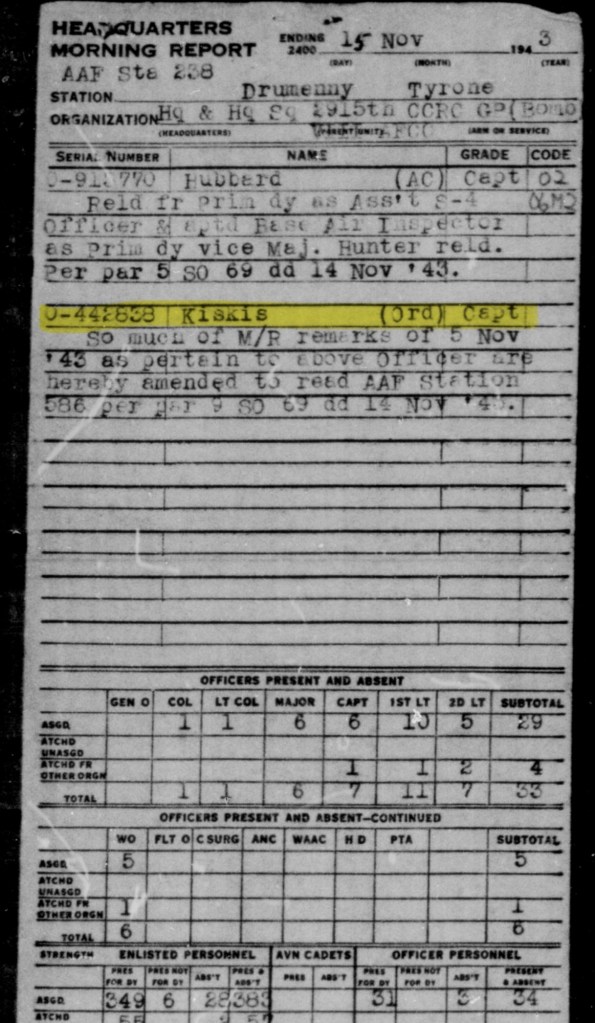
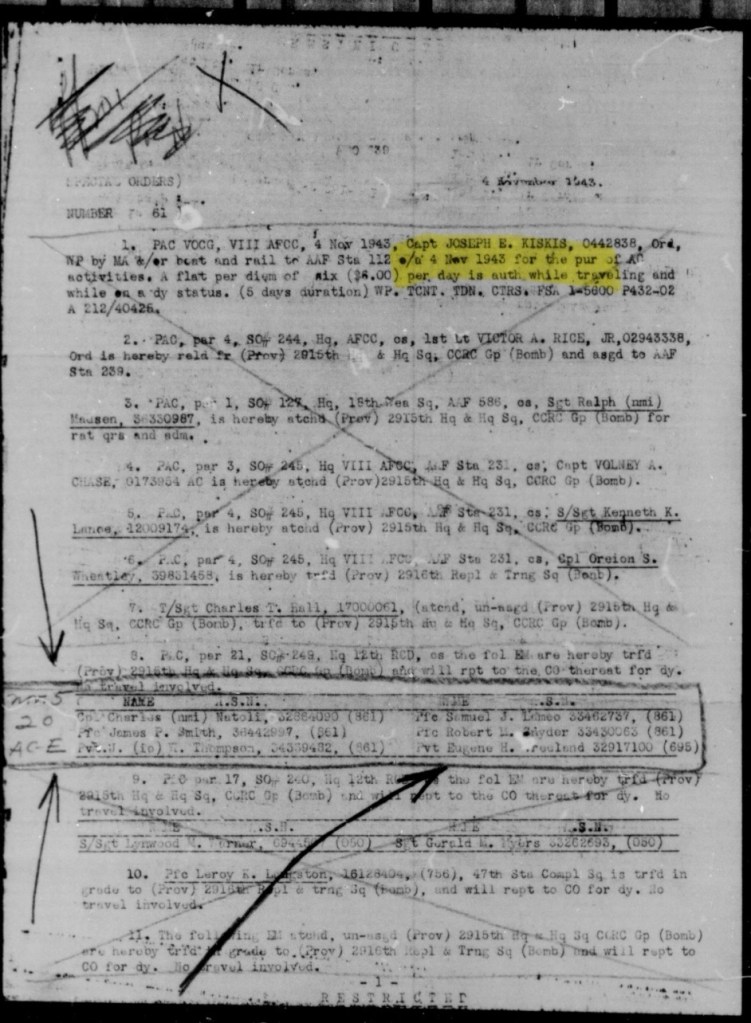
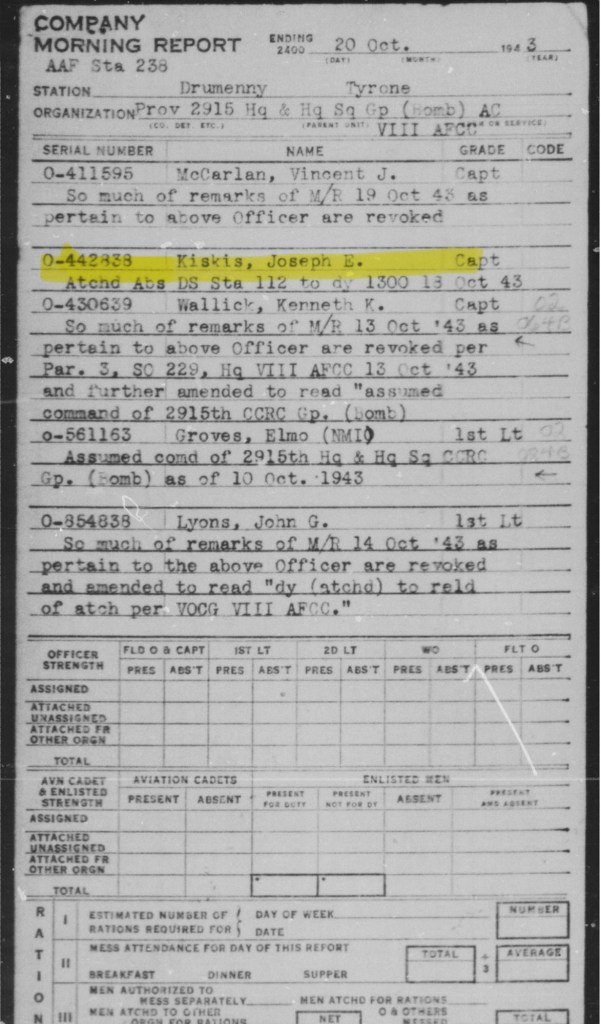
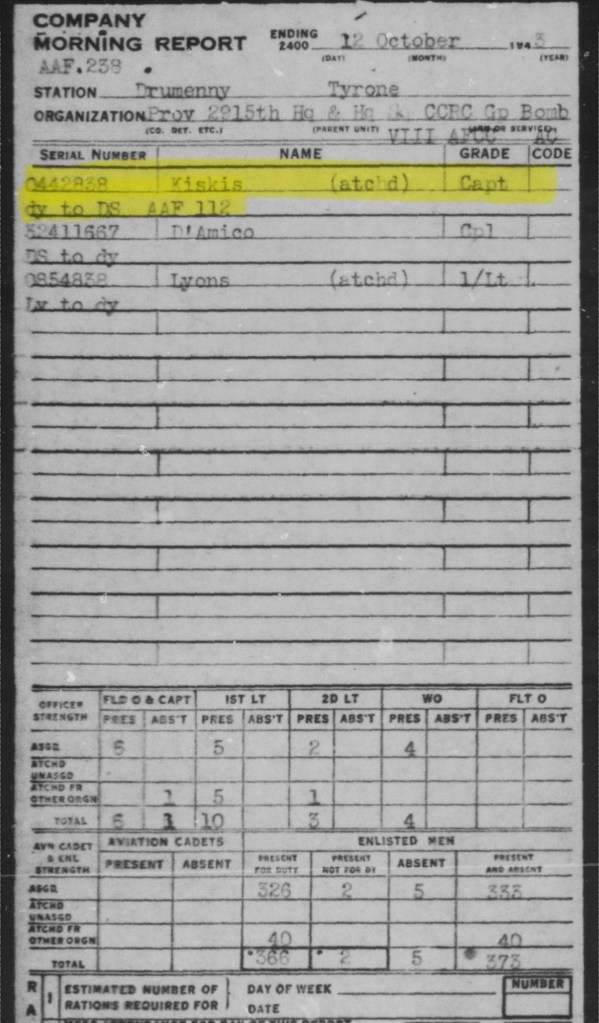
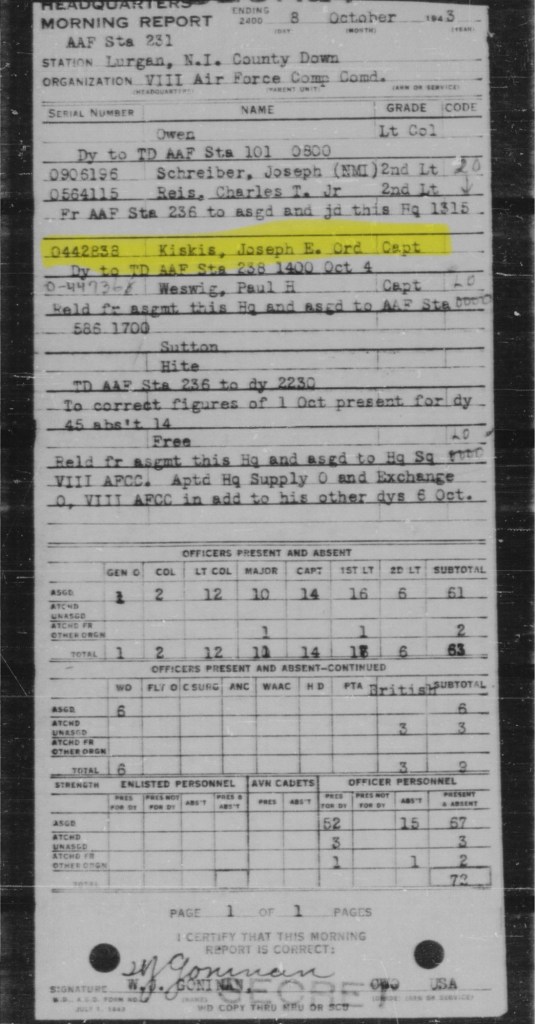
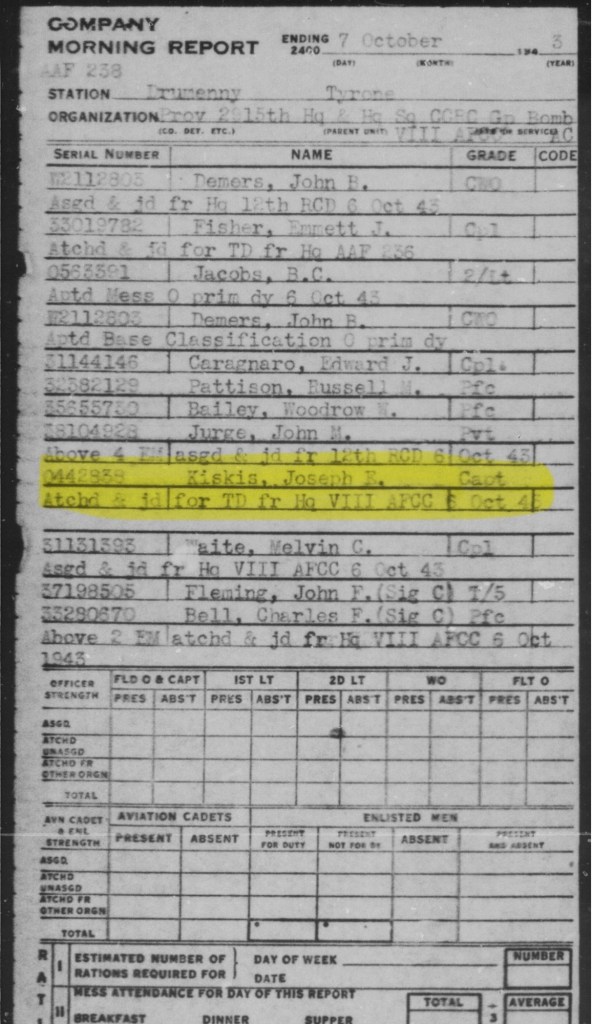
By October 1943, Kiskis was overseas in Northern Ireland. A morning report dated October 7, 1943, places him at Lurgan, County Down with the VIII Air Force Composite Command as a captain. This command handled replacement processing, administration, and support work for bomber units operating in England.On October 8th, 1943, Kiskis appears with the Provisional 2915th Headquarters and Headquarters, Combat Crew Replacement Center Group (Bomb) located at Drumeny, County Tyrone. He remained with this organization through November 1943, later appearing with Headquarters and Headquarters Squadron, 4th Combat Crew Replacement Center Group.
These replacement center units prepared bomber crews and support personnel before assignment to operational combat groups. As an ordnance officer, Kiskis would have worked with bombs, aircraft armament systems, ammunition supply, and other technical duties connected to heavy bomber operations.
Service with the 303rd Bomb Group “Hell’s Angels”
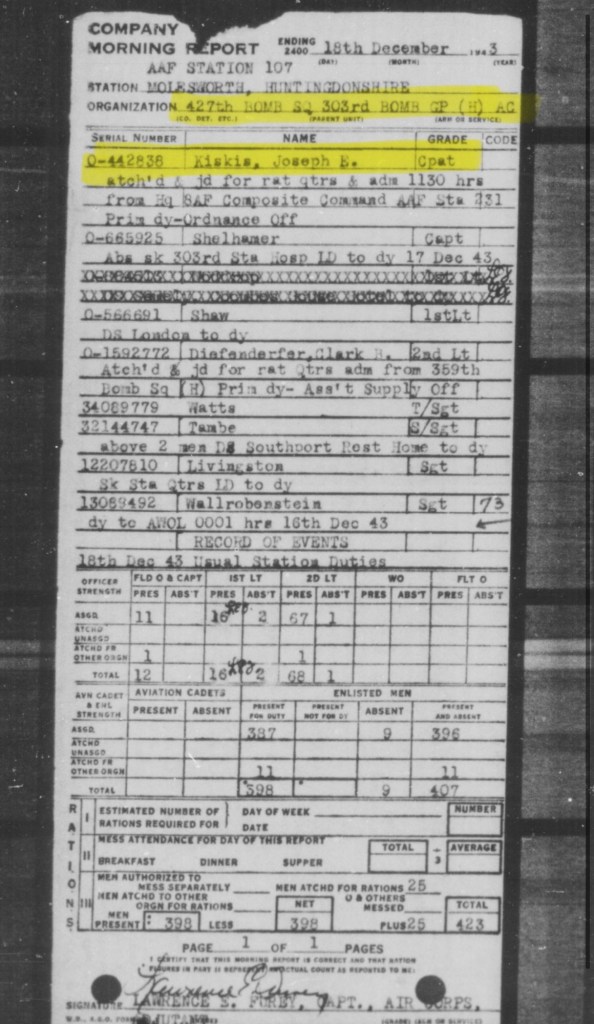
A morning report dated December 18, 1943, places Captain Kiskis with the 427th Bomb Squadron, 303rd Bomb Group, at RAF Molesworth, Huntingdonshire, England, also known as AAF Station 107. The 303rd Bomb Group was one of the best-known B-17 groups in the Eighth Air Force and earned the nickname “Hell’s Angels.”On December 22, 1943, Kiskis is listed as a passenger aboard B-17F #42-5854 “Alley Ooop” of the 360th Bomb Squadron during Mission #91 against Osnabrück, Germany. The mission record states:
“Passenger – Mission 91 – 22 Dec 43 – Capt J.E. Kiskis”
Kiskis was not listed as a regular crew member, showing he flew in an observational or technical role rather than as part of the permanent flight crew. As an ordnance officer with an engineering background, he was most likely observing bomb loading procedures, armament systems, or combat operational conditions within the 303rd Bomb Group.
The mission was listed as an “Abortive Sortie,” meaning the aircraft failed to complete the bombing mission, but it was still an operational combat flight launched toward Germany.
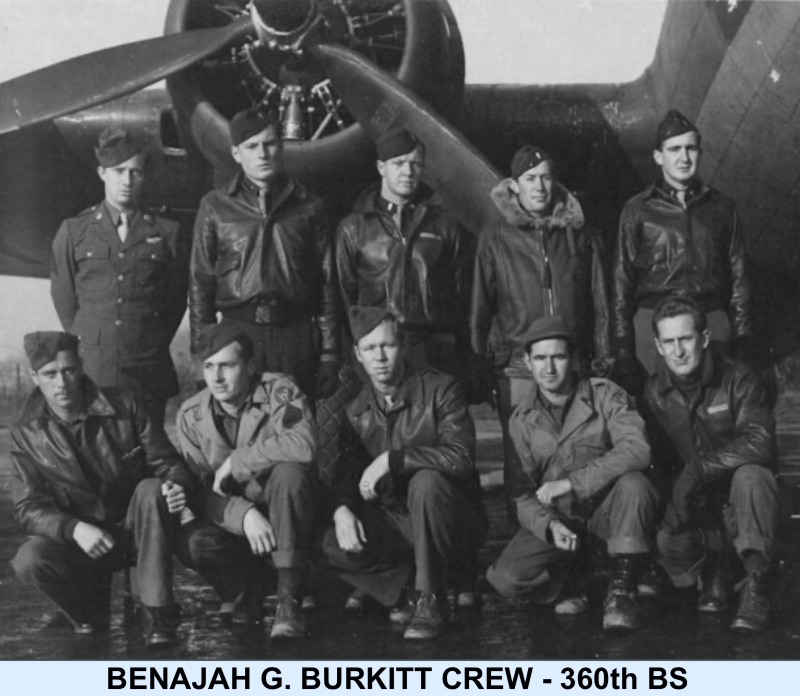
The crew Kiskis flew with was led by 2Lt. Benajah G. Burkitt.
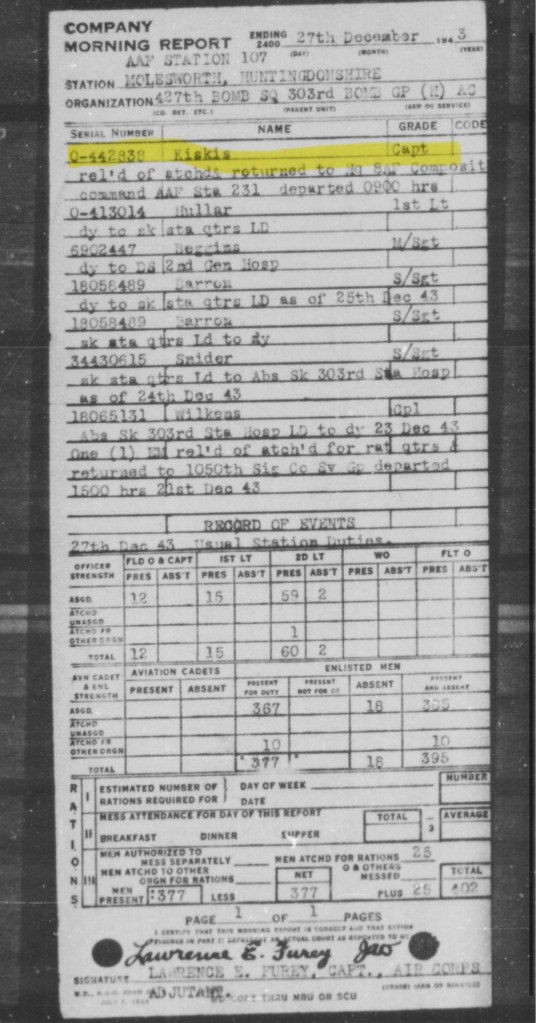
A surviving morning report dated December 27, 1943, shows Kiskis leaving the 427th Bomb Squadron and returning to Headquarters, VIII Air Force Composite Command at AAF Station 231. The report states:
“Rel’d of atchd returned to Hq 8AF Composite Command AAF Sta 231 departed 0900 hrs”
His duty was listed as ordnance officer.
About a week after KisKis’s departure on the 5th of January, 1944, and about two weeks after he flew aboard with Burkitt and his entire crew, he would learn that they were all killed during takeoff for Mission #96 to Kiel, Germany. Flying a newly assigned B-17G, the aircraft collided with another bomber in poor visibility shortly after departure. Both aircraft crashed, killing all twenty crewmen involved.
The Burkitt crew killed in the crash were:
- 2Lt Benajah G. Burkitt – Pilot
- 2Lt Harold J. Kuhn – Co-Pilot
- 2Lt Fred J. Reith – Bombardier
- 2Lt Herbert A. Foote Jr. – Navigator
- S/Sgt Philip H. Gatewood – Engineer
- Sgt Cleve C. Rush – Tail Gunner
- Sgt William E. Stoffregen – Left Waist Gunner
- Sgt Alvin D. Cantrell – Radio Operator
- Sgt Lee E. Brown – Right Waist Gunner
- Sgt Arthur O. Berntzen – Ball Turret Gunner
This is the very last bit of information on Kiskis and his service history, with absolutely no other documents relating to him after this.
*MassMilitaria is requesting any information regarding the service history of Joseph E. KisKis so his story can be documented in full*
Postwar Life and Legacy
This is the very last bit of information on Kiskis and his service history, with absolutely no other documents found that relate to him after this though we will continue to try.*MassMilitaria is requesting any information regarding the service history of Joseph E. KisKis so his story can be documented in full*