PFC. Sherman A. Lindgren
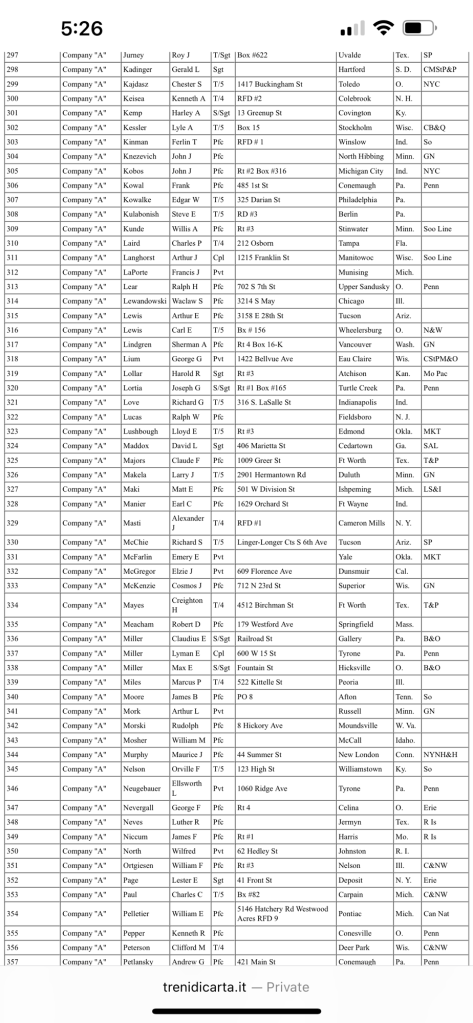
U.S. Army – Transportation Corps – 727th Railway Operating battalion, Company “A”
-
Sherman Arthur Lindgren was born on February 11, 1919, in Koochiching County. He grew up in northern Minnesota during the hardships of the Great Depression, eventually living near Jacobson, where his family remained while he served overseas during World War II.
Service with the 727th Railway Operating Battalion
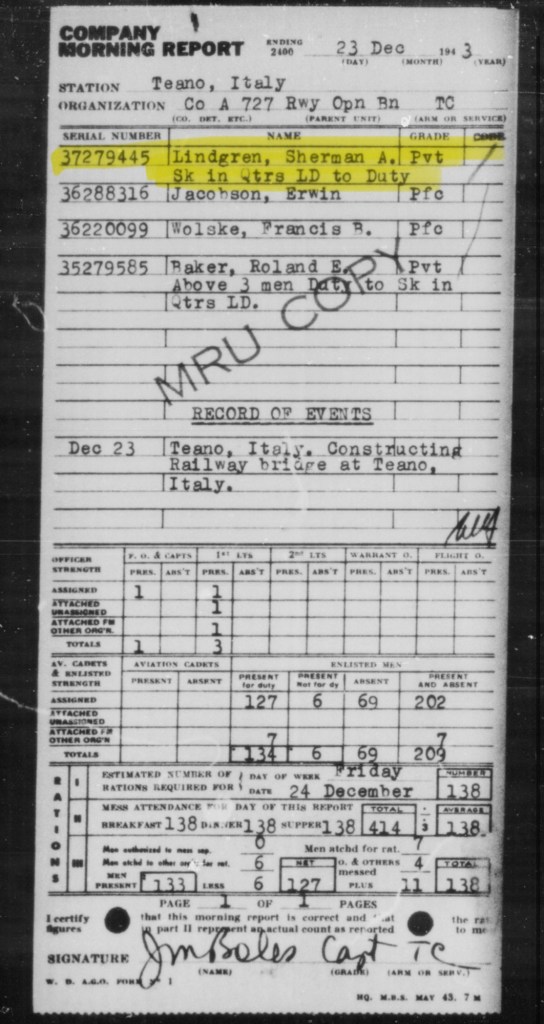
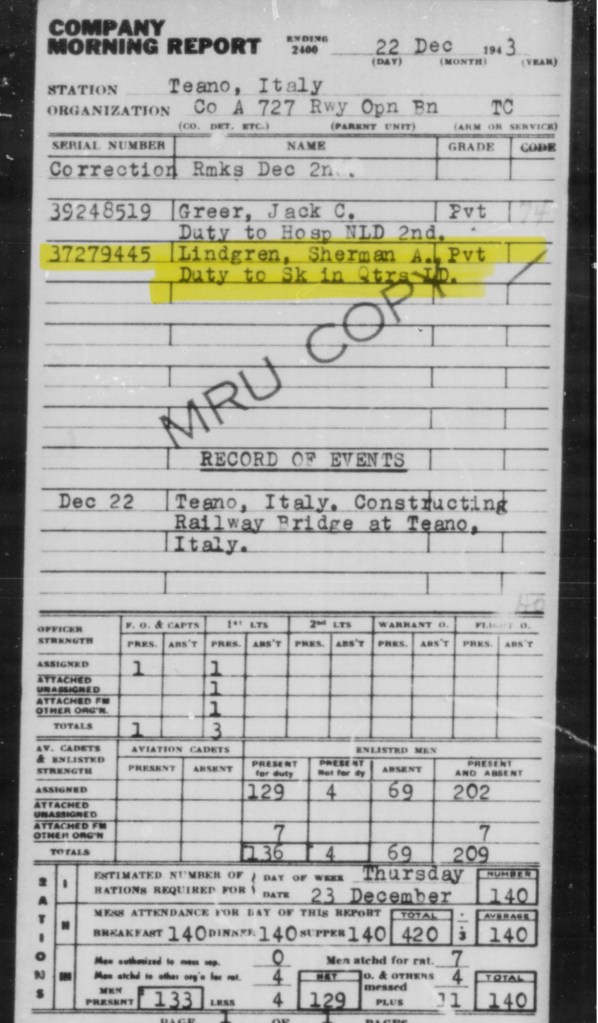
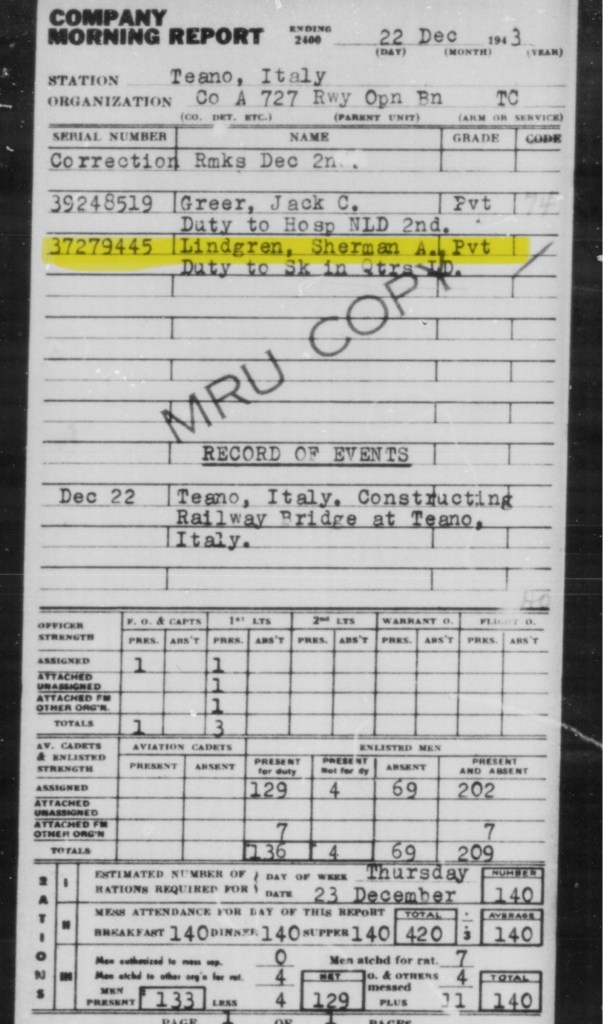
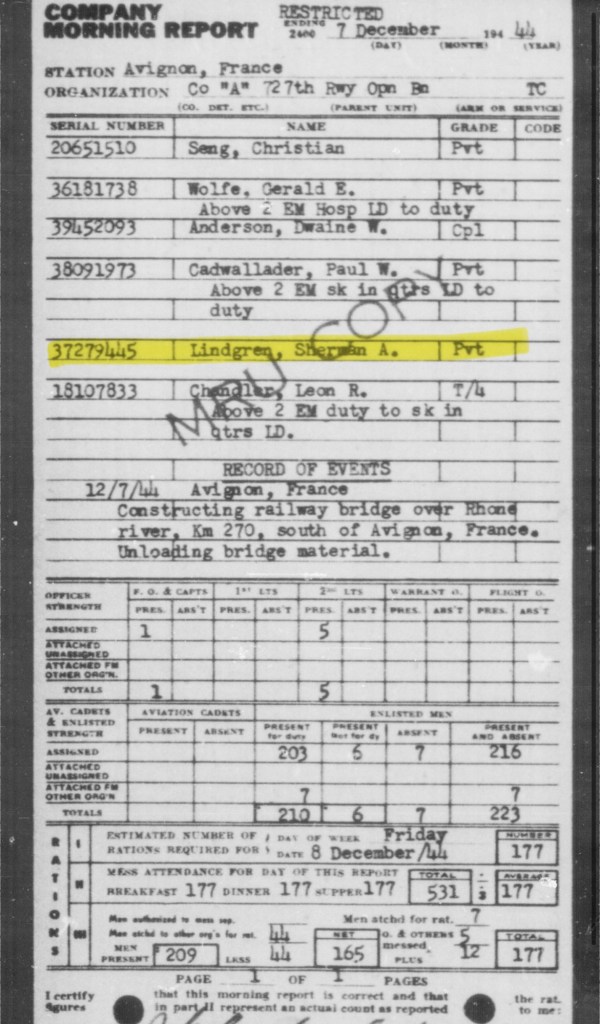
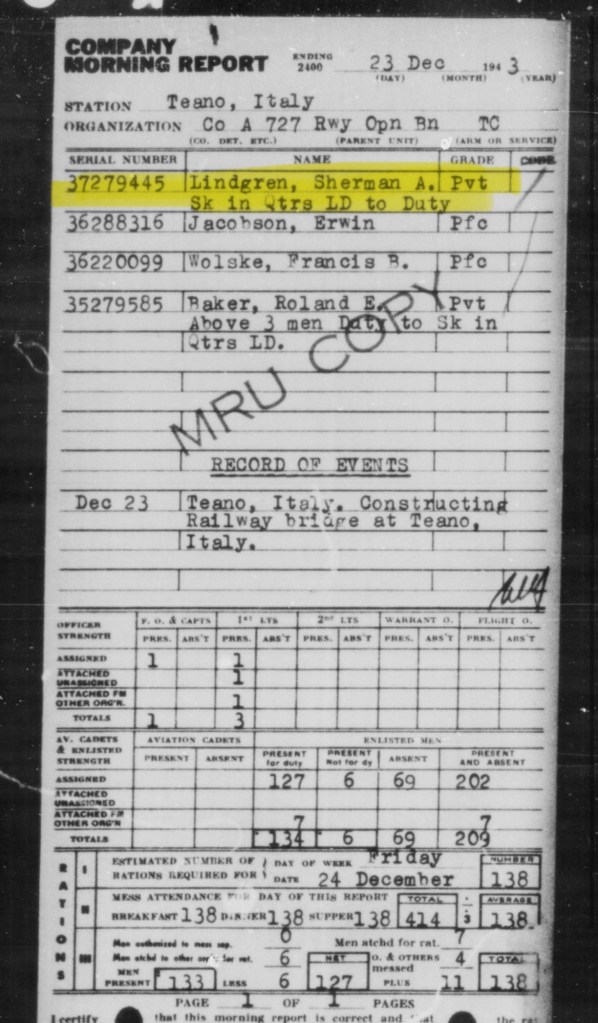
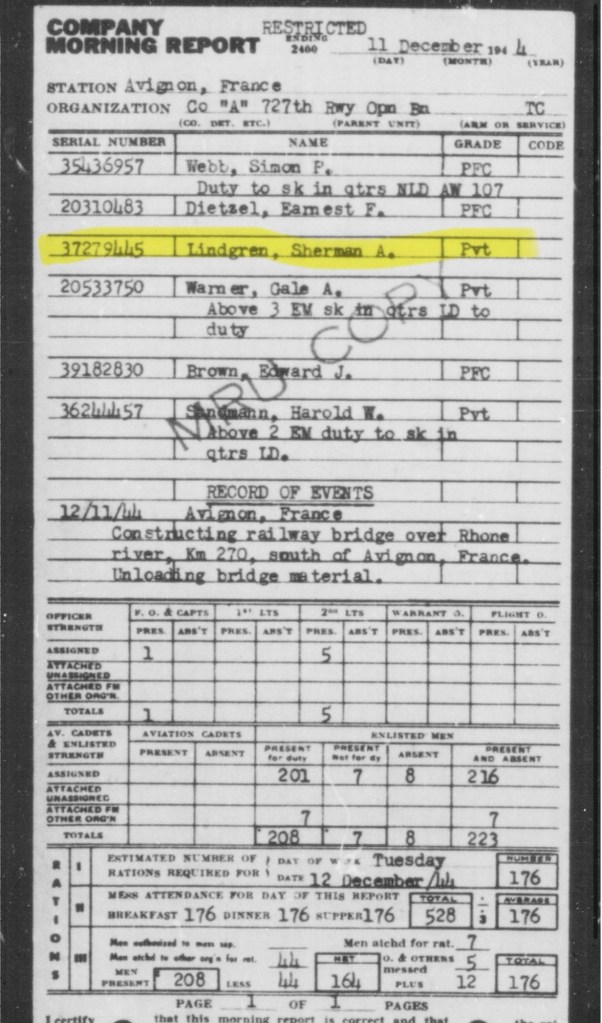
During World War II, Lindgren served as a Private in Company A of the 727th Railway Operating Battalion, part of the U.S. Army Transportation Corps. Railway operating battalions were responsible for restoring and running the rail systems that supplied Allied armies with ammunition, fuel, food, vehicles, and reinforcements. Though far less publicized than combat units, railroad troops were essential to keeping the Allied advance moving.
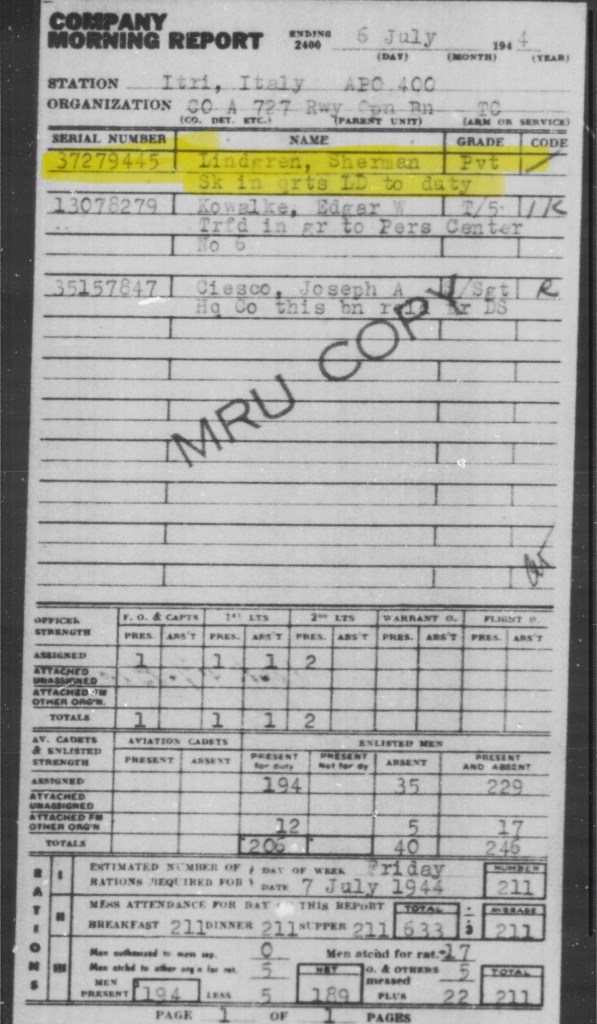
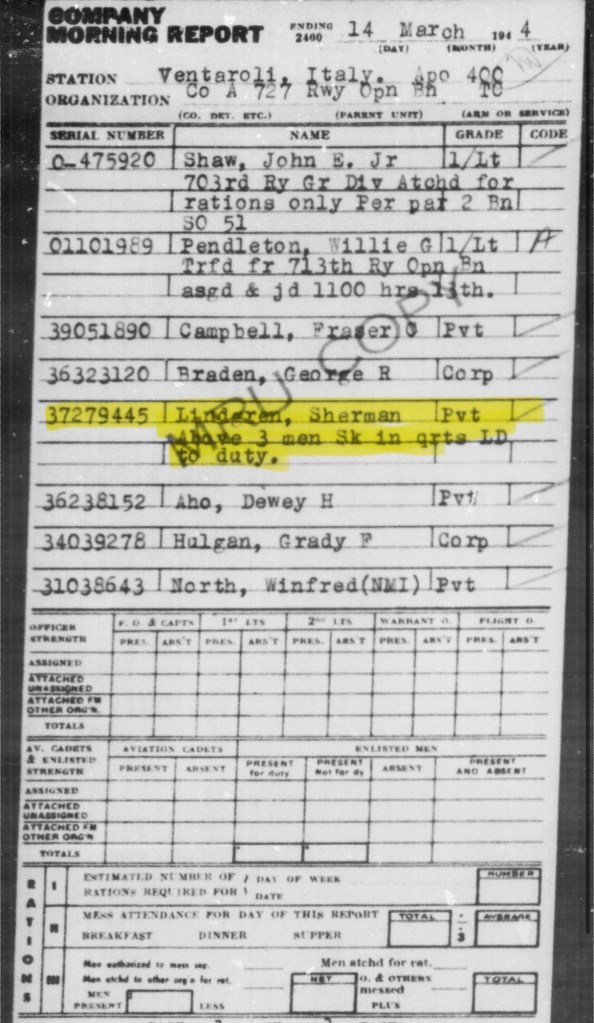
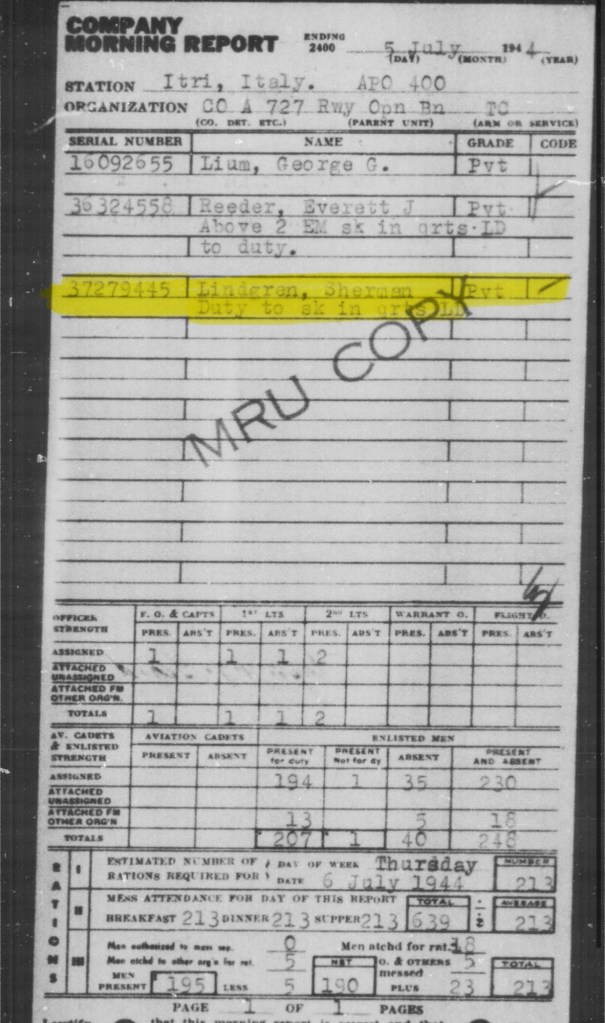
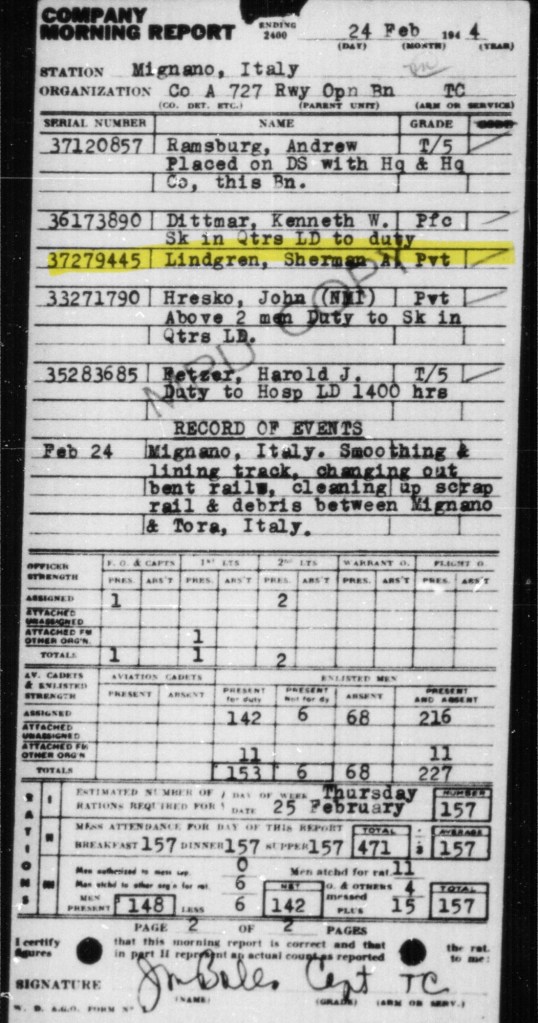
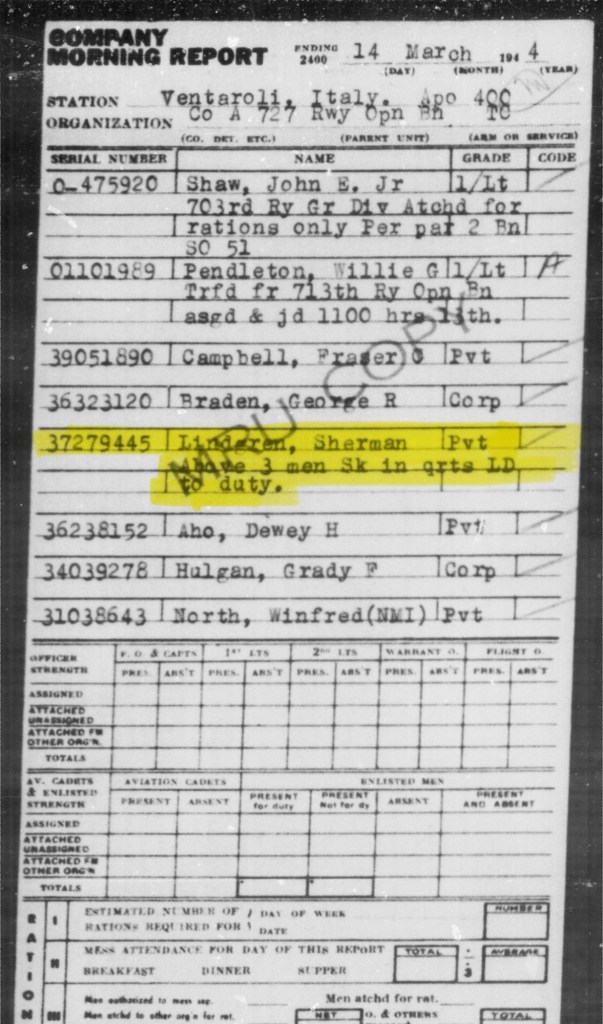
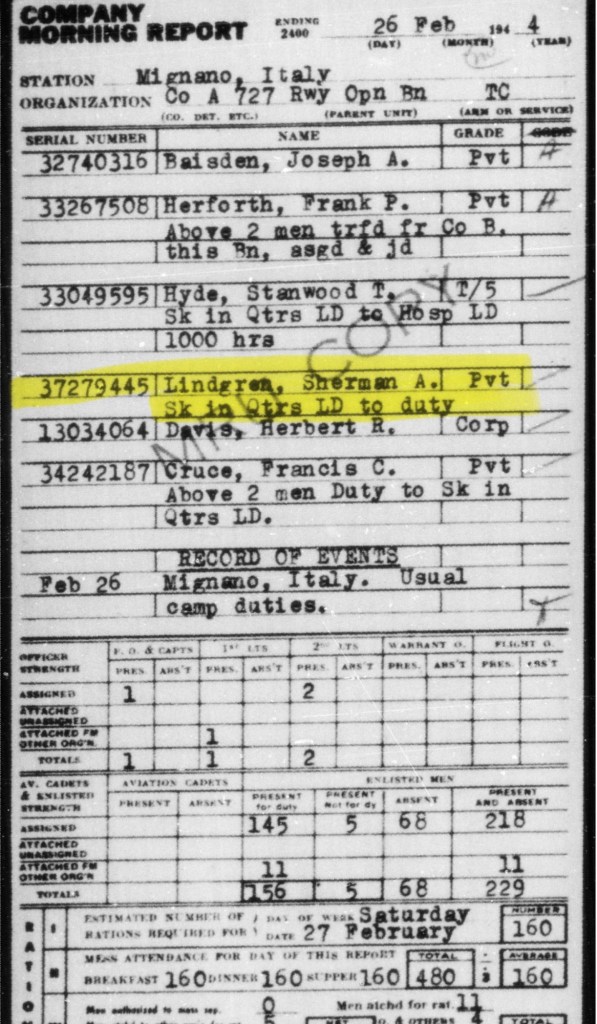
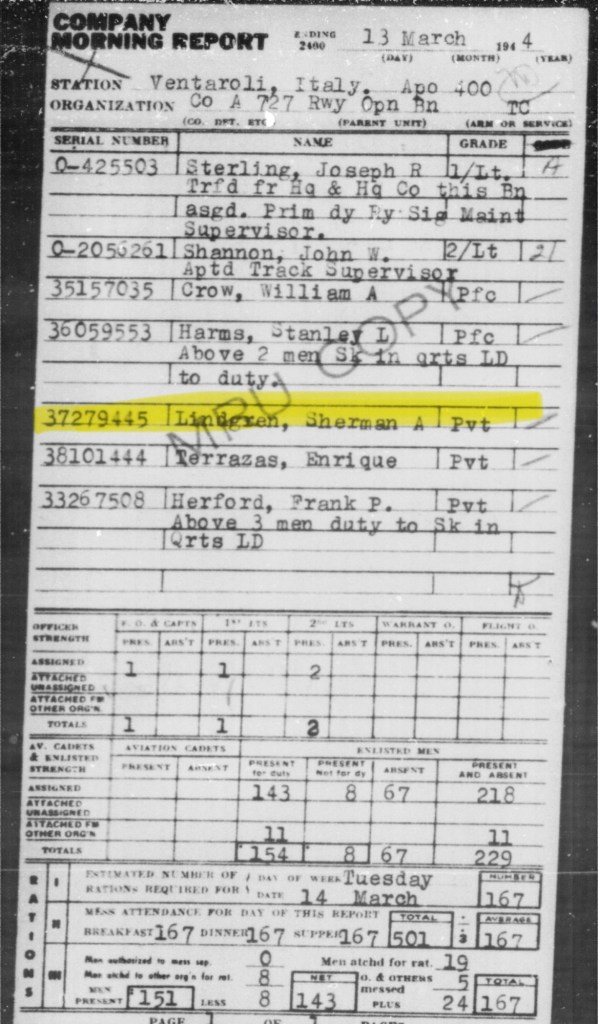
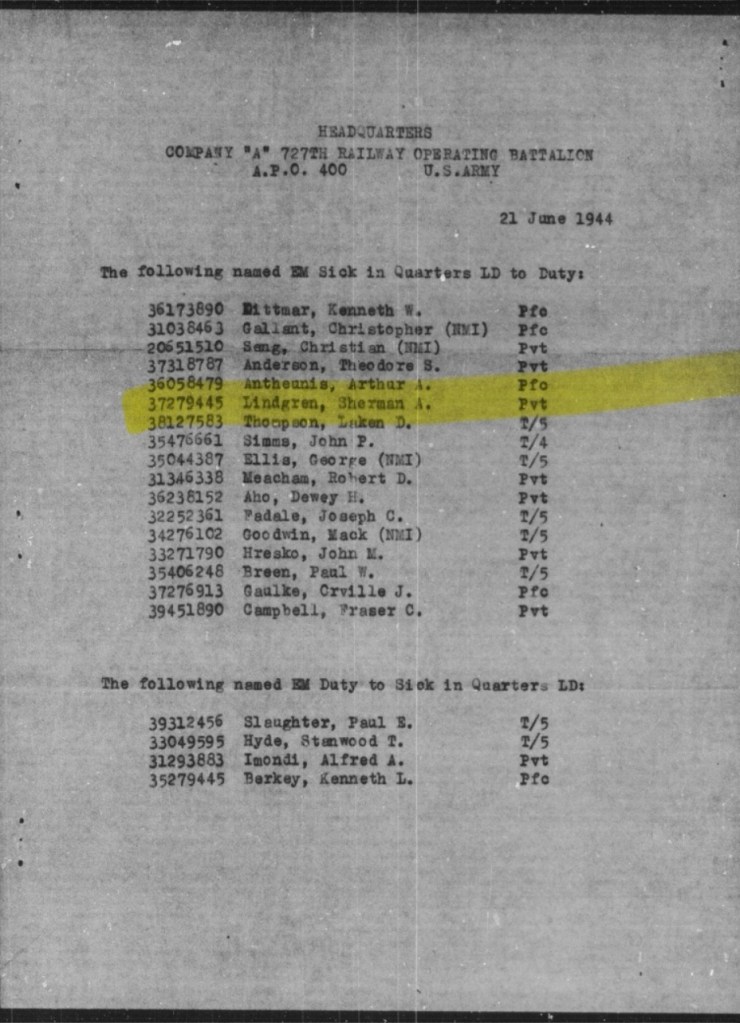
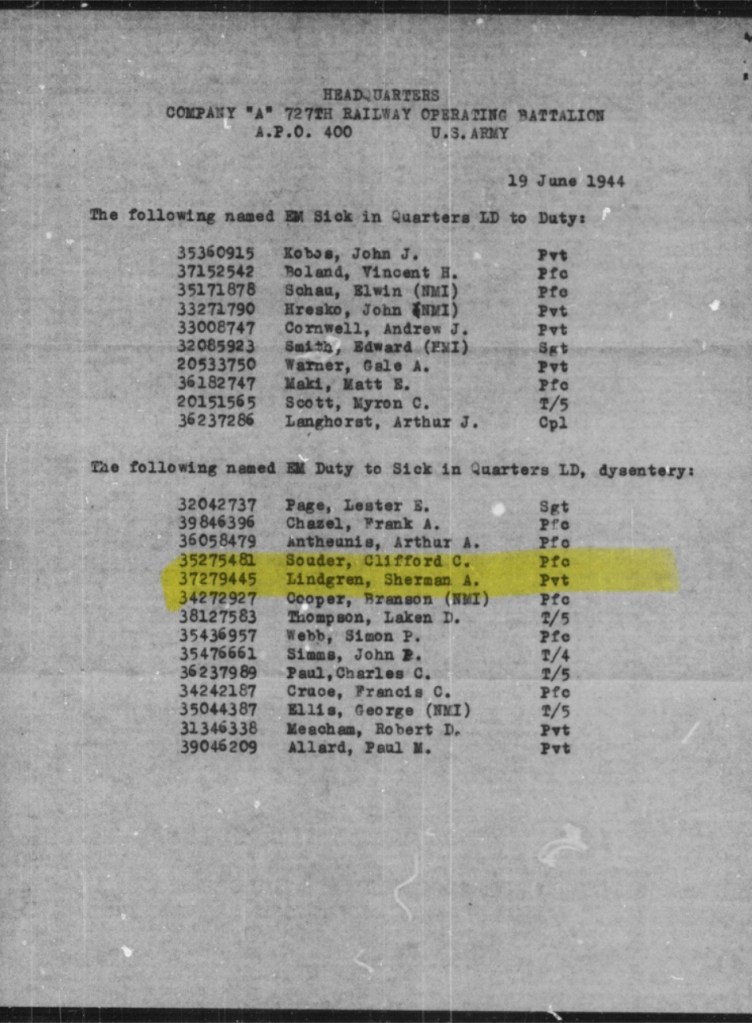
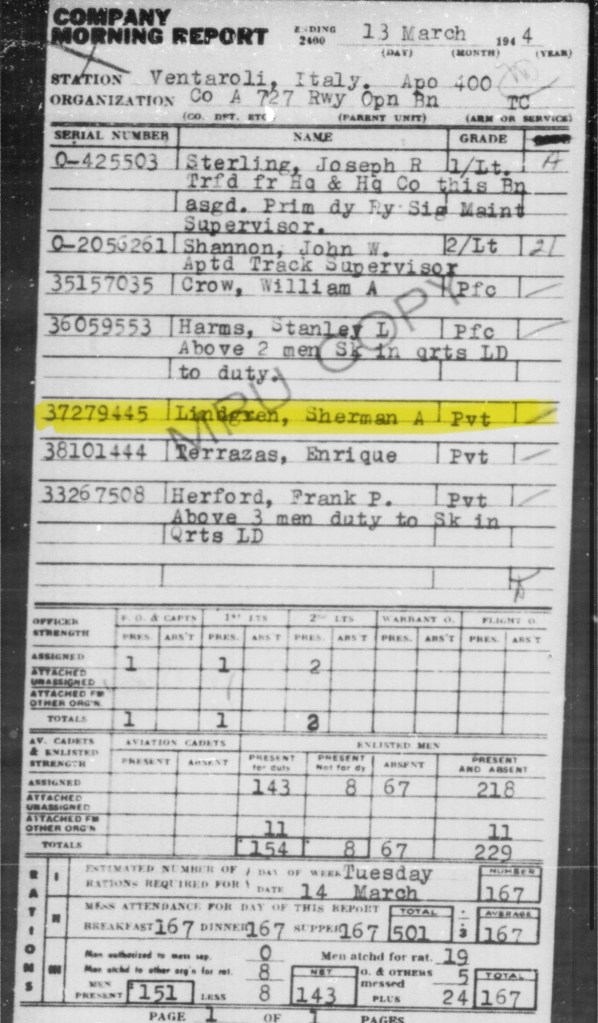
As a Section Hand Railway, Lindgren performed maintenance and repair work on rail lines and yards used by military supply trains. Morning reports place him with the battalion in Italy during 1944, including at Ventaroli and Itri, south of Rome. These areas had recently seen heavy fighting during the Allied push north following the battles around Monte Cassino and the breakout from Anzio. Retreating German forces had damaged bridges, rail lines, switches, and locomotives in an effort to slow the Allied advance, leaving railway troops to rebuild transportation networks under difficult conditions.
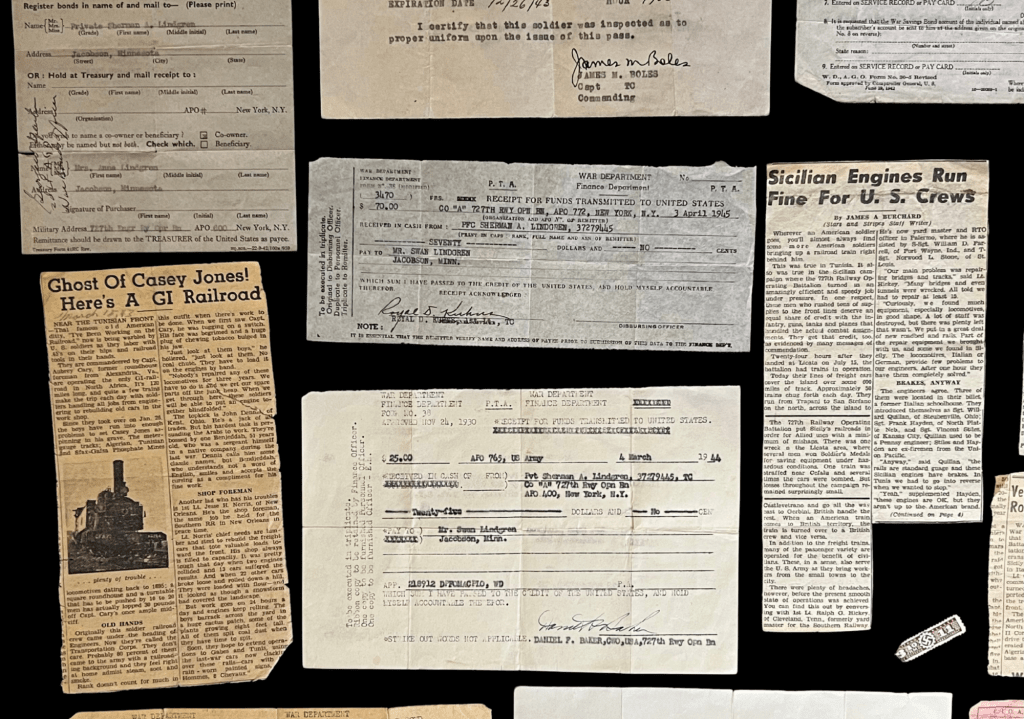
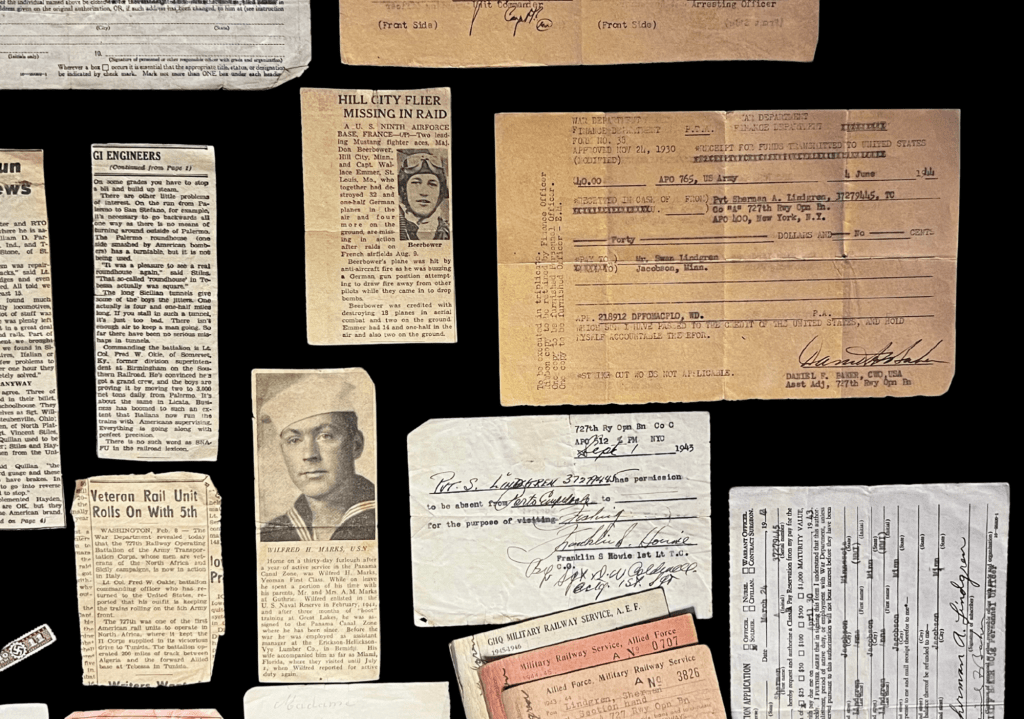
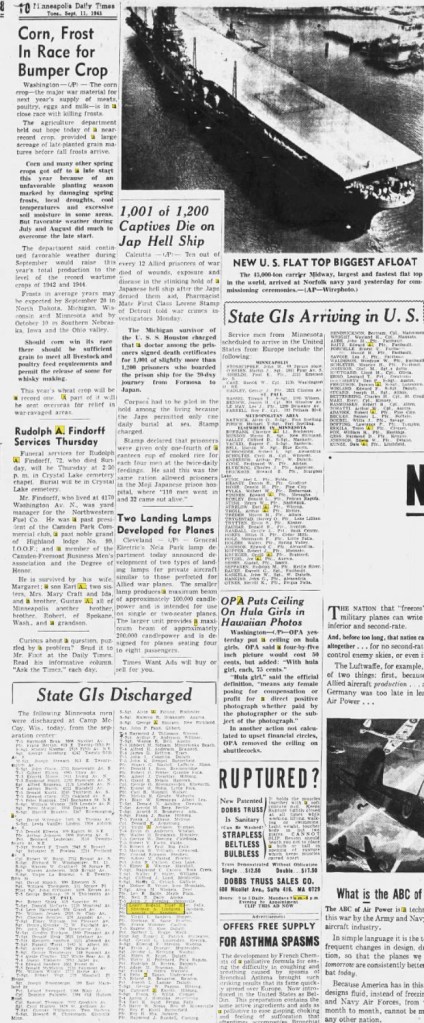
The 727th Railway Operating Battalion worked long hours clearing wrecked track, replacing rails and ties, repairing switches, and returning captured or damaged locomotives to service. Newspaper clippings preserved with Lindgren’s papers describe Army railway crews in Sicily and Italy operating trains despite bomb damage and destroyed infrastructure. In many locations, tracks had to be repaired quickly so supply trains could continue moving north behind advancing Allied forces.
Railway workers also faced the danger of air raids, artillery fire, sabotage, and accidents caused by overloaded wartime rail traffic. Troops in the Military Railway Service were sometimes referred to as the “Ghosts of Casey Jones,” a nickname earned from operating trains through blackout conditions and combat zones while maintaining strict schedules critical to military operations.
Wartime Documents in relation to Overseas Service
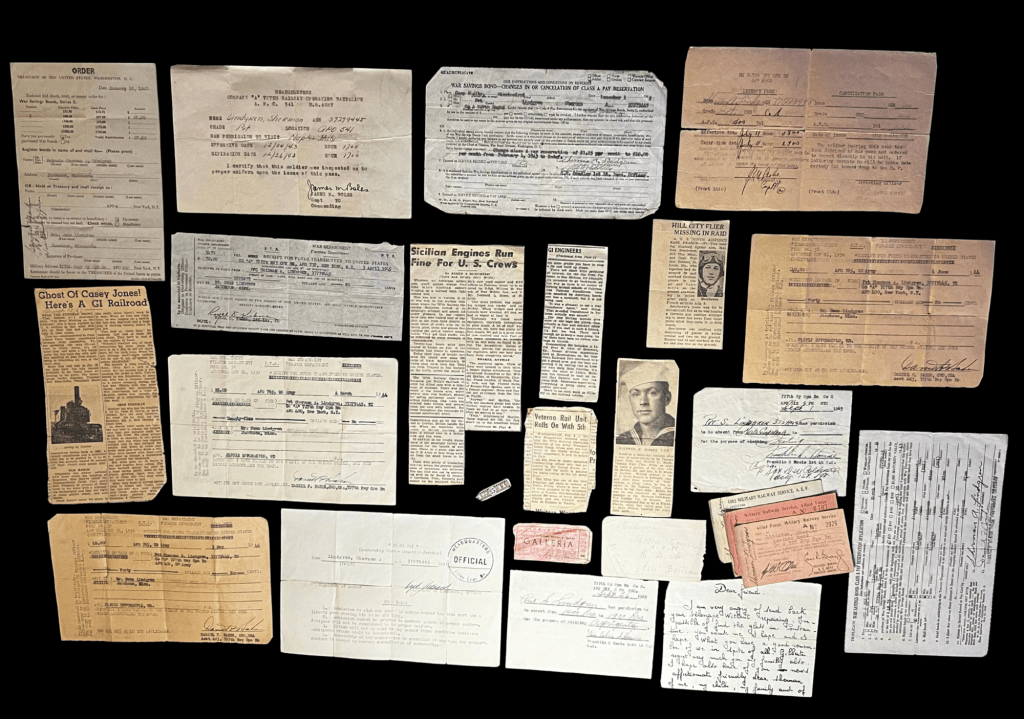
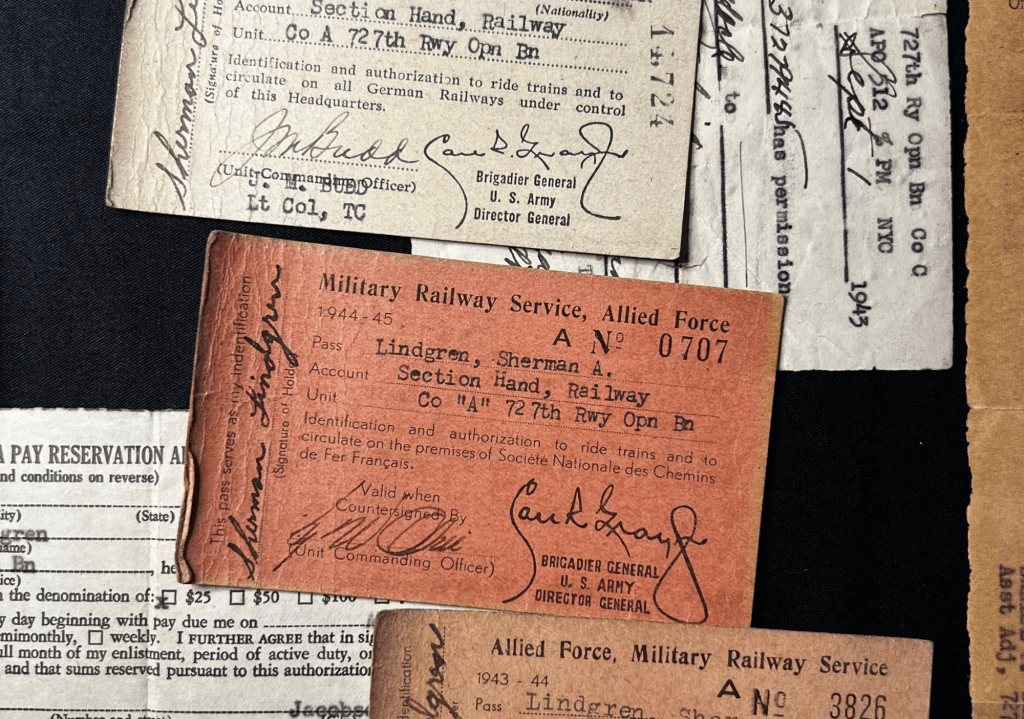
Several surviving documents provide a detailed glimpse into Lindgren’s wartime service. Allied Military Railway Service passes issued in 1944 and 1945 authorized him to travel and work on military controlled railway systems, including French rail lines after liberation. One pass identifies him traveling under authority connected to the Allied Forces Headquarters railway system.
Additional War Department finance records and receipts show Lindgren regularly sent money home to his family in Jacobson, Minnesota, while serving overseas. His preserved paperwork also includes transportation documents, military forms, newspaper clippings related to railway operations, and correspondence connected to the daily life of Army railroad personnel during the war.
Postwar Life and Legacy
After the war, Lindgren returned to Minnesota. Though railway operating battalions rarely received widespread recognition, their work formed the backbone of Allied logistics in Europe. Without functioning railroads, frontline armies could not receive the supplies needed to continue offensive operations across Italy and Western Europe.
Sherman Arthur Lindgren died on June 3, 2008, at the age of 89. He was buried at Fort Snelling National Cemetery in Section 17, Site 712. His surviving military papers, passes, receipts, and wartime records preserve the story of one of the many Transportation Corps soldiers whose work quietly sustained the Allied victory in Europe